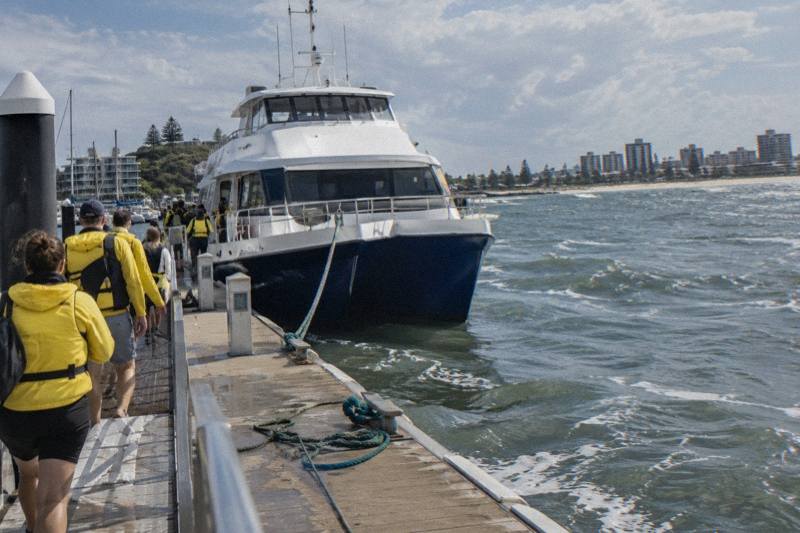
Can You Go Whale Watching From Shore On The Sunshine Coast Or Do You Need A Cruise?
Yes, you can watch whales from Sunshine Coast headlands such as Point Cartwright, Point Perry and Dolphin Point between June and November, but a cruise gets you inside the 300 m caution zone the shore keeps you outside of.
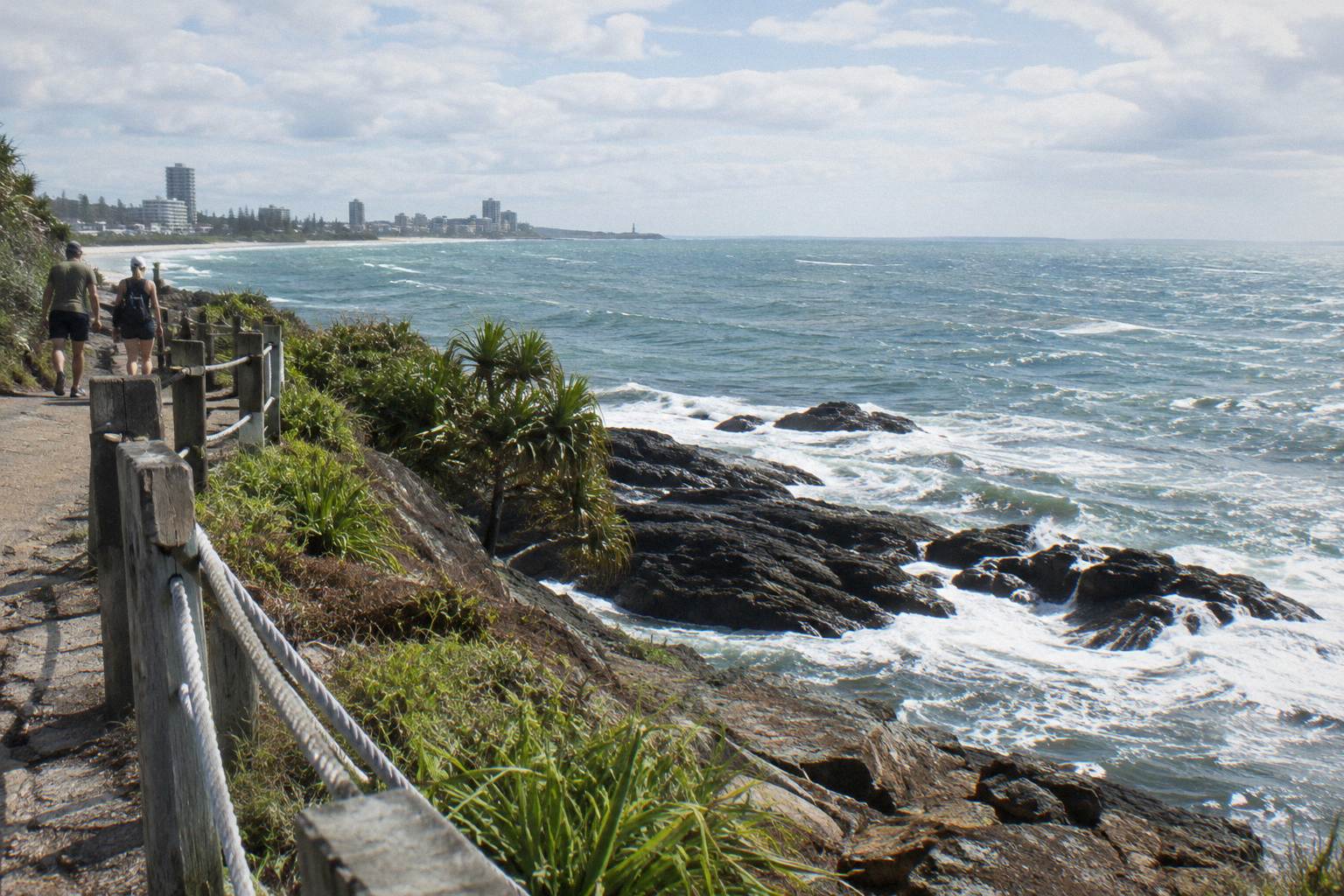
Yes, you can watch whales from shore on the Sunshine Coast, and the official tourism and parks sources name the lookouts: Point Perry in Coolum, Point Cartwright, Moffat Headland, Dolphin Point Lookout in Noosa and Alexandra Headland, with Point Arkwright noted for southbound whales in spring. A cruise is not required to see a whale, but it is the only way to sit inside the 300 m caution zone that the land keeps you well outside of, and no shore lookout comes with a sighting promise of any kind.
The short answer splits into two parts. The first part is geography: humpbacks migrate along this coast every year in numbers the Queensland Government now estimates at around 50,000 eastern Australian humpbacks, and they pass headlands that push out toward their line of travel. The second part is law: Queensland approach rules set a no approach zone of 100 m all round a whale, extending 300 m in front of and behind the animal, with a caution zone out to 300 m. A licensed trip can operate inside that caution zone at limited speed. A person on a headland is always outside it, watching from whatever distance the whales happen to keep from the coast.
Visit Sunshine Coast states the season plainly: "Official whale season is from June to November here on the Sunshine Coast", and adds that "the best time to spot whales on the Sunshine Coast is in July and August, because that's when the largest numbers are passing by as they head north". Operators frame the window slightly differently; Sunreef says its season runs from early June with tours until very early November, and Adventure Rafting's page says 1 June to 31 October. The practical takeaway for a shore watcher is the same as for a boat passenger: roughly June to October, into early November, with the busiest passing traffic in July and August.
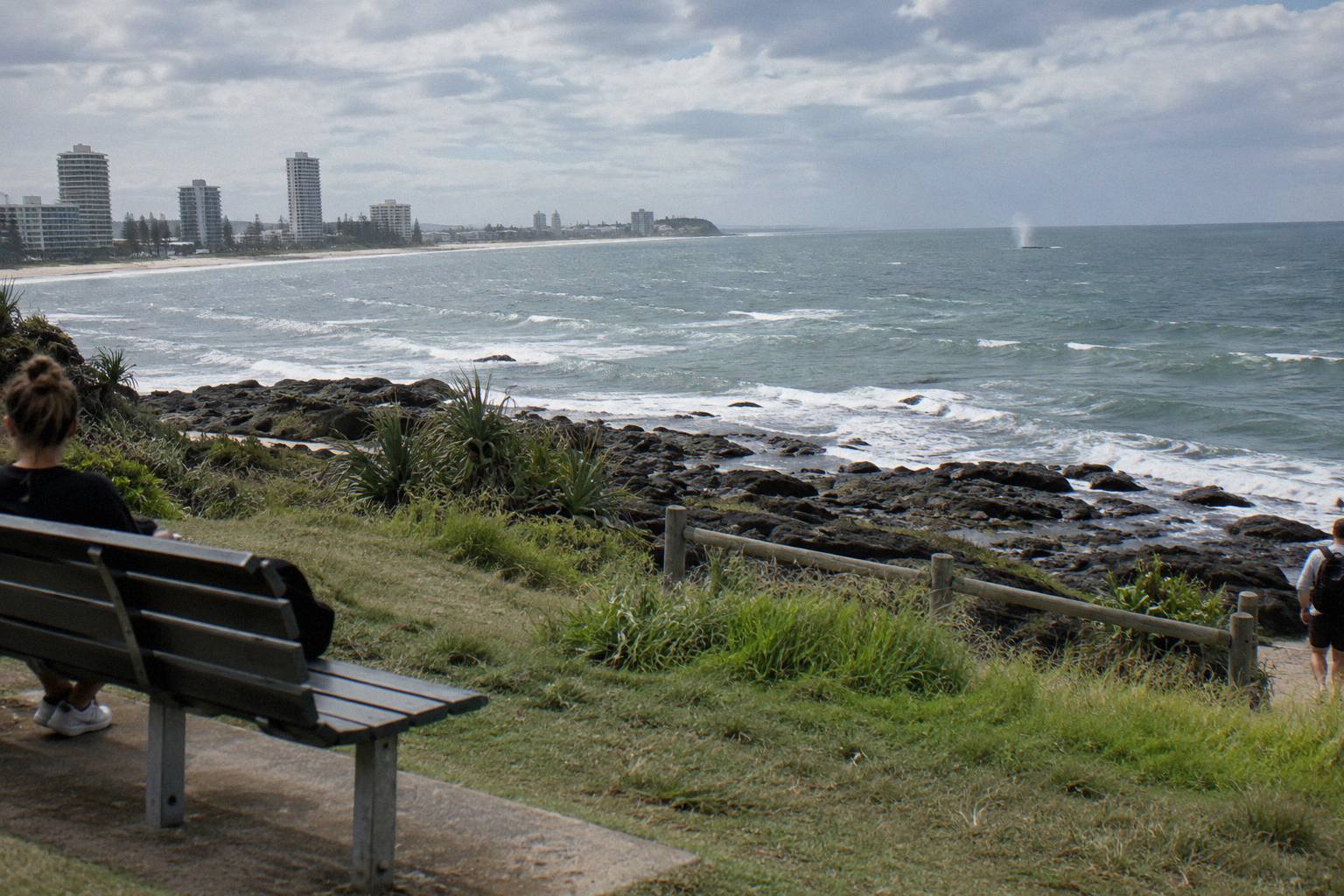
Which choice fits depends on what you want from the morning. A lookout costs nothing and asks nothing of your stomach. A boat costs money, takes two to four hours, and puts you on the water where conditions differ from the beach; Whale One's own page notes that "sometimes the weather looks fine on the beach, it does not always give an accurate representation of what the conditions offshore are".
Which Headlands Do The Official Sources Name?
Visit Sunshine Coast's guide page lists its favourites directly: "Favourite local spots include Point Perry in Coolum, Point Cartwright, Moffat Headland, Dolphin Point Lookout (Noosa), and Alexandra Headland." The same body's attraction page for Point Cartwright, a headland reserve at 1 Pacific Boulevard in Buddina, says of the spot that "it's often possible to spot migratory humpback whales, turtles, and ships", which is tourism wording for "sometimes, not always". A council trail page adds Point Arkwright at Coolum, calling it "a great place to view migrating whales heading south during Spring", which lines up with the southbound leg of the migration. Queensland Parks, for Noosa Headland, says "Between June and November, humpback whales can be glimpsed", naming Dolphin Point and Hell's Gates as the best spots in that park.
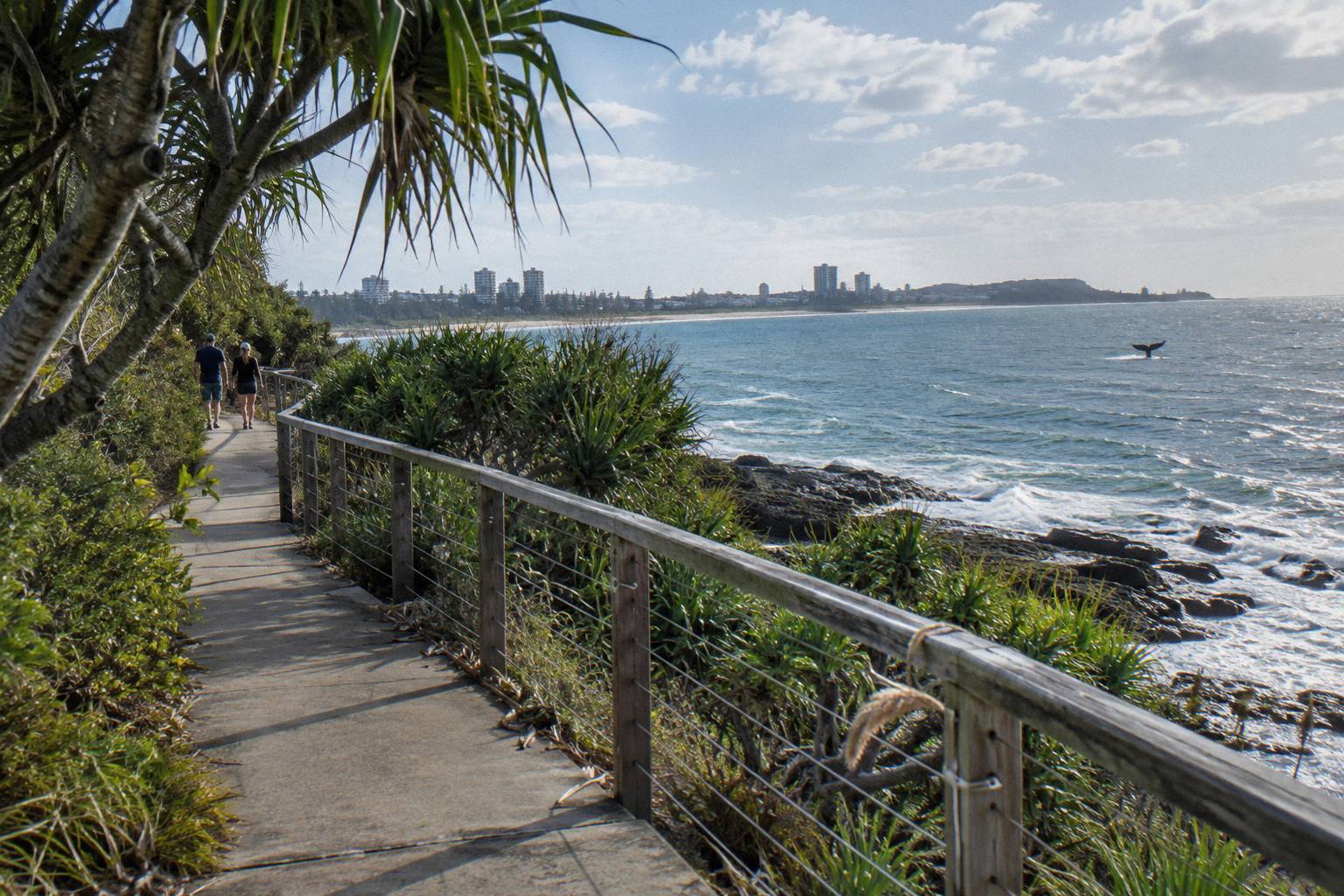
Put the named lookouts side by side, each with the statement its own source makes:
| Lookout | Place | What The Source Says | Source |
|---|---|---|---|
| Point Perry | Coolum | Named among favourite local whale spots | Visit Sunshine Coast |
| Point Cartwright | Buddina | "Often possible to spot migratory humpback whales, turtles, and ships" | Visit Sunshine Coast attraction page |
| Moffat Headland | Caloundra end | Named among favourite local whale spots | Visit Sunshine Coast |
| Dolphin Point Lookout | Noosa | Named among favourite local whale spots | Visit Sunshine Coast |
| Alexandra Headland | Alexandra Headland | Named among favourite local whale spots | Visit Sunshine Coast |
| Point Arkwright | Coolum | "A great place to view migrating whales heading south during Spring" | Council trail page |
| Dolphin Point and Hell's Gates | Noosa Headland | Whales "can be glimpsed" June to November; best spots in the park | Queensland Parks |
The pattern across all seven is careful wording. Every source says whales can be seen or glimpsed or spotted, and none gives a distance, a frequency or a percentage. That caution matches the law of the coast: the whales travel on their own line, and some days that line sits further out than others. Timing helps more than lookout choice does; the same Visit Sunshine Coast FAQ that sets the June to November season also points to July and August for the largest northbound numbers, and a peer-reviewed study of the southbound pass measured adult peaks at Peregian Beach, on this coast, in mid-September by 2023 and 2024, earlier than the early-October peak recorded before 2015.
What The Boat Adds That The Shore Cannot?
The boat's advantage is legal access and mobility: Queensland rules extend a whale's caution zone to 300 m with a no approach zone of 100 m all round, extending 300 m ahead of and behind the animal, yet a licensed commercial whale watching boat may operate inside that caution zone at no more than 6 knots. A shore watcher, by contrast, stays fixed wherever the headland is, while the whales do not.
Those numbers come from the Queensland Government's rules for watching marine mammals, which state that "the caution zone extends out to 300 metres from a whale, and 150 metres for a dolphin", that boats in a caution zone are limited to 6 knots with no wake, and that "for a whale, the no approach zone is 100 metres and extends 300 metres in front of and behind the animal". Operators must follow the Queensland and Commonwealth approach rules. None of that changes what a whale does; it changes where the viewer is allowed to be while the whale does it.
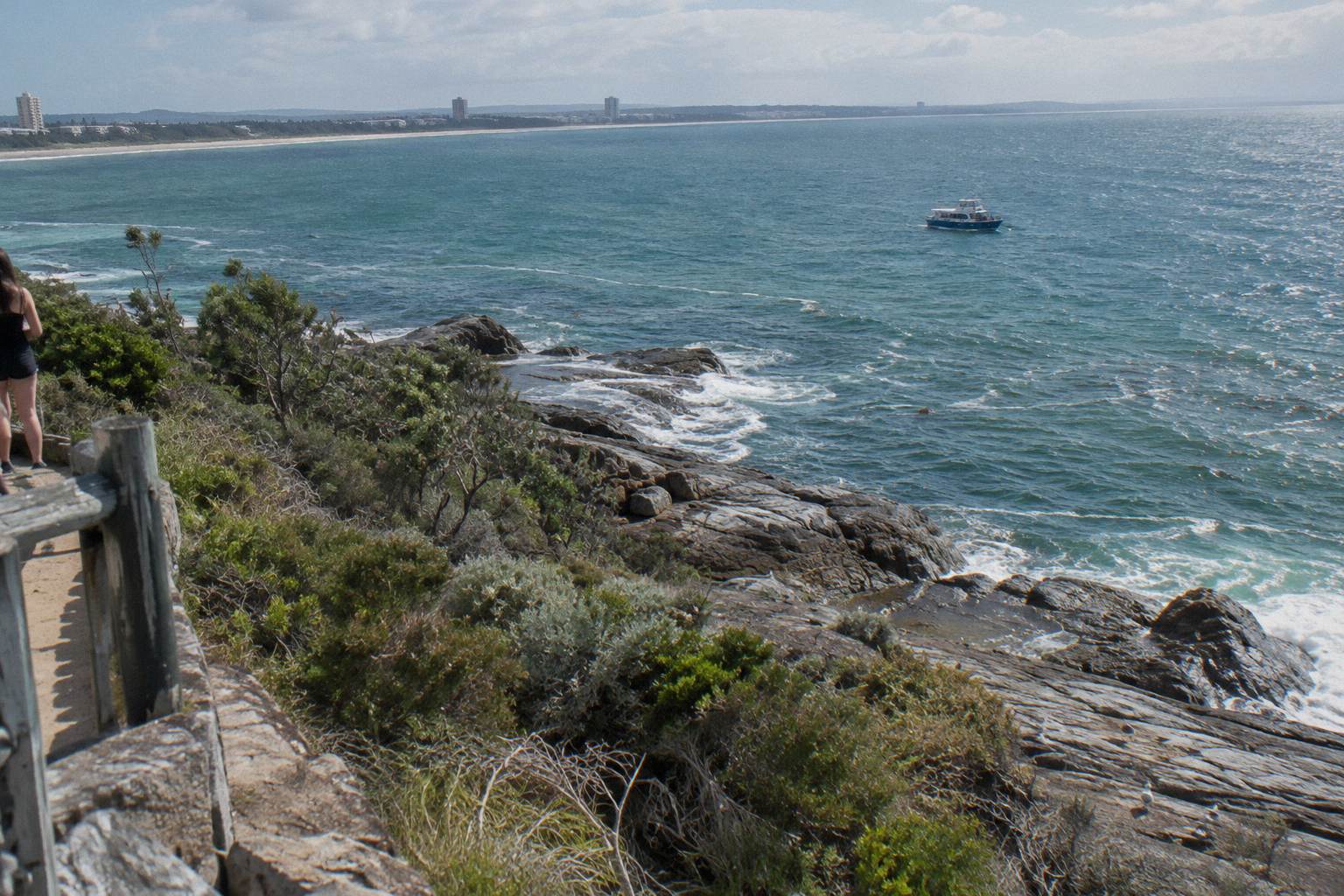
The practical contrast between the two ways of watching, on the stated facts only:
| From A Headland | On A Cruise | |
|---|---|---|
| Cost | Nothing | From A$89 per person for the Sunreef 3-Hour Whale Cruise, from A$115 per person for the Fast Boat option, from A$105 per person for a Noosa trip |
| Time | As long as you like | 2 hours to 4 hours depending on the trip |
| Distance to whales | Wherever the coastline puts you | Inside the 300 m caution zone, at 6 knots or less, per Queensland rules |
| Sighting promise | None | None; Adventure Rafting states it cannot guarantee sightings |
| Cancellation | Not applicable | Free cancellation (up to 24 hours before departure on most, up to 3 days on the Sunreef 3-Hour Whale Cruise and Swim With Humpback Whales) on the booking page for the trips covered here |
| Conditions | Beach and headland weather | Offshore conditions, which Whale One says can differ from how the beach looks |
One more stated fact belongs here: amounts above are in Australian dollars, and each is a booking-page from-price per person that varies by date. What the table cannot say is what any given day will show. The Queensland Government's own whale watching page notes calm conditions are most likely in the morning "before any wind picks up", a statement about weather patterns, not a promise about any departure.
| Rule | Distance | Applies To |
|---|---|---|
| Caution zone for a whale | 300 m | Boats, jet skis, aircraft and drones, per Queensland rules |
| No approach zone for a whale | 100 m all round, 300 m in front of and behind | All vessels |
| Speed inside the caution zone | 6 knots, no wake | Vessels in the zone |
| Drones near a whale | Not within 100 m | Unmanned aircraft, per the Queensland rules page |
| A person in the water | Not within 100 m of a whale | Swimmers, divers, anyone entering the water |
The rules page is worth a read before any trip, whether from shore or boat: the Queensland rules for watching marine mammals set every distance in the table above. Drone operators should note the 100 m limit before flying off a headland.
If the table leans you toward the boat, the decision that remains is format. The Sunreef 3-Hour Whale Cruise, covered in detail on the same coast as the Point Cartwright lookout above, runs three hours from The Wharf Mooloolaba; its full details are on the Sunreef three-hour whale cruise page, and you can check availability at the same time. Anyone wanting a deeper sense of the onboard side of that choice can read what to expect on a whale watching cruise from Mooloolaba, while the full range of departures is laid out in the Sunshine Coast whale watching guide.
How Do You Choose Between Shore And Boat?
Choose the shore if cost, flexibility or a nervous stomach rules the day, and choose the boat if distance and time on the water matter more; the headland suits a patient watcher with a free morning, while a cruise suits a visitor with limited days who wants the closest legal view. Both can come home without a whale, and neither source promises otherwise.
The shore case is straightforward. It costs nothing, it runs every day of the year, it needs no booking, and it asks nothing of your stomach. Its weakness is fixed position and fixed distance: the whale chooses the line, and on the days that line sits wide of the coast, a headland delivers sea and horizon and not much else. The official wording at every named lookout, "often possible", "can be glimpsed", "a great place to view", is written around exactly that variability.
The boat case is equally straightforward. It costs money, it takes a booked date and a fixed block of hours, and it crosses the Mooloolah River bar when it departs Mooloolaba, a designated coastal bar where Maritime Safety Queensland warns "conditions on a bar can change quickly and without warning, even on a good day". In exchange it carries you inside the caution zone and it moves with the whales rather than waiting for them. For a traveller with three days on the coast rather than a season, that mobility is the product being bought.
By traveller type, on the stated facts:
- Families with young children: the shore has no minimum age and no ticket; on the water, age rules differ by operator, Adventure Rafting sets a minimum age of 5 on its own trips, and Sunreef states no numeric minimum with ticket bands for children 4 to 14 and under 4. Ask the operator for the trip you have in mind.
- Visitors prone to seasickness: the shore wins on physiology alone. Both operators suggest considering seasickness tablets for their trips, and offshore conditions can differ from the beach, per Whale One's own note. There is more on this in the whale watching seasickness guide.
- Photographers: distance is everything, and the 300 m caution zone is the closest legal position on the water. From a headland the distance is whatever the day gives.
- Locals with the whole season: shore watching rewards repeat visits across July to September at no cost, timed to the July and August northbound peak Visit Sunshine Coast names.
- Short-stay visitors: a booked cruise converts one morning into the closest available view, with free cancellation on the booking page across the trips covered here.
The two are not rivals, which is why Mooloolaba Whale Watching covers both: plenty of passengers stand on Point Cartwright in the morning and ride a boat later the same season, and the reverse order is how many people find the lookouts in the first place.
What Does A Boat Trip Cost Against A Free Headland?
The published from-prices for the trips leaving this coast start at from A$89 per person for the three-hour Sunreef cruise and from A$99 per person for the Oceanrider small-group trip from Tewantin, against nothing at all for a headland; all prices here are Australian dollars, booking-page from-prices per person that vary by date, and several trips publish no from-price at all, with the booking page showing the price for your date.
Set beside a free lookout, the boat is a real cost, but it buys hours on the water inside the caution zone. The published figures, with everything that can be printed beside them:
| Trip | From Price Per Person | Duration | Rating And Reviews |
|---|---|---|---|
| Sunreef 3-Hour Whale Cruise | from A$89 | 3 hours | 4.3 from 200+ reviews |
| Fast Boat, Free Cancellation | from A$115 | 2 hours | 4.6 from 100+ reviews |
| Oceanrider Small-Group Tour | from A$99 | 2 hours | 4.9 from 169 reviews |
| Noosa Thriller Whale Watching | from A$105 | 2 hours | 4.8 from 300+ reviews |
| Sunshine Coast Afloat, 3 Hours | from A$105 | 3 hours | 4.8 from 136 reviews |
| Swim With Humpback Whales | from A$269 | 4 hours | ask the operator |
Trips with no published from-price, among them the Coastal Express Small Boat, the Jet Boat Whale Adventure from Buddina and the Noosa Whale And Dolphin Charters, show the price for your date on the booking page. Every trip listed here carries free cancellation on the booking page, which softens the comparison: a headland plan can be abandoned at zero cost, but a cruise booked for a forecast-dependent morning can be walked away from up to a day ahead.
For anyone staying in Noosa rather than Mooloolaba, the shore answer is particularly strong: Queensland Parks names Dolphin Point and Hell's Gates inside Noosa National Park, and the park's own things-to-do page sets the June to November window for glimpsing humpbacks there. The boat answer is strong too, with three Noosa departures and the Oceanrider Small-Group Tour at from A$99 per person, rated 4.9 from 169 reviews.
Common Mistakes When Choosing Between Shore And Boat?
The recurring mistakes are expecting a promise neither option makes, assuming one age rule or one departure point covers every trip, turning up at a Mooloolaba departure without time to park, picking a spring lookout for the northbound winter run, and booking a cruise expecting a swim. None of the sources, tourism or operator, promise a whale from land or from a boat.
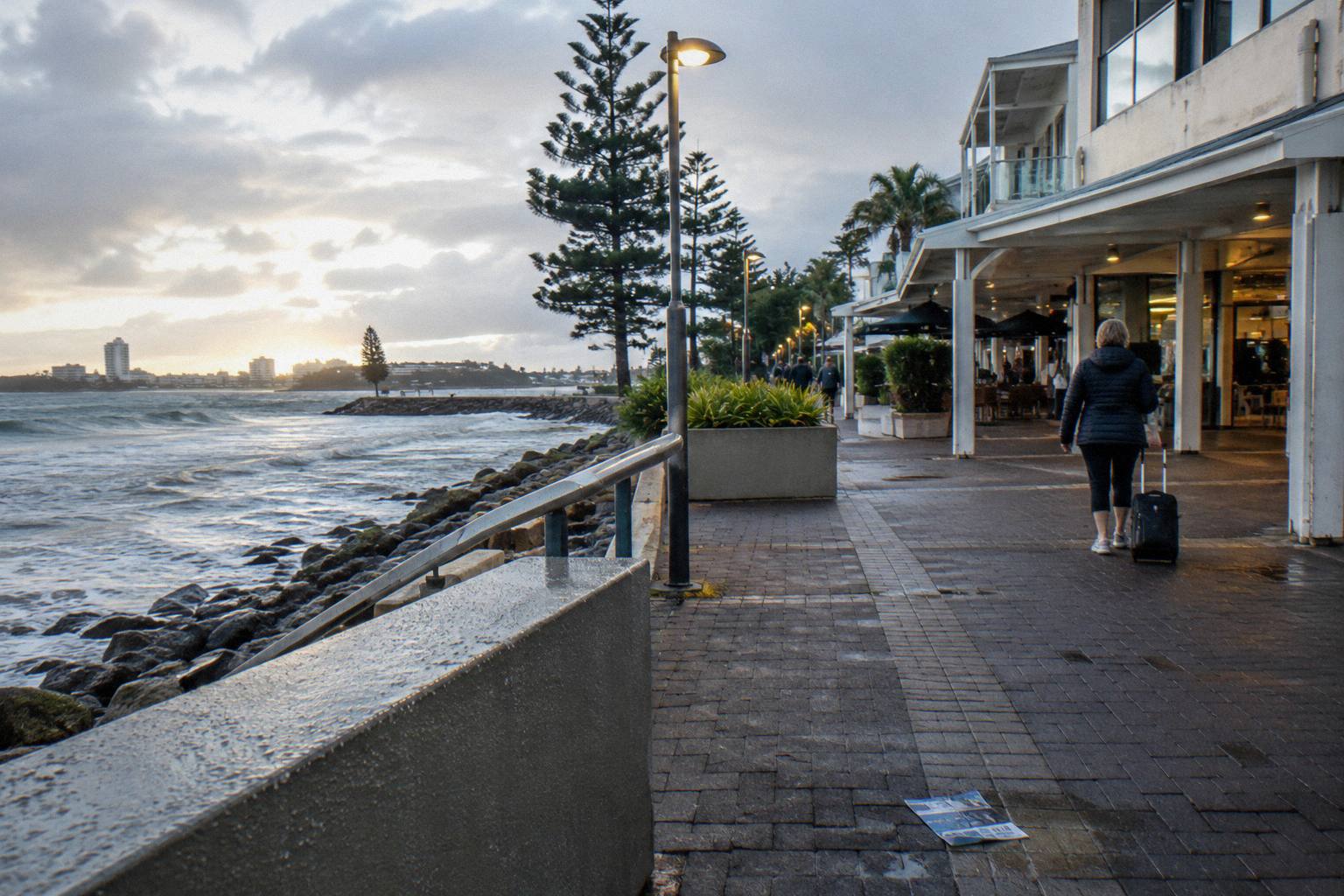
The first mistake is the oldest one: treating a whale as part of the ticket. No headland source and no operator here promises a sighting, and Adventure Rafting states outright on its own page that it cannot guarantee sightings. The second is assuming every boat works the same way: minimum ages differ by operator, departure points differ by trip, The Wharf Mooloolaba for the Sunreef, Adventure Rafting and Coastal Express trips against 21 Parkyn Parade for Sunshine Coast Afloat, and arrival advice belongs to each operator, Adventure Rafting asks its passengers to arrive 30 minutes before sailing because parking can be difficult in peak times. Time-limited parking at The Wharf means extra time in peak season, whatever trip you take.
The third mistake is seasonal: Point Arkwright's council trail note is specifically about southbound whales in spring, so it belongs to the September side of the season, while the July and August northbound peak named by Visit Sunshine Coast is better served by any of the named lookouts. The fourth is confusion about what a cruise ticket includes: a whale watching cruise is a viewing trip, and the Swim With Humpback Whales product is a separate four-hour trip at from A$269 per person; the two should never be booked as though interchangeable. Anyone unsure how long each option runs can check how long a whale watching cruise from Mooloolaba is before committing a morning.
A last practical note on weather. Neither option runs on forecasts you can read from the beach. Whale One's own page makes the point that offshore conditions can differ from how the beach looks, and Maritime Safety Queensland's bar warning covers the river mouth the Mooloolaba boats cross. The shore watcher's equivalent is simpler: a fine-looking beach does not put a whale within view of a headland either. Both choices reward a loose plan and a second attempt.
Shore or boat, then, is not a verdict but a fit. The headlands named by the official sources are free, real and busiest during July and August; the boats are booked, priced and mobile inside the rules. Many people do both in one season, and the cheapest way to start is a lookout, while the closest way to watch is a cruise.
Common Questions About Whale Watching From Shore On The Sunshine Coast
Can You Go Whale Watching From Shore On The Sunshine Coast Or Do You Need A Cruise?
Yes, you can watch from shore. Visit Sunshine Coast names Point Perry in Coolum, Point Cartwright, Moffat Headland, Dolphin Point Lookout in Noosa and Alexandra Headland, Point Arkwright is noted for southbound whales in spring, and Queensland Parks names Dolphin Point and Hell's Gates in Noosa National Park. A cruise is not required, but it is the only way to sit inside the 300 m caution zone.
Which Lookouts Are The Official Whale Spots On The Sunshine Coast?
The named spots are Point Perry in Coolum, Point Cartwright, Moffat Headland, Dolphin Point Lookout in Noosa and Alexandra Headland from Visit Sunshine Coast, plus Point Arkwright from a council trail page and Dolphin Point and Hell's Gates from Queensland Parks. Each source says whales can be seen or glimpsed there; none promises one.
When Is The Best Time To Watch Whales From The Shore?
Visit Sunshine Coast sets the official season at June to November and says July and August carry the largest northbound numbers. For the southbound leg, a peer-reviewed study measured adult peaks at Peregian Beach in mid-September by 2023 and 2024. Spring lookouts such as Point Arkwright suit the southbound pass.
Do Any Shore Lookouts Or Cruises Promise A Whale Sighting?
No. No shore source promises a whale, and no trip here does either; Adventure Rafting states it cannot guarantee sightings. The tourism wording at Point Cartwright is that it is "often possible" to spot migrating humpbacks.
How Much Does A Whale Cruise Cost Compared With Watching From Shore?
The shore costs nothing. Published cruise prices start at from A$89 per person for the Sunreef 3-Hour Whale Cruise and from A$99 per person for the Oceanrider Small-Group Tour, in Australian dollars, varying by date. Several trips publish no from-price; the booking page shows the price for your date.
Can Kids Watch From Shore More Easily Than From A Boat?
From shore there is no age rule at all. On the water, age rules differ by operator: Adventure Rafting sets a minimum age of 5 on its own trips, and Sunreef states no numeric minimum, with children under 16 required to be accompanied by an adult. Ask the operator for the trip you are considering.