Where Are The Humpbacks In Australia?
Eastern Australian humpbacks move north between May and July and south from July and August; the Peregian southbound peak has shifted to mid-September, and the Queensland Government estimates around 50,000 animals.
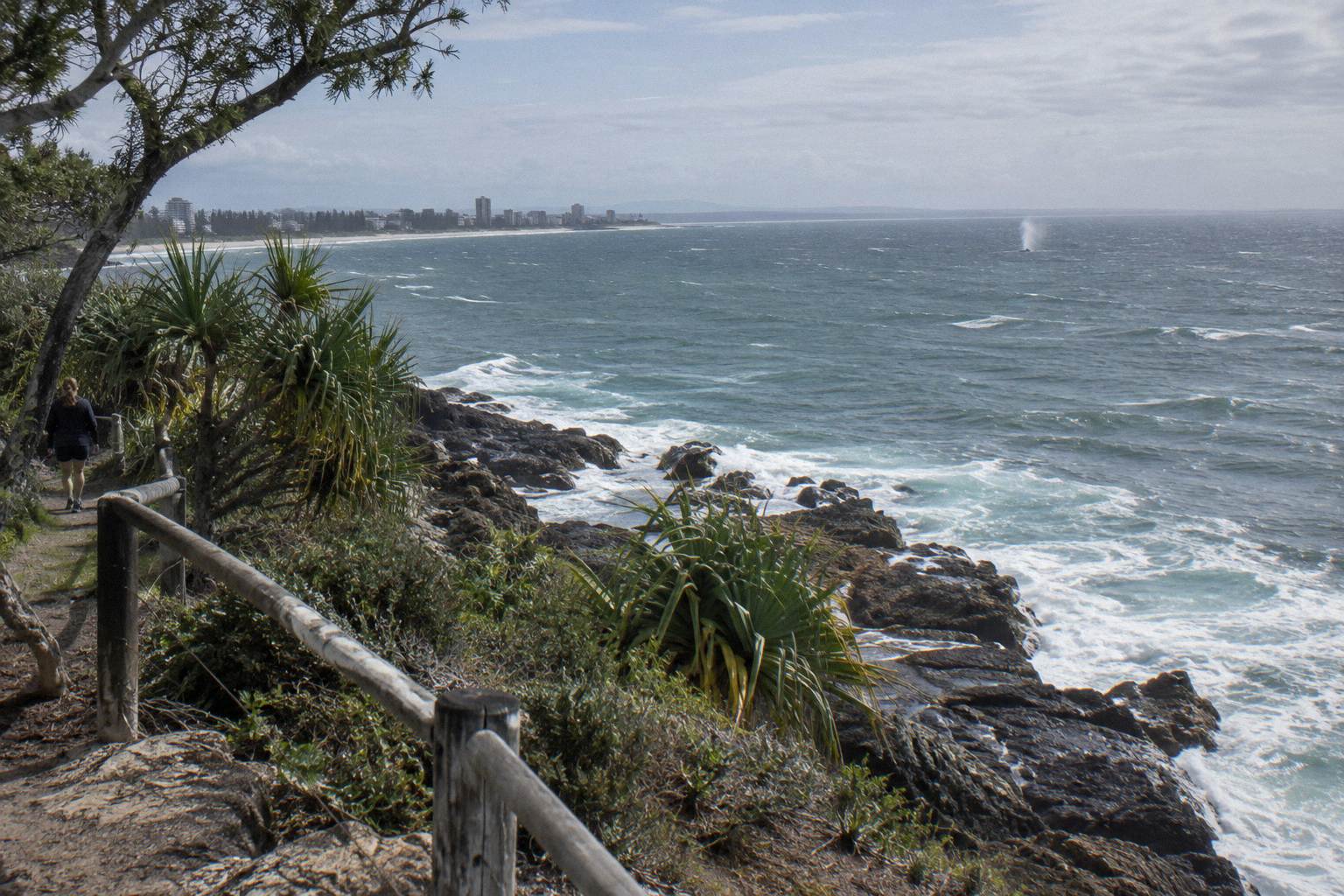
Humpback positions in Australia come down to timing rather than a live feed: eastern Australian humpbacks migrate north along the Queensland coast between May and July, then turn south in July and August, which places the bulk of the population somewhere along that corridor in almost any month from June to October. The Queensland Government, which publishes the migration summary, estimates around 50,000 animals in the eastern Australian population.
No satellite map follows individual humpbacks down the coast in a way a traveller can check, and no operator publishes live positions. What exists instead is a set of measured timing windows, each from a named source, and together they answer the question well enough to plan a trip. The Queensland Government states the broad pattern: a northbound passage between May and July, time spent in tropical breeding grounds, then a southbound turn in July and August. That single sentence covers the whole engine of the season.
The detail comes from three other places. Visit Sunshine Coast frames the tourism season as June to November and points at July and August as the months with the largest northbound numbers passing the Sunshine Coast. Sunreef, the Mooloolaba operator, describes a crossover period in August and September when whales move in both directions. And a peer-reviewed study published in Scientific Reports in 2025 measured the southbound adult peak off Peregian Beach on the Sunshine Coast shifting from early October before 2015 to mid-September by 2023 and 2024, one of the most useful facts a prospective watcher can hold onto.
Each of those sources answers a slightly different version of the question, and reading them together is more reliable than any single one. The sections below set out what each source measured, where, and how to turn the timing into a booking decision, with the trip options that match each window.
How The Migration Timing Is Actually Measured
No one counts whales as they pass in real time; instead, the timing windows come from land-based survey years, operator season statements and government summaries, each with its own vantage point and years behind it. The Point Lookout northbound peak of late June to early July reflects surveys through 2015, the Peregian southbound shift reflects counts to 2023 and 2024, and operator statements reflect what crews recorded on the water in recent seasons.
The Queensland Government page on whale watching gives the plain summary quoted above, and it is the right baseline for any month-by-month reasoning. It is a general statement about the whole Queensland coast, not a count taken at one headland, and it deliberately leaves room for the spread of animals that a 9,000 km round trip migration produces. A population of around 50,000, the same government source estimates, does not move as one group; it strings out over months, which is exactly why a season runs from June into November rather than a fortnight.
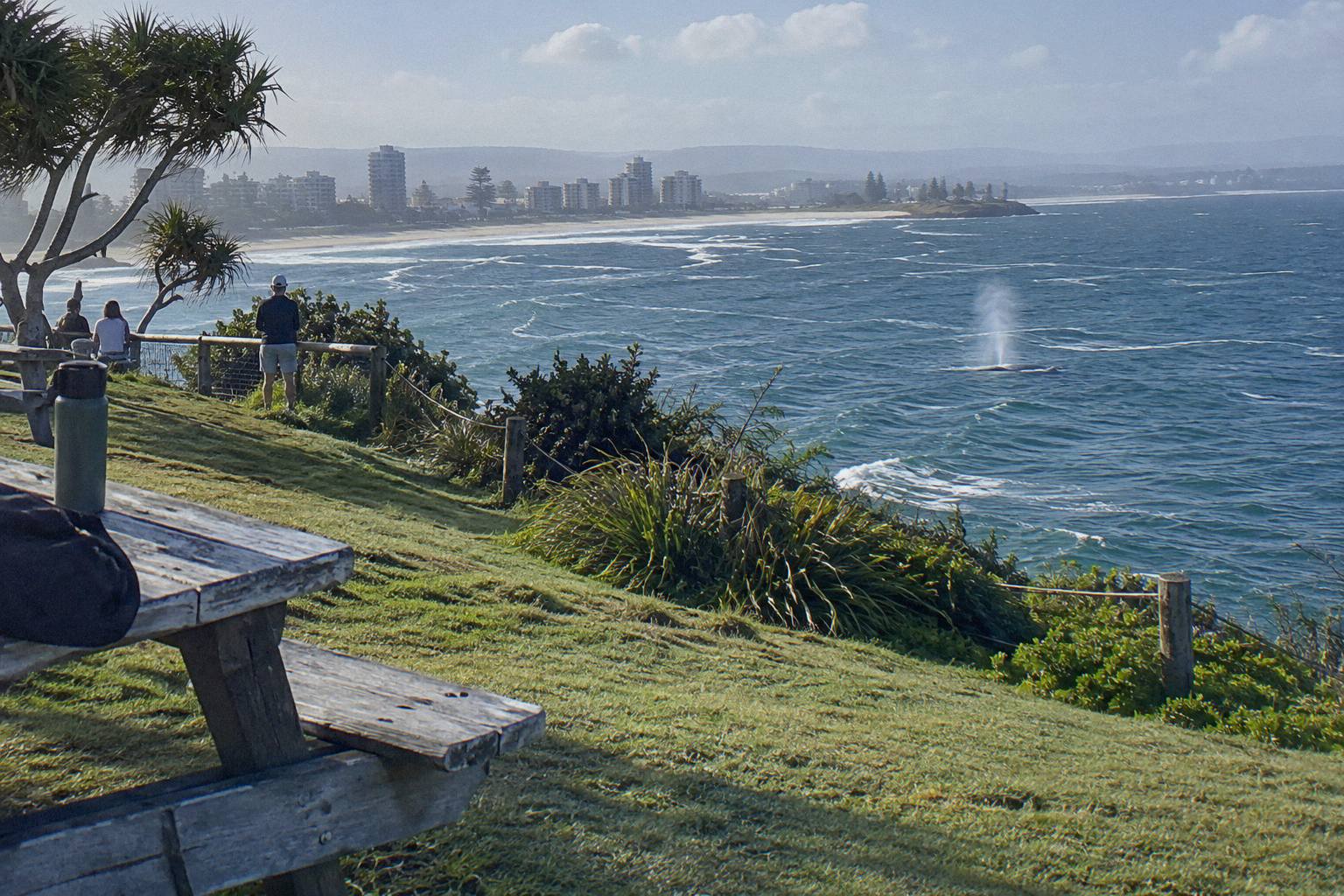
The peer-reviewed numbers are sharper because they were counted. The 2025 Scientific Reports paper tracked the southbound stream past Peregian Beach on the Sunshine Coast and found adult peaks occurring in early October before 2015, moving forward to mid-September by 2023 and 2024. The same paper reports that northbound counts at Point Lookout, which sits south of Mooloolaba and off the Sunshine Coast, consistently peaked in late June to early July through 2015. Those are measured peaks from defined survey sites, and the distinction between them matters when a reader is deciding between a June trip and a September one.
Operator statements sit somewhere between the two. Sunreef describes the season from the wheelhouse: northbound animals through June and July, a crossover in August and September with movement in both directions, and most whales finishing the southbound journey between September and the end of October. Adventure Rafting runs its own season from 1 June to 31 October on its page. These reflect recent on-water seasons rather than a survey series, and they are the statements most closely tied to what a passenger actually encounters.
Northbound Timing: What The Sources Say
The northbound leg is the June-and-July story: the Queensland Government puts the northward migration along the coast between May and July, the Point Lookout surveys measured a consistent northbound peak in late June to early July through 2015, and Visit Sunshine Coast points to July and August as the months when the largest northbound numbers pass the Sunshine Coast. For a traveller, that makes late June through July the measured heart of the northern run.
The Point Lookout figure deserves its own sentence of care. The survey site sits south of Mooloolaba and is not on the Sunshine Coast, so the peak is best described as measured off south-east Queensland rather than off any particular departure point. Still, a northbound peak measured anywhere on that stretch of coast tells a reader when the stream is thickest in the region generally, and late June to early July is the answer the data gives.
Visit Sunshine Coast adds the tourism-side reading: July and August carry the largest northbound numbers past the coast, in the words of its FAQ page. That aligns neatly with the survey peak and with the Queensland Government's May-to-July northbound window, three sources pointing at the same few weeks from three angles. When government summary, measured survey and tourism body agree, the planning conclusion is a firm one: for the northbound stream, book inside late June to July.
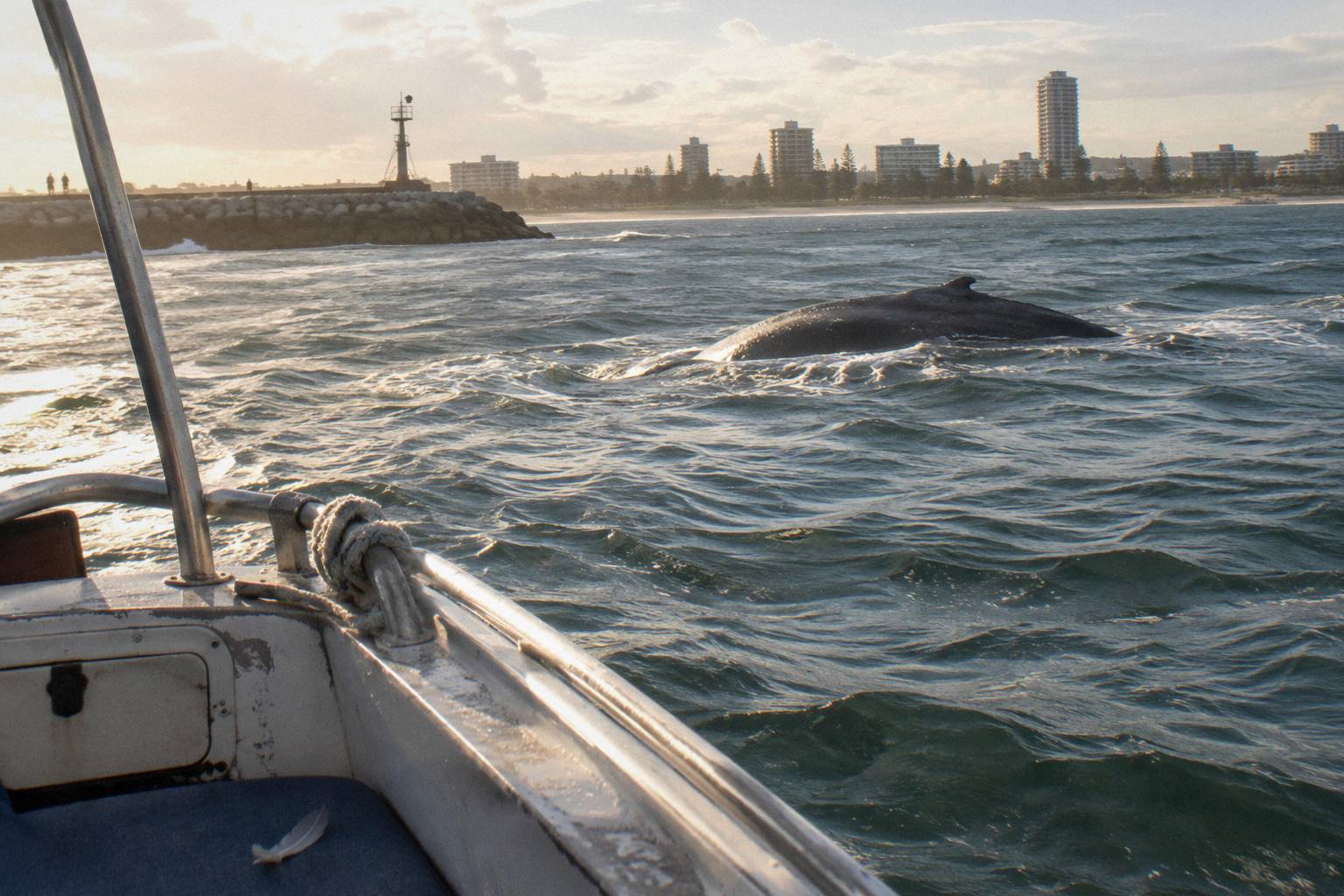
One nuance separates the northbound adults from the southbound ones. The northbound run carries the breeding population heading to tropical waters, while the southbound stream brings cows with newborn calves back down the coast later in the season. The timing tables below put each window next to its source so the comparison stays clean.
| Source | Place measured or described | Direction and window | What it is |
|---|---|---|---|
| Queensland Government | Queensland coast generally | Northward May to July; southward July and August | Migration summary |
| Point Lookout surveys (through 2015) | Off south-east Queensland, south of Mooloolaba | Northbound peak late June to early July | Measured survey peak |
| Visit Sunshine Coast | Sunshine Coast | Largest northbound numbers July and August | Tourism body statement |
| Peregian Beach counts (to 2023 and 2024) | Sunshine Coast | Southbound adult peak mid-September by 2023 and 2024 | Peer-reviewed survey shift |
| Sunreef | Mooloolaba waters | Crossover August to September; southbound finishing September to end of October | Operator season statement |
Southbound Timing And The Crossover Period
Yes, the southbound timing has shifted: Peregian Beach surveys recorded the southbound adult peak moving from early October before 2015 to mid-September by 2023 and 2024, meaning the heaviest southbound traffic off the Sunshine Coast now falls a fortnight or more earlier than before. With Sunreef describing an August-to-September crossover of whales moving both directions, the southbound window runs roughly August into October, and mid-September is the measured adult peak.
That shift is the single most useful piece of information gain on the page, because a lot of older advice still treats early October as the southbound sweet spot. The measured record says the peak moved forward, and a reader booking a September trip off the Sunshine Coast is now aligned with the adult peak rather than ahead of it. The Queensland Government's southbound framing, a turn south in July and August, sits upstream of that peak and describes the start of the return stream rather than its maximum.
The crossover period deserves its own planning logic. In August and September, northbound stragglers and early southbound animals share the coast, in Sunreef's own description of many whales going both north and south. From September to the end of October, most whales are finishing the southbound journey, which is also the window that brings mothers with calves closer to the coast on the way south, a well-documented feature of the late season that the same operator statement reflects in its month-by-month framing.
For a reader weighing September against October, the measured answer is that mid-September carries the adult peak off Peregian, while October thins toward the season's end, with operators running into late October and, in Whale One's case, very early November. Neither month is promised anything; the timing simply tells a reader where the bulk of the population likely sits in its cycle.
Which Trips Run In Which Window
Every trip covered here runs inside the migration window, but the stated edges differ by operator: Adventure Rafting lists a season of 1 June to 31 October, Sunreef describes a season from early June with Whale One tours running until very early November, and Visit Sunshine Coast frames the official Sunshine Coast season as June to November, so June and late October are the edges where checking your operator's booking page for a specific date matters most.
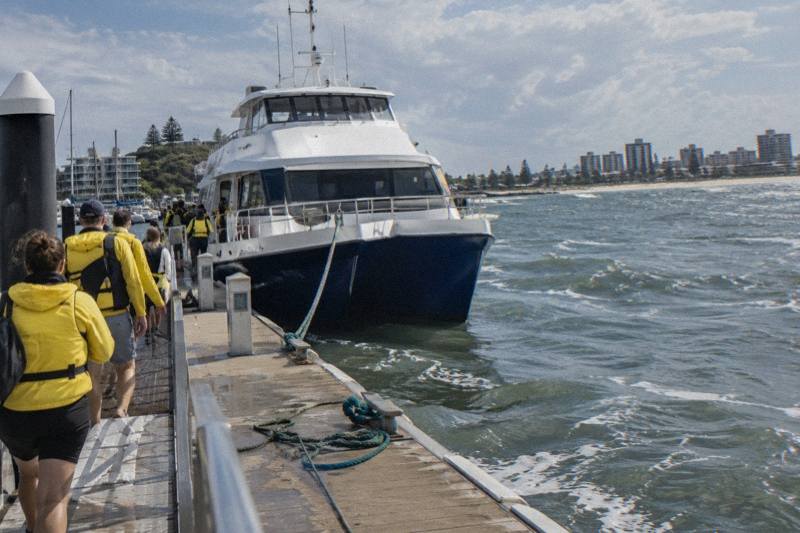
The Mooloolaba departures all leave from a tight cluster: The Wharf Mooloolaba at 123 Parkyn Parade for the Sunreef, Adventure Rafting and Coastal Express trips, and 21 Parkyn Parade for Sunshine Coast Afloat. The Noosa and Buddina options sit to the north, at Noosaville, Tewantin and the Kawana Waters Hotel deck respectively, and none of them is a Mooloolaba trip. Position on the coast matters less than timing, since the migration stream passes the whole region within days of itself.
Matching a trip to a window is mostly a matter of format and budget rather than direction, since the same boats run through the whole season. The Noosa Thriller Whale Watching trip, a 2-hour departure from 194 Gympie Terrace in Noosaville, runs from A$105 per person and carries a 4.8 rating from 300+ reviews, with free cancellation up to 24 hours on the booking page; a reader deciding when to book can hold a July or September date with that flexibility in mind. The same logic applies to the Sunreef 3-Hour Whale Cruise, from A$89 per person, rated 4.3 from 200+ reviews, and to the Fast Boat, Free Cancellation option at from A$115 per person, rated 4.6 from 100+ reviews. Amounts are Australian dollars.
A reader planning around the southbound peak has a second layer to consider: the longer 3-hour formats spend more time on the water, which during a mid-September adult peak means more of the measured window covered per trip. That is arithmetic on the published durations, not a promise of sightings, which no operator here makes in general terms. Whale One's own policy is a free return trip if no whales are seen on its tours, one of the few guarantee-type statements on the coast and one tied strictly to that operator.
| Trip | Departure point | Duration | From-price per person | Season statement |
|---|---|---|---|---|
| Sunreef 3-Hour Whale Cruise | The Wharf Mooloolaba, 123 Parkyn Parade | 3 hours | from A$89 | Early June to very early November, operator statement |
| Fast Boat, Free Cancellation | The Wharf Mooloolaba | 2 hours | from A$115 | 1 June to 31 October, operator statement |
| Hydrophone Whale Adventure | The Wharf Mooloolaba, marina-side jetty | 2 hours | from A$115 | 1 June to 31 October, operator statement |
| Sunshine Coast Afloat, 3 Hours | 21 Parkyn Parade, Mooloolaba | 3 hours | from A$105 | ask the operator |
| Noosa Thriller Whale Watching | 194 Gympie Terrace, Noosaville | 2 hours | from A$105 | ask the operator |
| Oceanrider Small-Group Tour | Noosa Marina, Tewantin | 2 hours | from A$99 | ask the operator |
The Population Behind The Numbers
The eastern Australian humpback population sits at around 50,000 animals per the Queensland Government estimate, rebuilt from approximately 12,000 in 2008, a growth the same source describes as increasing by around 10 percent each year at that time. The last peer-reviewed survey counted 24,545 whales in 2015, with long-term growth of about 10.9 percent a year through 2015, so the bigger current figure is a government estimate rather than a survey result.
That distinction is more than pedantry when a reader is weighing the odds of an encounter. A population of that size spread over a five-month migration produces a steady stream rather than a parade, and the measured peaks are the weeks when the stream runs thickest off a given stretch of coast. The recovery itself is the deeper story: a population deleted from the national Vulnerable list effective 26 February 2022, still listed as a migratory species and cetacean, is the outcome of decades of protection after whaling cut the same population to a remnant.
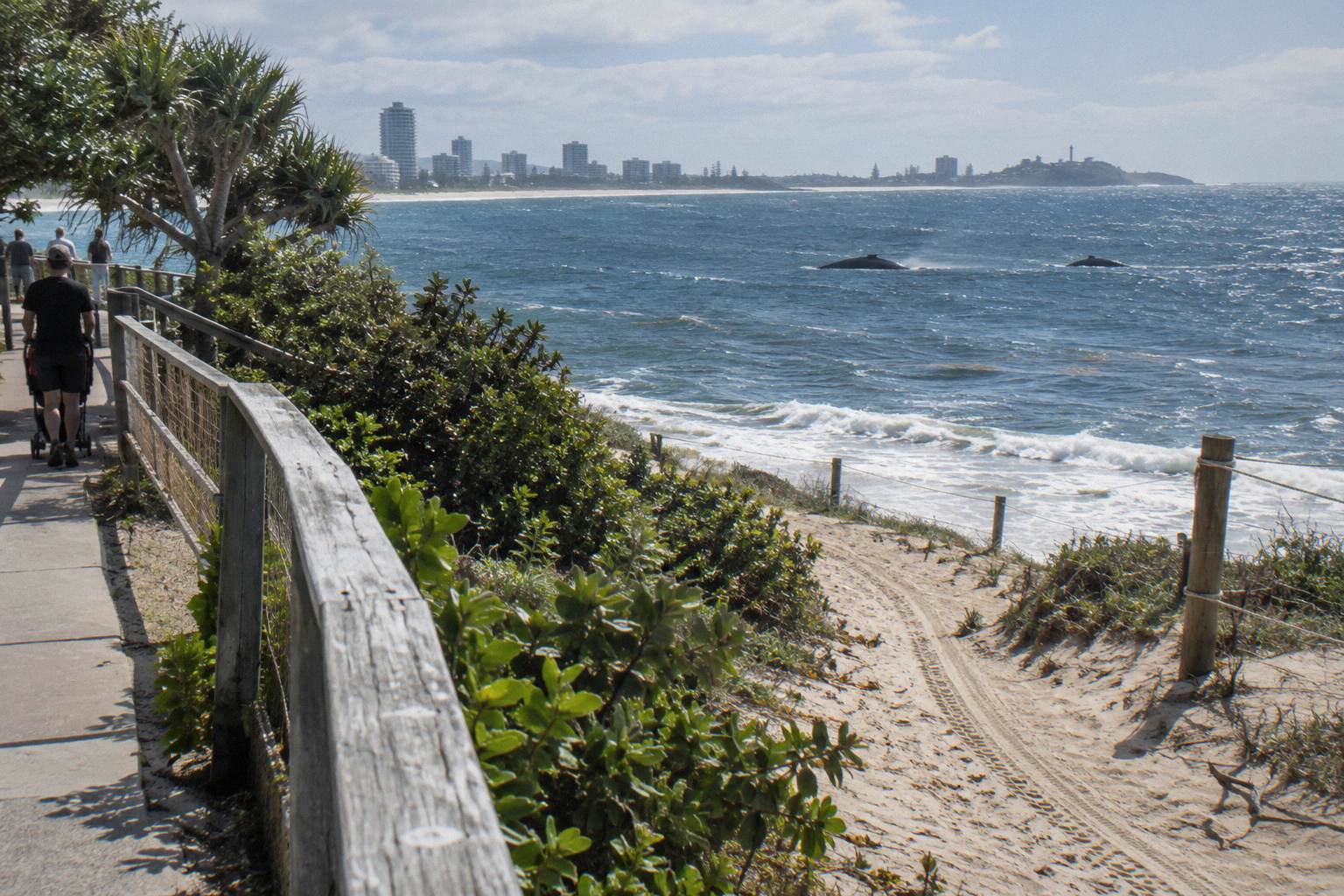
The individual animals behind the number are worth a sentence of scale. The Queensland Government's whales page describes adults usually up to 16 m and 30 to 45 tonnes, a round trip migration of about 9,000 km, typical dives of 10 to 15 minutes and calves born at 4 to 5 m after an 11-to-12-month gestation. White whales such as the well-known Migaloo carry special approach distances of 500 m for vessels, but sightings are rare and not guaranteed each season, the same source notes.
For a reader asking the page's question with a date in mind, the population figure answers the underlying worry: there are enough animals that the timing windows above, not luck, do most of the work. The month-by-month pattern is laid out in more detail in the Sunshine Coast whale season month-by-month guide, and the wider movement story sits in the humpback migration guide for the Sunshine Coast.
Common Mistakes When Reading Migration Timing
The most common mistakes are treating one source's window as a promise, mixing up the northbound and southbound peaks, and assuming the southbound peak still sits in early October because older advice says so. A reader who checks which source measured which window, and books a date inside the measured peak for the direction they want, avoids all three. The season statement on the booking page for the chosen date is the final word on whether a trip runs.
No departure time can guarantee a sighting. No source here promises whales, and Adventure Rafting says plainly on its own page that it cannot guarantee sightings while noting missed sightings are rare. Timing shifts the odds in the sense that more animals are passing in the peak weeks, but the whales, the weather and the sea make the final call on any given day.
The second is date confusion between the two peaks. The late June to early July peak is northbound and measured at Point Lookout off south-east Queensland; the mid-September peak is southbound and measured at Peregian Beach on the Sunshine Coast. A reader who books late June expecting the calf-carrying southern stream, or mid-September expecting the thick northbound run, has the direction backwards.
The third is trusting a single season end date. Adventure Rafting's own page gives 1 June to 31 October while its booking page has shown a shorter end, and Visit Sunshine Coast gives June to November in one place and the end of October in another. The disagreement is real and small; the fix is checking the departure for your date during booking rather than assuming either edge. More on that decision sits in whether whale watching cruises run every day in season.
A fourth, smaller trap is expecting a live position answer at all. The question of where the humpbacks are has a timing answer, not a map answer, and the timing answer is good enough to book against. Readers who want the water-side experience can start from Mooloolaba Whale Watching and its trip pages for the formats that match their window.
Common Questions About Humpback Timing In Australia
Where Are The Humpbacks In Australia?
No live map exists, but the timing answers the question: humpbacks move north along the Queensland coast between May and July and turn south from July and August, so in June and July the bulk of the population is on the northern leg, in August and September it is crossing in both directions, and from mid-September the southern stream is near its measured adult peak off the Sunshine Coast.
When Is The Northbound Peak?
Surveys at Point Lookout, off south-east Queensland and south of Mooloolaba, measured a consistent northbound peak in late June to early July through 2015, and Visit Sunshine Coast names July and August as the months with the largest northbound numbers passing the coast.
When Is The Southbound Peak Off The Sunshine Coast?
The peer-reviewed Peregian Beach counts found the southbound adult peak moving from early October before 2015 to mid-September by 2023 and 2024, so mid-September is the measured peak in the recent record.
How Many Humpbacks Are In The Eastern Australian Population?
Around 50,000 per the Queensland Government's current estimate, up from approximately 12,000 in 2008. The last peer-reviewed survey counted 24,545 whales in 2015, with long-term growth of about 10.9 percent a year through 2015.
Do Any Operators Guarantee A Sighting?
No trip promises a whale as a general rule, and Adventure Rafting says on its own page that it cannot guarantee sightings.