Humpback Whale Migration Past The Sunshine Coast: Why The Season Works
The humpback whale migration along Queensland brings the whales past the Sunshine Coast twice each year, north to the breeding grounds and back south with calves. The timing of each leg, and why the published season dates differ, decides which month to book.
Short answer
Humpbacks migrate north along the Queensland coast between May and July and turn south from July and August, per the Queensland Government. Visit Sunshine Coast puts the largest northbound numbers in July and August, and a peer-reviewed study found the southbound adult peak at Peregian has moved to mid-September by 2023 and 2024.
What Is The Humpback Whale Migration Past Queensland?
The eastern Australian humpback population travels a round trip of about 9,000 km each year, passing the Queensland coast on the way north to tropical breeding grounds and again on the way south, per the Queensland Government. Adults are usually up to 16 m and 30 to 45 t, calves are 4 to 5 m at birth after a gestation of 11 to 12 months, and the current population estimate is around 50,000, per the Queensland Government. The migration is the whole reason a whale watching industry exists on the Sunshine Coast: without the twice-yearly pass of the whole population, there would be no season to book into. To pin down where the pod is at any given month, the month-by-month guide to humpback locations around Australia maps the northern and southern legs of the journey.
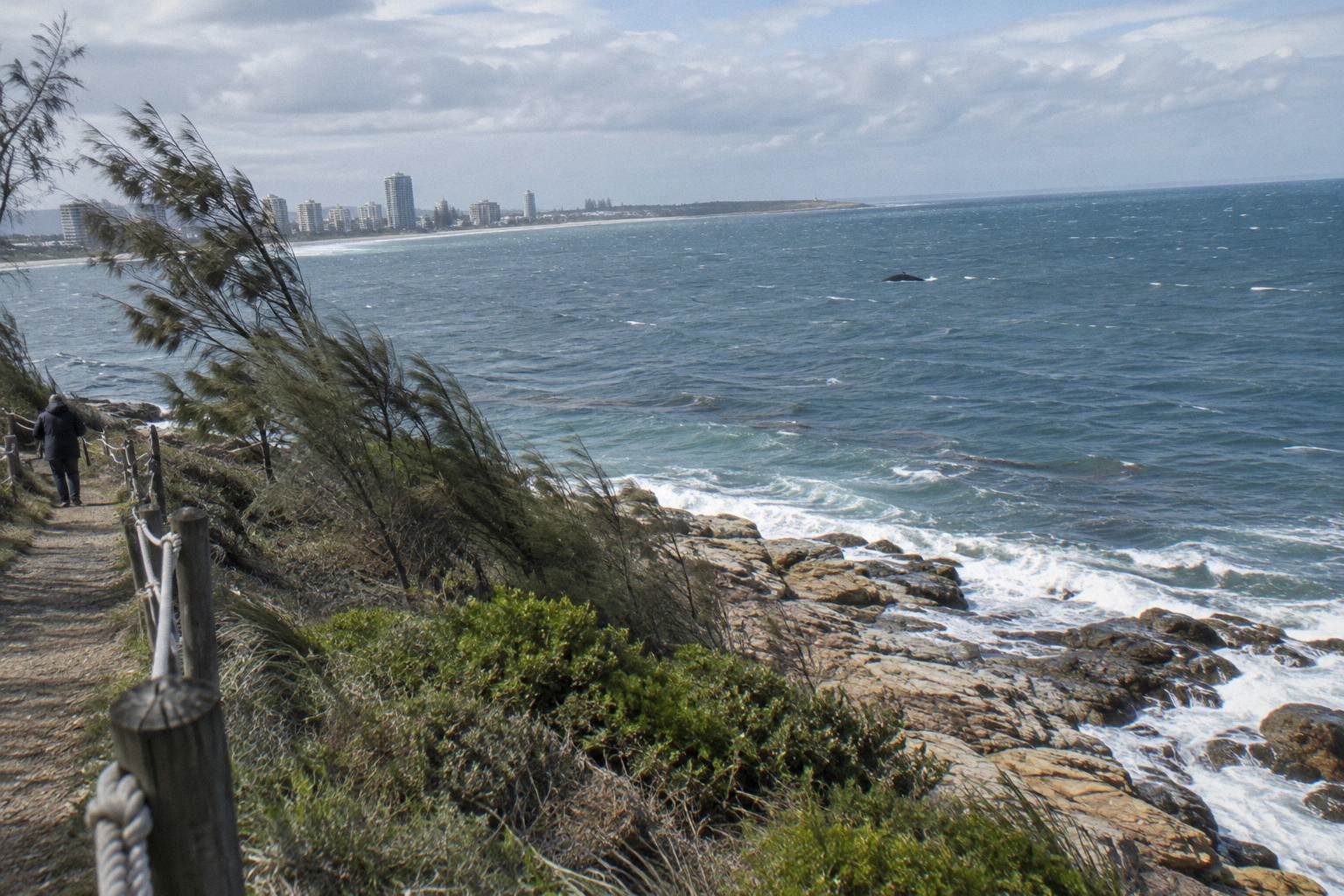
The Queensland Government describes the pattern plainly: humpback whales generally migrate northwards along the Queensland coast between May and July, and after spending time in tropical breeding grounds they turn south in July and August. That single sentence contains both halves of the season, the northbound leg and the southbound return, and both pass close enough to the coast to be watched from boats and headlands. The Queensland whale watching page adds one detail that matters for planning: calm conditions are most likely in the morning, before any wind picks up.
The scale of the animals explains why the migration is such a draw. A typical dive runs 10 to 15 minutes and can stretch to about 30, so a whale that slips under the surface may reappear some distance away, and the boat rules covered later in the article keep every vessel at set distances regardless. The round trip of about 9,000 km, also from the Queensland Government's whales page, means each adult swims from Antarctic feeding waters to the tropics and back without feeding for most of the journey.
Understanding the two directions of travel also explains the shape of the local season, roughly June to October into early November. The early months carry northbound adults, the middle carries a mix in both directions, and the later months carry southbound adults and mothers with calves. Sunreef describes the same pattern from the boat's point of view: June through July is usually when the whales are heading north, August through September has many whales going both north and south in what the operator calls the crossover period, and from September to the end of October most whales are finishing their journey south.
For readers deciding how to watch the migration rather than when, the boat choice matters as much as the month. The comparison of whale watching tours across the Sunshine Coast lays out the trip formats side by side, and the month-by-month detail continues below.
When Do Humpbacks Pass The Sunshine Coast?
The published dates differ by source, but the practical window is roughly June to October into early November. Visit Sunshine Coast states the official season runs June to November and that July and August carry the largest northbound numbers; a peer-reviewed study found the southbound adult peak at Peregian Beach, on the Sunshine Coast, has moved forward to mid-September by 2023 and 2024. No single date governs the whole coast, and the differences between sources are real rather than sloppiness, which is worth understanding before booking a month.
The tourism body and the operators frame the season for visitors. Visit Sunshine Coast says the official whale season is from June to November and that the best time to spot whales on the Sunshine Coast is July and August, because that is when the largest numbers are passing by as they head north. Sunreef, whose cruise is the featured trip for this topic, says its season runs from early June and tours with Whale One run until very early November.
The peer-reviewed science adds precision that the tourism lines cannot carry. A study published in Scientific Reports tracked land-based counts and found that southbound adult peaks at Peregian Beach occurred in early October before 2015, moving forward to mid-September by 2023 and 2024. The same paper found the northbound peak measured at Point Lookout, off south-east Queensland south of Mooloolaba, consistently peaked in late June to early July through 2015. The Scientific Reports paper is the source for both of those statements.
Putting the sources side by side shows where they agree and where they legitimately differ:
| Source | Place the statement covers | Timing stated |
|---|---|---|
| Queensland Government | Queensland coast generally | Northward May to July; south from July and August |
| Visit Sunshine Coast | Sunshine Coast | Official season June to November; largest northbound numbers July and August |
| Sunreef (operator statement) | Its Mooloolaba trips | Early June to very early November with Whale One; crossover period August through September |
| Scientific Reports study | Peregian Beach (Sunshine Coast) | Southbound adult peak moved to mid-September by 2023 and 2024 |
| Scientific Reports study | Point Lookout (off south-east Queensland) | Northbound peak late June to early July through 2015 |
| Adventure Rafting (operator statement) | Its Mooloolaba trips | 1 June to 31 October on its page |
The practical read is that June and July favour the northbound stream, August and September mix both directions, and late September into October leans southbound, including mothers with calves travelling more slowly. Any month inside the window gives a real chance of whales; no month or trip promises one, and Adventure Rafting says outright on its own page that it cannot guarantee sightings.
For travellers weighing a trip in either half of the season, the choice between a whale cruise or a swim with whales also depends on the month, since Sunreef states its swim season runs July to mid October.
Why The Season Dates Differ Between Sources
The dates differ because each source measures a different thing: a government page describes the whole Queensland coast and the full migration, a tourism body frames a visitor season, an operator states its own sailing dates, and the peer-reviewed study counts whales passing one beach on measured days. None of them is wrong; they answer different questions, and a reader who expects one tidy date range will find the disagreement confusing until the basis of each claim is clear.
The Queensland Government statement covers the species' movement along the entire coast, north and south, so its May-to-July northbound window necessarily starts earlier than any local boat season. The tourism body's June-to-November season is a visitor-facing window, wide enough to catch the stragglers at both ends. The operators state when their boats actually sail, and those two things are not identical: Adventure Rafting's page says 1 June to 31 October, while Sunreef says tours with Whale One run until very early November, a small but real difference at the tail of the season.
The scientific figures are the sharpest but the narrowest. A peak measured at Peregian Beach describes southbound adults passing that one stretch of coast, not the whole population, and the Point Lookout northbound peak was measured off south-east Queensland, south of Mooloolaba, not off Mooloolaba itself. This is why no peak month is claimed for Mooloolaba here: the measurements were not taken there, and applying them to a different stretch of coast would overstate what the data says.
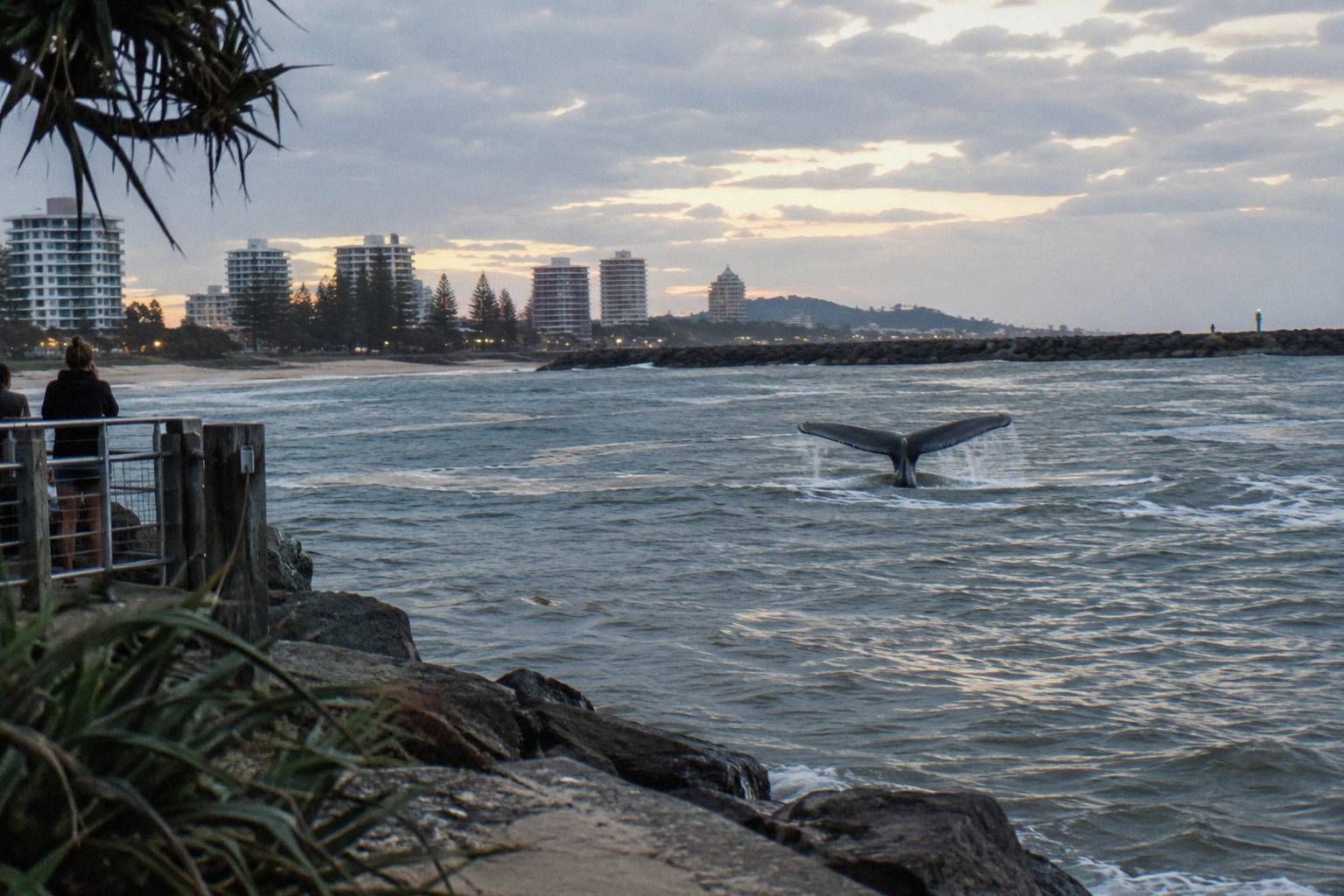
The shift in the southbound peak is the most interesting finding for planning. The paper's verbatim finding is that adult peaks occurred in early October before 2015, moving forward to mid-September by 2023 and 2024. In practical terms, the southbound stream now tends to thicken earlier in September than it once did, which supports September as a strong month on the water rather than a fading one.
Travellers deciding between months can use the month-by-month season breakdown for the finer grain: pick a month inside the window the operators actually sail, and expect the mix of directions to shift as the season progresses.
How Many Humpbacks Make The Journey?
The current estimate is around 50,000 eastern Australian humpbacks, per the Queensland Government, up from approximately 12,000 in 2008, when the same source described the population as increasing by around 10 percent each year. The last peer-reviewed survey counted 24,545 whales in 2015, with long-term growth of about 10.9 percent a year through 2015. The population has recovered strongly since commercial whaling ended, and the recovery is the reason the coast now sees a substantial stream of whales in both directions each year.
The two kinds of numbers should not be blended. The 50,000 figure is a government estimate of the current population, not a peer-reviewed count, and it is stated here only as per the Queensland Government. The peer-reviewed number is the 2015 survey figure of 24,545 whales, reported with a 95 percent confidence interval of 21,631 to 27,851 in the Commonwealth listing advice, alongside the growth rate of about 10.9 percent a year through 2015 from the same body of work. Larger preliminary reports of recent numbers exist but are not peer-reviewed, so they are not treated as established here. Other pages covering the same trip are gathered on Mooloolaba Whale Watching.
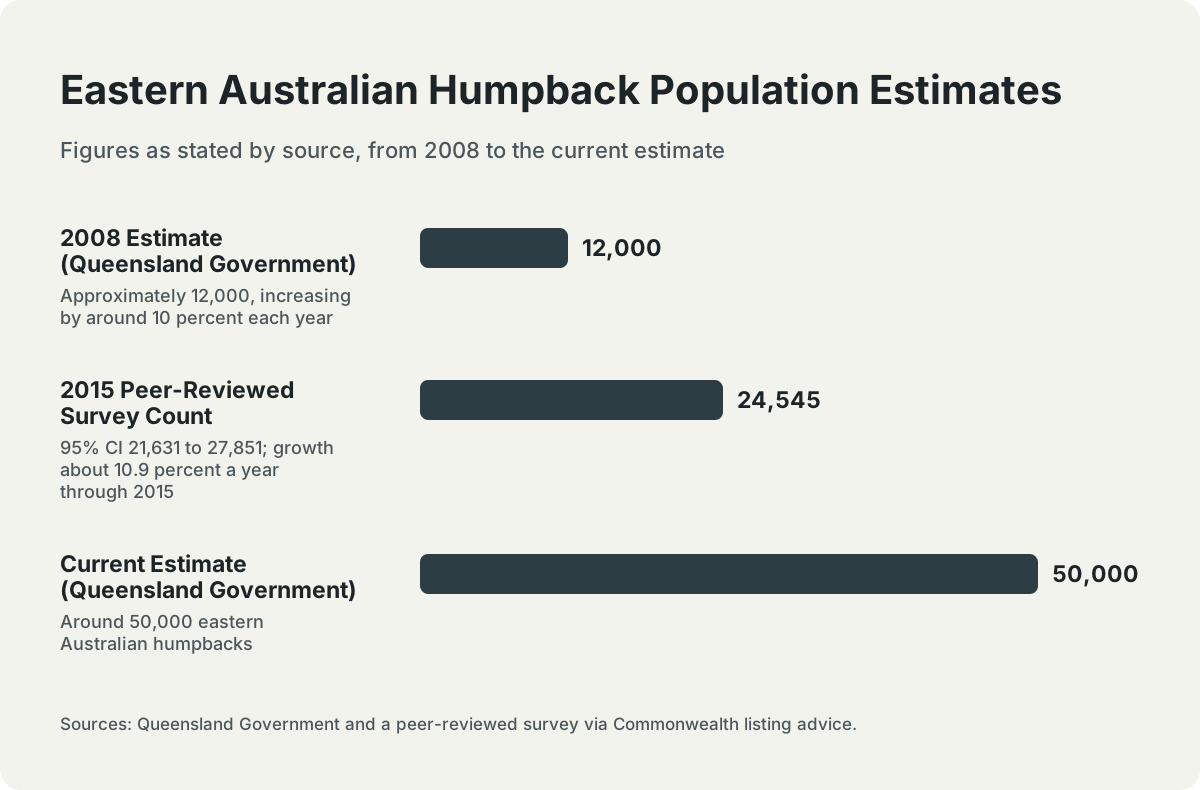
The conservation status reflects that recovery. The Commonwealth listing advice records that the Minister deleted the humpback from the Vulnerable category effective from 26 February 2022; the species remains a listed migratory species and a cetacean, so protections around approach distances still apply in full. The listing advice document is the source for both the 2015 count and the status change.
| Source | Year of figure | Number stated |
|---|---|---|
| Queensland Government | 2008 | Approximately 12,000, increasing by around 10 percent each year at that time |
| Peer-reviewed survey (via Commonwealth listing advice) | 2015 | 24,545 whales (95% CI 21,631 to 27,851); growth about 10.9 percent a year through 2015 |
| Queensland Government | Current estimate | Around 50,000 eastern Australian humpbacks |
For the migration itself, the numbers translate into steady traffic past the coast rather than a single parade. A population measured in the tens of thousands, passing over several months in both directions, is what makes a daily whale watching industry viable from Mooloolaba through to the end of the sailing season.
How Close Can Boats Go During The Migration?
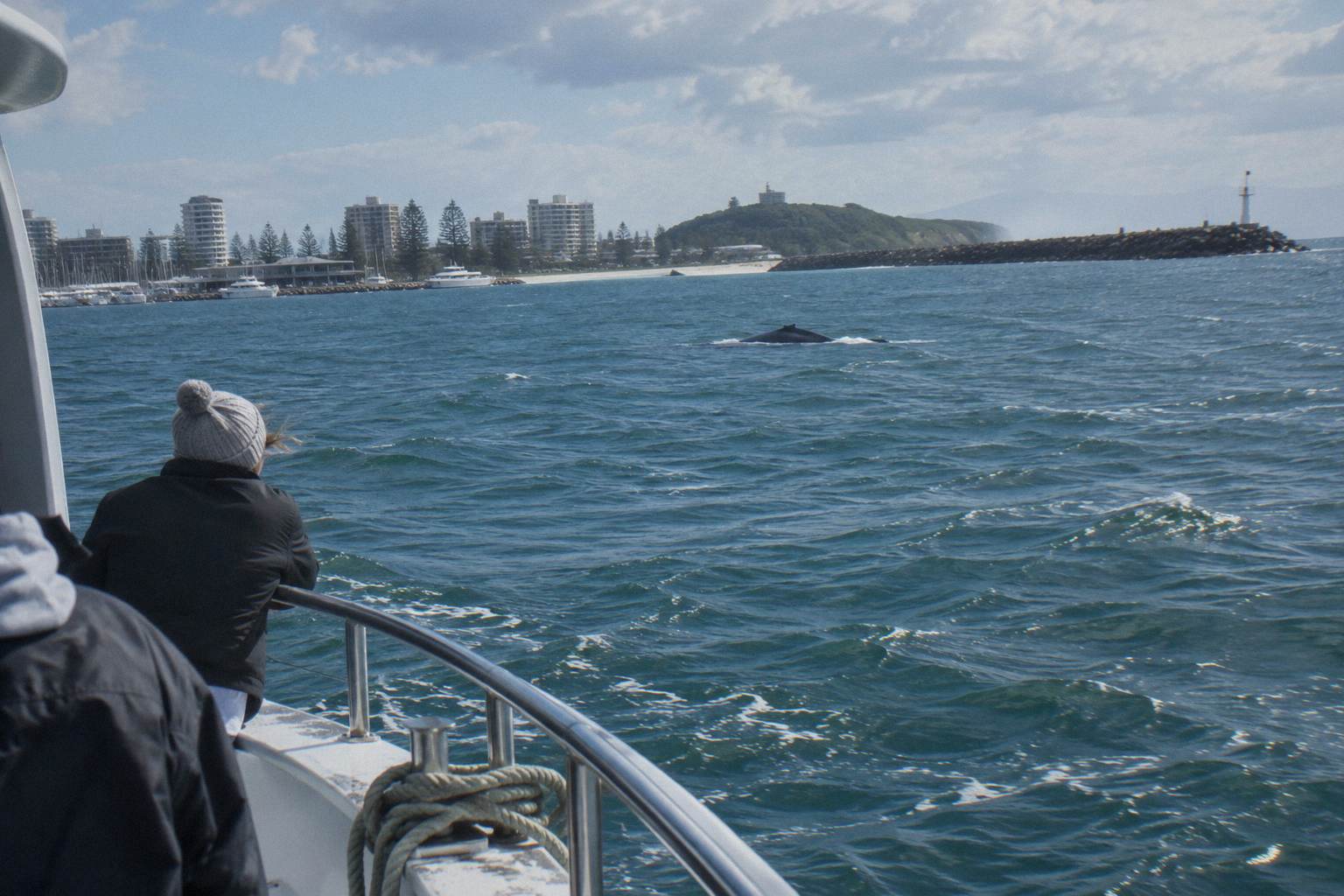
Under Queensland rules a boat must stay outside a 100 m no approach zone around a whale, a zone that extends to 300 m in front of and behind the animal, and inside the 300 m caution zone the boat is limited to 6 knots with no wake. If a whale approaches the boat inside the no approach zone, the engines must be disengaged or the boat withdrawn at under 6 knots. The rules exist precisely because the migration puts thousands of whales and dozens of watching boats on the same stretch of coast, and every licensed trip operates inside them.
The details matter to a reader choosing a trip, because the rules shape what any boat can do regardless of its size or price. Jet skis and hovercraft must not come within 300 m of a whale or dolphin, aircraft must keep 300 m and helicopters 500 m with no hovering, and drones must not fly within 100 m of a whale. White whales, humpbacks over 90 percent white such as Migaloo, carry a 500 m no approach zone, and the Queensland page notes sightings of white whales are rare and not guaranteed each season. A person in or entering the water must not be within 100 m of a whale.
A point that surprises some readers: a permit is not required to run commercial whale watching in Queensland state waters outside marine parks, per the Queensland environment department, and Mooloolaba sits outside both the Moreton Bay and Great Sandy marine parks. Operators must still follow the Queensland and Commonwealth approach rules wherever they run, which is the protection that matters to the whales. The Queensland marine mammal watching rules page states the distances and speed limits.
For swimmers the picture is different again. Sunreef states its Swim With Humpback Whales encounters follow the Australian National Guidelines for Whale and Dolphin Watching, and the 2017 national guidelines say swimmers in authorised programmes must not enter the water closer than 100 m to a whale and must not approach closer than 30 m, and that swimming should not occur with calves or pods containing calves. The rules and safety detail around swim trips has its own full treatment on the swim with whales rules and safety page.
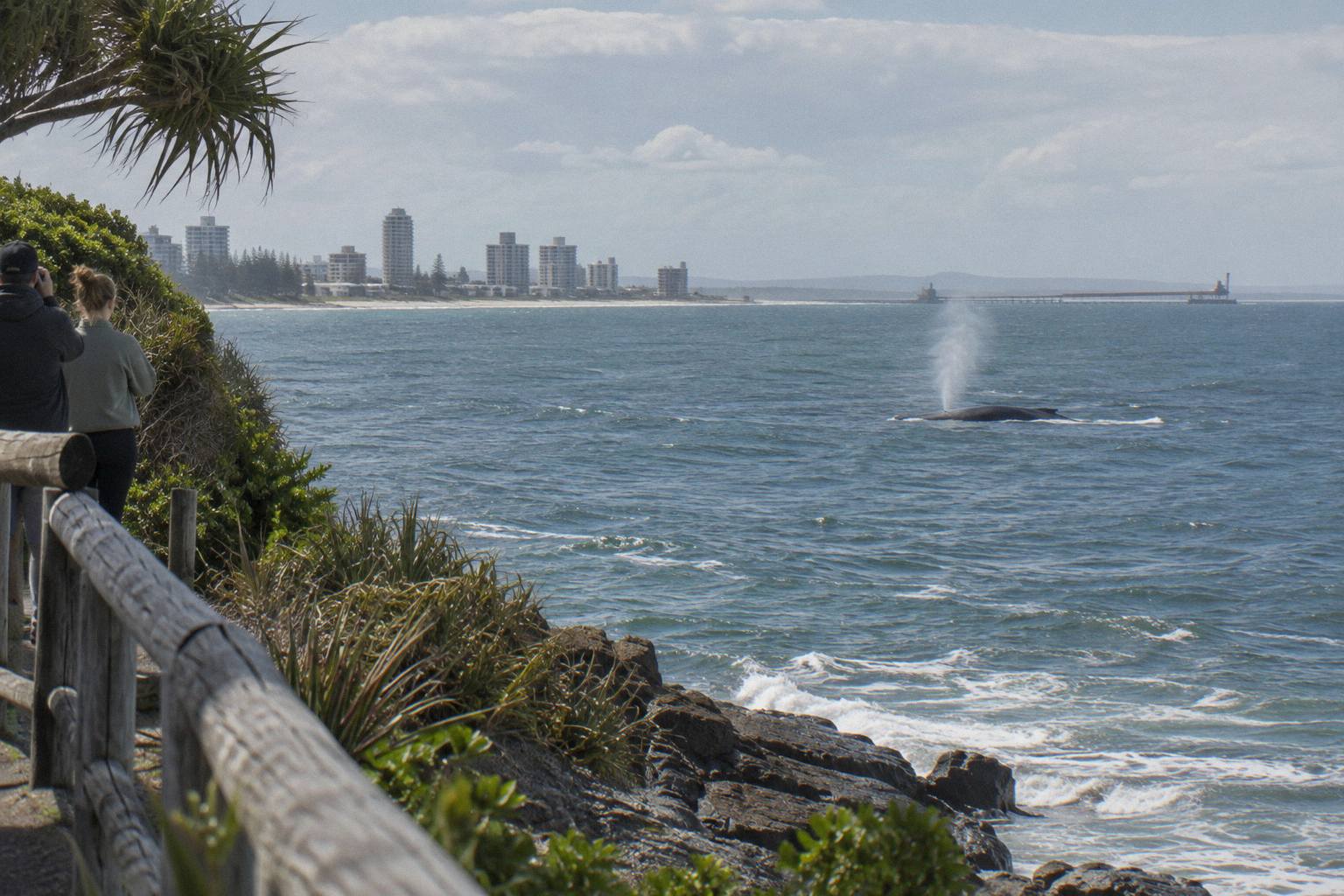
The migration also passes close enough to land for shore watching, which costs nothing and uses no boat at all. Visit Sunshine Coast names Point Cartwright, where it says it is often possible to spot migratory humpback whales, among its favourite local spots, and the question of whether you can whale watch from shore on the Sunshine Coast is covered in its own piece.
Which Trips Fit Each Part Of The Migration?
The Sunreef 3-Hour Whale Cruise, from A$89 per person and rated 4.3 from 200+ reviews, runs the entire operator season from early June to very early November, so it suits any month. The Adventure Rafting Fast Boat, free cancellation, from A$115 per person and rated 4.6 from 100+ reviews, offers 2-hour trips from June to October, while Swim With Humpback Whales, from A$269 per person, runs only July to mid October. Amounts are Australian dollars, and every trip here carries free cancellation on the booking page. All amounts are per person booking-page from-prices.
Matching the trip to the month is mostly matching the trip to the traveller, because every Mooloolaba boat chases the same stream of whales. The three-hour cruise format suits readers who want the longest window on the water; the two-hour fast boat suits shorter attention spans and tighter schedules; the four-hour swim trip is its own category, restricted to its own July to mid October window and its own in-water rules. The detailed what to expect on a whale watching cruise walkthrough covers the boarding and check-in side.
A small-group option also exists: Sunshine Coast Afloat, 3 Hours, from A$105 per person, rated 4.8 from 136 reviews, departs 21 Parkyn Parade rather than The Wharf, a detail worth checking before travel since it is a different end of the same street. Coastal Express Small Boat, rated 4.1 from 10 reviews, has no from-price published; the booking page shows the price for your date.
Trip length is another planning input, and the question of how long a whale watching cruise from Mooloolaba runs is answered by duration alone: the Mooloolaba trips run 2 to 4 hours depending on the format. On duration grounds alone, the swim trip is the longest at 4 hours, the two cruise formats run 3 hours, and the fast boat runs 2.
The month-by-month fit can be summarised from the operator and source statements:
| Month | Migration stream (per the sources) | Trips sailing |
|---|---|---|
| June | Northbound stream building; Point Lookout northbound peak late June to early July through 2015 | Sunreef cruise and fast boat from early June |
| July and August | Largest northbound numbers, per Visit Sunshine Coast; crossover period begins, per Sunreef | All formats, swim season open July to mid October |
| September | Whales in both directions; southbound adult peak mid-September by 2023 and 2024 at Peregian | All formats |
| October | Mostly southbound, including mothers with calves | Cruises and fast boats; swim season ends mid October |
A reader ready to commit to a date on the featured cruise can go straight to the trip page for the Sunreef 3-Hour Whale Cruise, where the season dates and cancellation terms sit with the booking button, or check availability for a specific date before the peak months fill.
What Trips People Up When Booking Around The Migration
The common mistakes are booking a month outside the operator's actual sailing dates, assuming a sighting is promised because whales are numerous, expecting one age or arrival rule to apply to every boat, and assuming a swim is part of a standard cruise ticket. Each of these catches otherwise careful planners, and each is avoidable with one check on the booking page before paying.
The first mistake is trusting a single season date. As the table of sources shows, the tourism season, the government migration window and each operator's sailing dates are different statements. A reader who books late October expecting the swim trip will find Sunreef's swim season ends in mid October, while the cruises continue. Check the operator's own dates for the specific trip, not the season headline.
The second is treating the population estimate as a promise. Around 50,000 whales, per the Queensland Government, pass the coast over months in both directions, but no trip promises a whale on a given day. Adventure Rafting says it cannot guarantee sightings; on the Whale One cruise side, Whale One's own policy is a free return trip if no whales are seen on its tours, which is that operator's offer, not a general rule.
The third and fourth mistakes mix rules across boats. Minimum ages differ: Adventure Rafting states a minimum age of 5 for its trips, while Sunreef states no numeric minimum, sells tickets in child bands of 4 to 14 years and under 4, and requires children under 16 to be accompanied by an adult. Arrival advice also differs; Adventure Rafting asks its guests to arrive 30 minutes before sailing because parking can be difficult during peak times, and that advice belongs to its trips. A swim is a separate four-hour product with its own rules and its own season, never an add-on to a cruise ticket.
A short checklist before paying covers all of it: confirm the trip sails in your month, confirm the meeting point (The Wharf Mooloolaba, 21 Parkyn Parade, or a Noosa or Buddina berth depending on the trip), confirm the age rules with the operator for your children, and read the cancellation line. Every trip covered here shows free cancellation on the booking page, which removes most of the risk from booking early in the season.
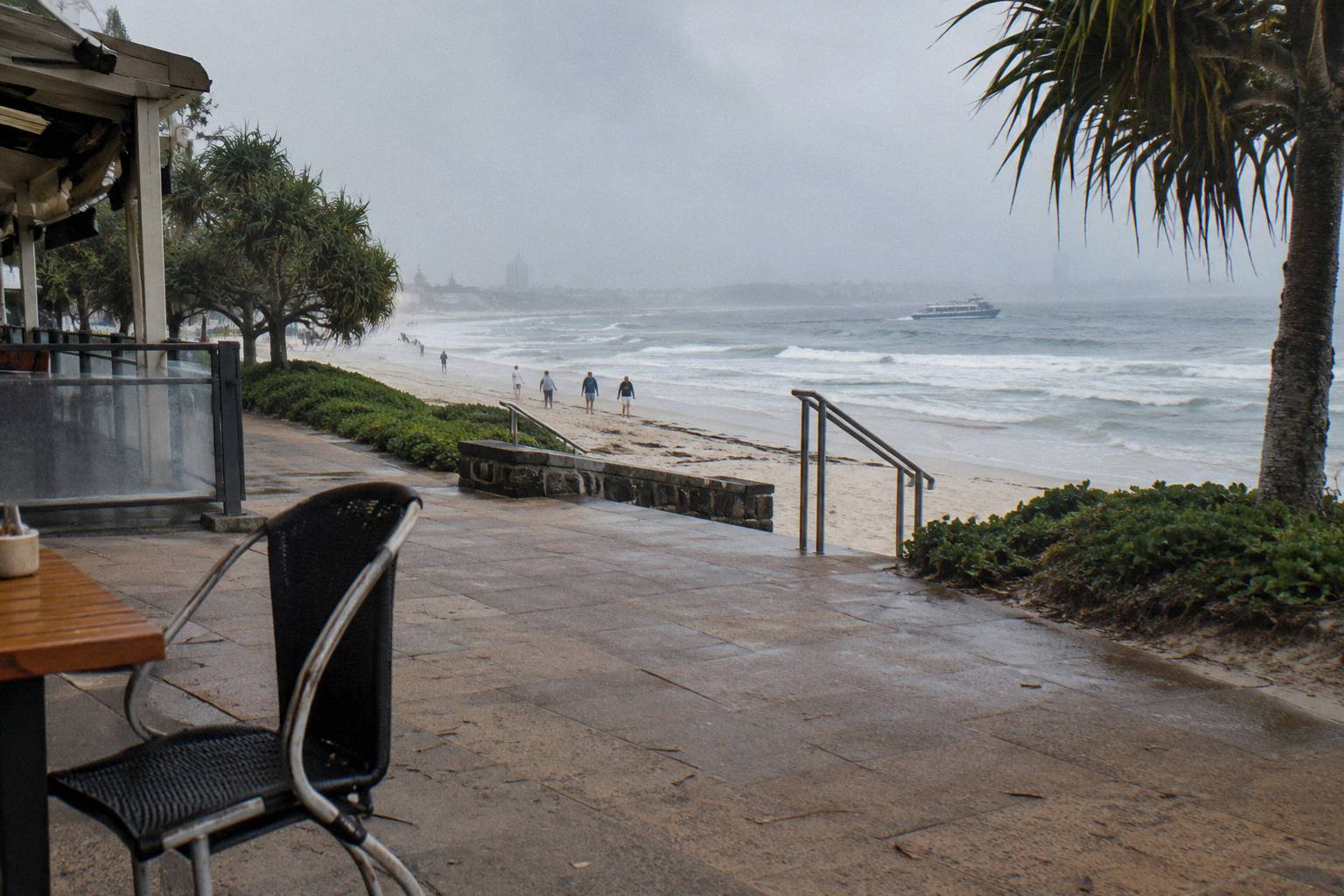
Weather is the remaining variable, and no amount of population growth changes it. Operators cancel for weather, wind and swell: Adventure Rafting reissues or refunds tickets when it cancels, and Whale One rebooks or refunds for its sea-condition cancellations. The offshore picture can differ from the beach, as Sunreef notes, so a fine morning on land does not decide the sailing.
Common Questions About The Humpback Migration Past Queensland
When Do Humpback Whales Migrate Past Queensland?
The Queensland Government says humpbacks generally migrate northwards along the Queensland coast between May and July, then turn south in July and August after time in the tropical breeding grounds.
What Is The Best Month To See Whales On The Sunshine Coast?
Visit Sunshine Coast says July and August carry the largest northbound numbers, and a peer-reviewed study found the southbound adult peak at Peregian has moved to mid-September by 2023 and 2024, so July through September is the strongest stretch on the sources.
How Many Humpbacks Pass The Coast Each Year?
The current estimate is around 50,000 eastern Australian humpbacks, per the Queensland Government, up from approximately 12,000 in 2008. The last peer-reviewed count was 24,545 whales in 2015.
Why Do The Published Season Dates Differ?
Each source measures a different thing: the government describes the whole coast and both migration legs, the tourism body frames a visitor season, each operator states its own sailing dates, and the study counts whales passing one measured beach.
Will You See A Whale On A Trip?
No trip promises a whale on a given day.
Can Boats Approach The Whales Closely?
No. Queensland rules set a 100 m no approach zone around a whale, extending to 300 m in front of and behind the animal, a 6 knot speed limit with no wake inside the 300 m caution zone, and specific distances for jet skis, aircraft and drones.