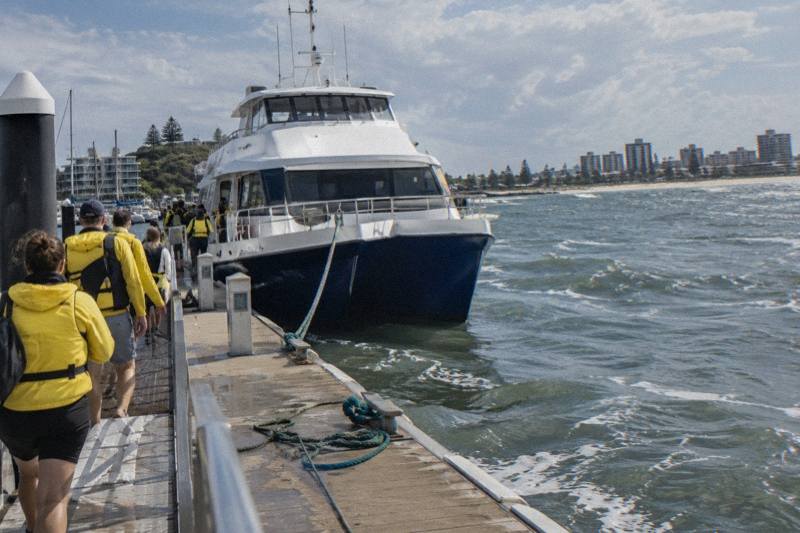
Whale Watching Cruise Or Swim With Whales: Which One Suits You
A whale watching cruise keeps you on the boat for 2 to 3 hours; the swim product puts you in the water on a 4-hour trip in a shorter season, at a higher from-price. The differences go well beyond the ticket.
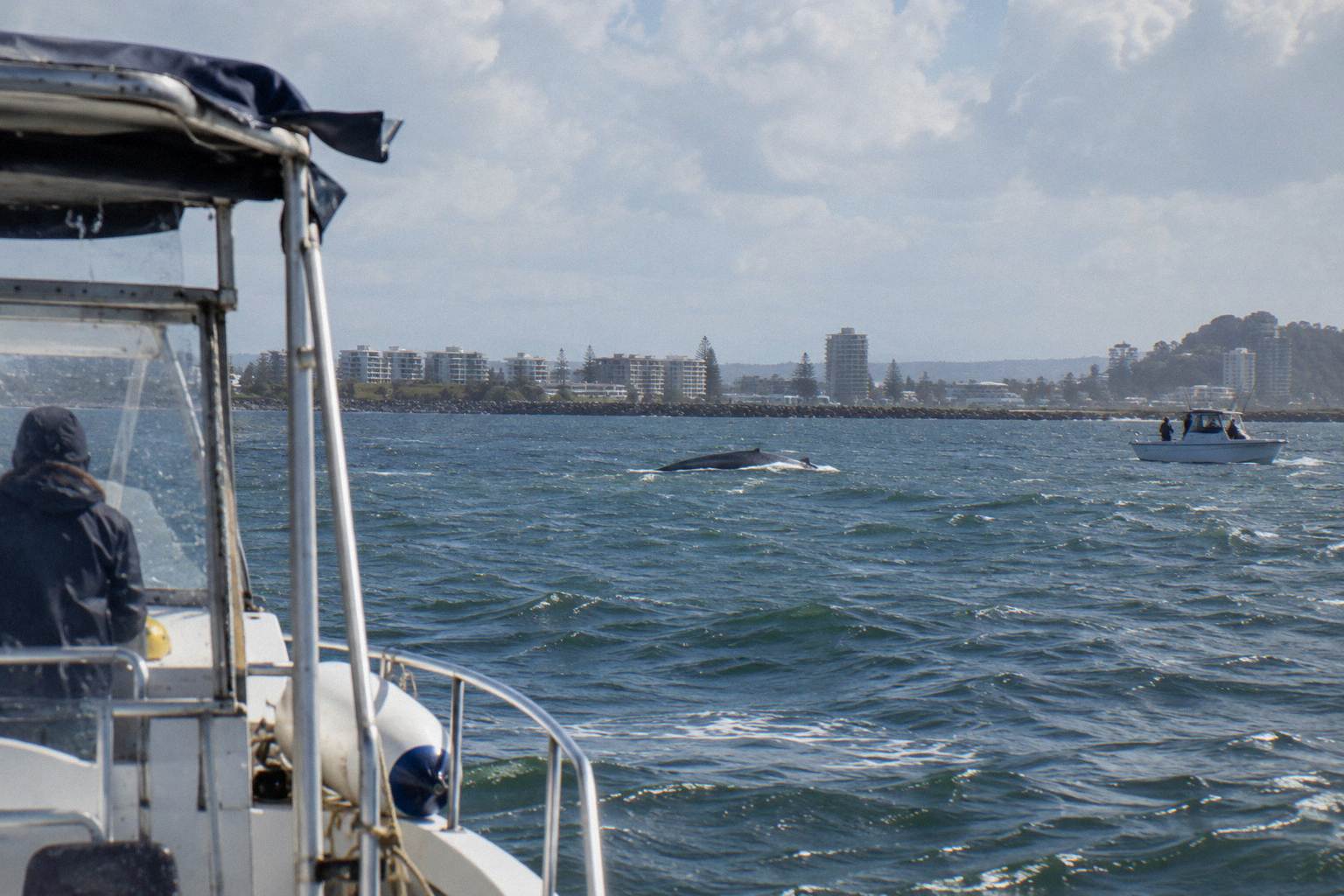
Short answer
A cruise is the shorter, cheaper and more flexible choice: 2 to 3 hours, from A$89 per person, with the widest season. Swim With Humpback Whales is a 4-hour trip from A$269 per person, in a season Sunreef states as July to mid October, with in-water rules and unstated age and fitness requirements you must ask the operator about.
Cruise Or Swim: The Short Answer
A whale watching cruise is a 2 to 3 hour boat trip from A$89 per person that anyone who can board a boat can join, while Swim With Humpback Whales is a 4 hour trip from A$269 per person with a shorter season and firmer stated requirements. For most travellers the cruise is the default choice; the swim is a different product altogether, not simply a bigger version of the same one.
Both products leave from The Wharf Mooloolaba on Parkyn Parade, and both are run by Sunreef with Whale One, whose own pages state the policies referenced here. The cruise option is the Sunreef 3-Hour Whale Cruise, rated 4.3 from 200+ reviews, from A$89 per person. The swim option is Swim With Humpback Whales, 4 hours, from A$269 per person, with no rating or review count to report. Amounts throughout are Australian dollars. If trip length matters to your plans, the guide to whale watching cruise durations from Mooloolaba compares how the different operators stack up.
The gap between them is not just A$180 of from-price. The cruise season and the swim season are different statements from the same operator, the rules that govern the water are different from the rules that govern the boat, and the facts each operator publishes about ages, pregnancy and mobility apply to their own trips only. A reader torn between the two is choosing one, so the rest of the page works through that choice: the side-by-side numbers first, then what the swim actually asks, then who each product suits.
If the swim is the side of the decision pulling at you, swimming with humpback whales on the Sunshine Coast has the fuller treatment of that product alone.
How The Two Products Compare Side By Side
Side by side, the swim is the longer, dearer and more time-boxed product: 4 hours against 2 to 3 hours, from A$269 per person against from A$89 to A$115 for the Mooloolaba cruises, and a season Sunreef states as July to mid October against a whale watching season it states as early June to very early November. Neither product carries a sighting promise, and the swim carries no published review record.
The table below holds only figures the operators publish. Where a number is not published, the cell says so plainly rather than guessing, because a decision like this is made worse, not better, by invented numbers.
| Sunreef 3-Hour Whale Cruise | Fast Boat, Free Cancellation | Swim With Humpback Whales | |
|---|---|---|---|
| Duration | 3 hours | 2 hours | 4 hours |
| From-price | from A$89 per person | from A$115 per person | from A$269 per person |
| Rating | 4.3 from 200+ reviews | 4.6 from 100+ reviews | ask the operator |
| Season statement | early June to very early November | 1 June to 31 October on its own page | July to mid October |
| Meeting point | 11-12/123 Parkyn Parade | The Wharf Mooloolaba | The Wharf Mooloolaba, 123 Parkyn Parade |
| Cancellation | free cancellation | free cancellation | free cancellation |
| You are | on the boat | on the boat | in the water at points the operator allows |
Note the two cruise columns deliberately include a second Mooloolaba operator, because the cruise side of the decision is not one product. Adventure Rafting's Fast Boat, Free Cancellation is a 2 hour trip at a higher from-price than the 3 hour Sunreef cruise; price and duration do not move together across the options covered here.
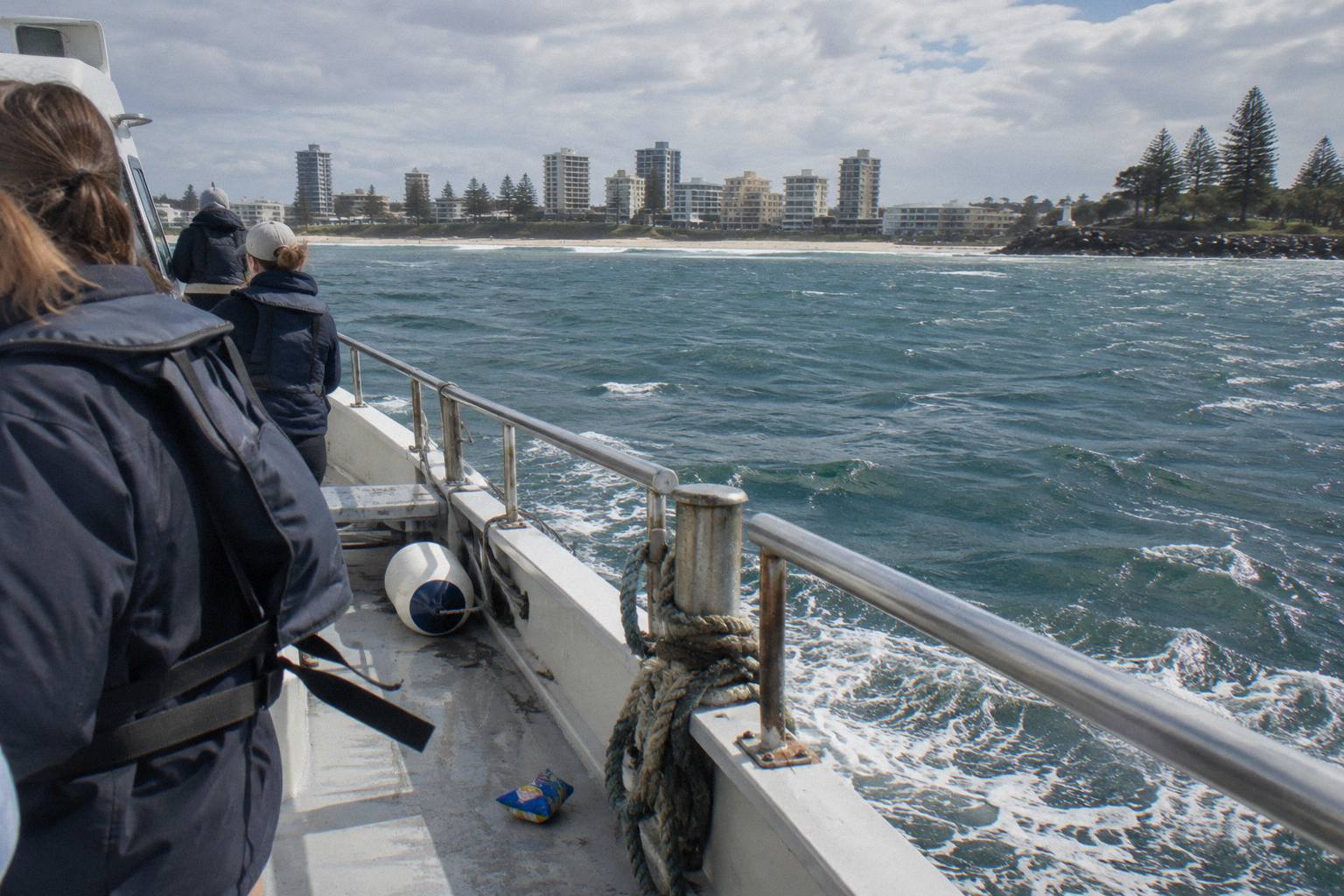
Two more cruise options widen the frame. Sunshine Coast Afloat, 3 Hours is a 3 hour cruise from 21 Parkyn Parade, from A$105 per person, rated 4.8 from 136 reviews. Coastal Express Small Boat is a 2 hour trip from The Wharf Mooloolaba; its rating is 4.1 from 10 reviews and the booking page shows the price for your date. The full field, including the Noosa and Buddina departures that are never Mooloolaba trips, is laid out in the whale watching tours compared rundown.
With the raw numbers on the table, the practical choice narrows to three questions: does the swim's season cover your dates, does its price fit your budget for what it delivers, and are you comfortable with what it asks of you in the water.
What The Swim Actually Asks Of You
The swim asks roughly four hours of your time, from A$269 per person, and requires you to enter open ocean water at operator-approved points while following in-water rules layered on top of boat rules. Its age, fitness and group requirements are not published, so you must confirm them with the operator before paying. Sunreef runs the swim July to Mid October, with encounters following the Australian National Guidelines for Whale and Dolphin Watching.
That season statement is the operator's own, from Sunreef's whale season page, and it is materially shorter than the same operator's cruise season statement of early June to very early November. If your travel dates fall in June or late October, the swim may not be running at all while the cruise is, and the departure for your date shows during booking.
The in-water side deserves clear eyes. Queensland's rules page states that a person in or entering the water must not be within 100 m of a whale or within 50 m of a dolphin, an offence under the state regulation. The 2017 national guidelines describe a different regime for authorised swim programmes: swimmers must not enter the water closer than 100 m to a whale, must not approach closer than 30 m to any whale or dolphin, and swimming should not occur with calves or pods containing calves. Sunreef says its encounters follow those national guidelines. No Queensland instrument was found that authorises or sets conditions such as swimmer numbers or line length for a Mooloolaba swim programme, so those details, along with age and fitness requirements, are questions for the operator rather than facts to assume. Safety questions around the swim are covered more fully in the swim rules and safety explainer.
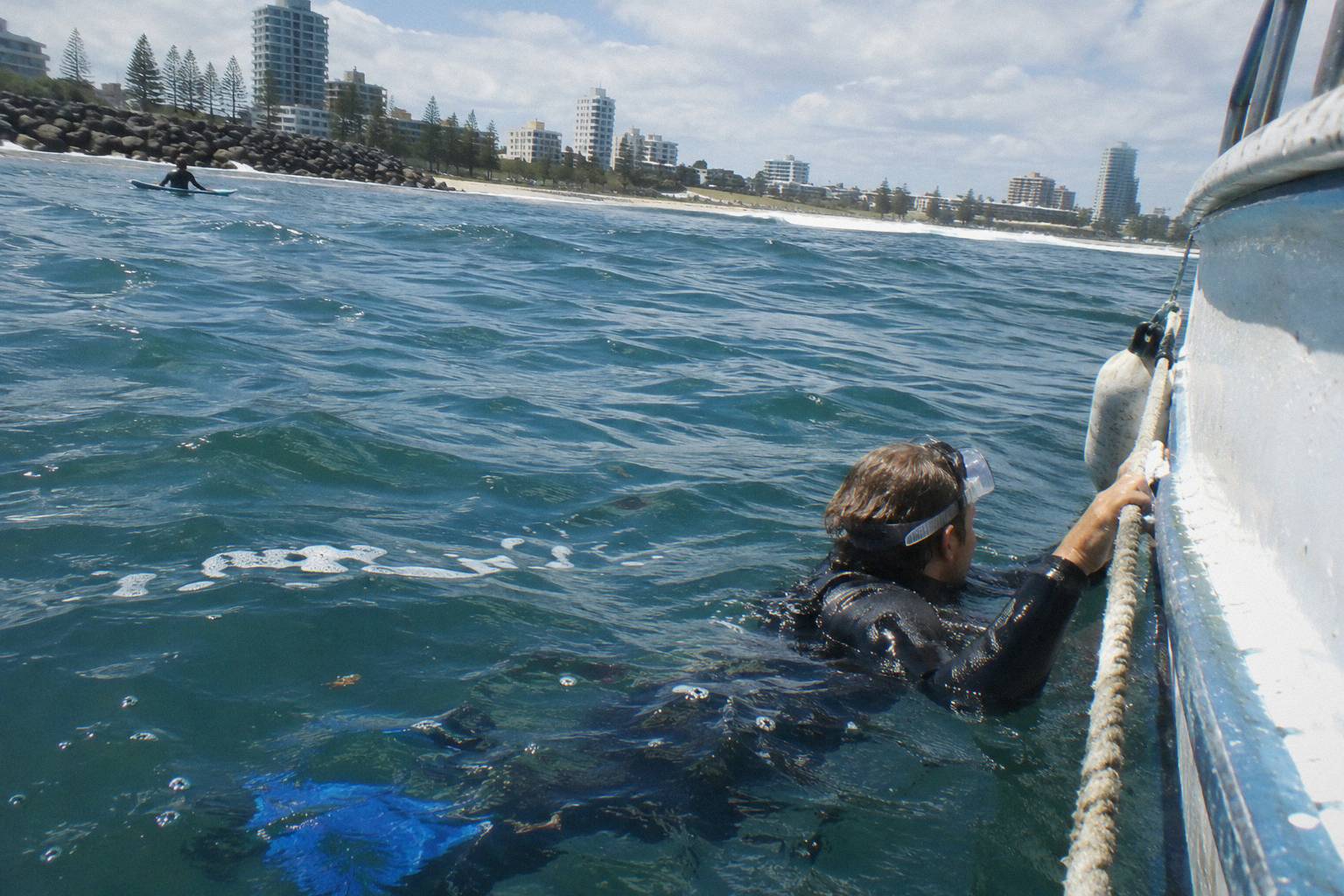
What is promised is the other half of the picture. No trip promises a whale, and no swim trip promises an in-water encounter. Whale One's own policy is a free return trip if no whales are seen on its tours. Adventure Rafting, for its own trips, says it cannot guarantee sightings.
The cruise asks none of this of you. You stay aboard, watching from the deck under boat-based approach rules, for 2 to 3 hours, with no in-water requirements, no unstated fitness bar and, on the Sunreef cruises, no numeric minimum age at all. Sunreef's ticket bands run children 4 to 14 years old and under 4 free, with children under 16 accompanied by an adult. That difference alone settles the choice for many families, and it is one of the reasons the swim page's scope limit matters: its age facts are simply not published.
Season Windows: Cruise Dates Versus Swim Dates
The cruise season is wider on every operator's statement: Sunreef says whale watching runs from early June with Whale One tours until very early November, Adventure Rafting's own page says 1 June to 31 October, and the swim season Sunreef states is July to Mid October. Visit Sunshine Coast puts the official season as June to November, and the Queensland Government describes the northward migration as May to July with the southward turn in July and August.
The pattern beneath the dates: the two products overlap fully in July, August, September and most of October, but June belongs to the cruises and the swim's window closes first. A late June trip or a late October trip is, on these statements, a cruise-only decision before any price or comfort question is asked.
| Source | Statement | What it covers |
|---|---|---|
| Sunreef | cruise season early June to very early November; swim season July to Mid October | its own products |
| Adventure Rafting | 1 June to 31 October, departures 8am, 11am, 2pm, 7 days | its own trips |
| Visit Sunshine Coast | official season June to November | the region |
| Queensland Government | northward migration May to July, southward turn July and August | the coast |
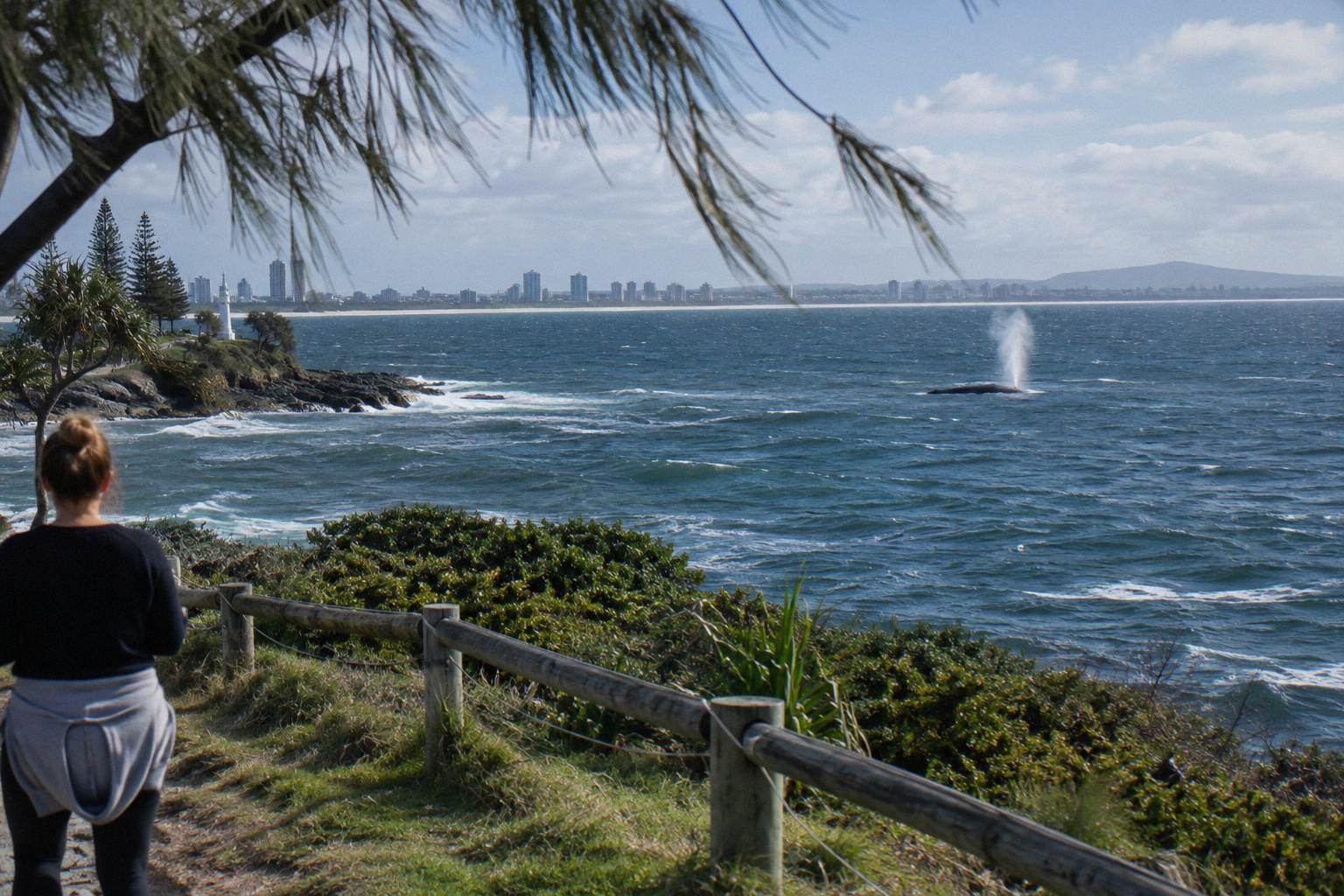
The months inside the season carry different whale traffic. Sunreef describes June through July as the northward leg, August through September as a period with whales moving both north and south in what it calls the crossover period, and September to the end of October as the southward finish. Visit Sunshine Coast says July and August carry the largest northbound numbers. A peer-reviewed study measured the southbound adult peak at Peregian Beach, on the Sunshine Coast, shifting from early October before 2015 to mid-September by 2023 and 2024. None of that tells you what a given day shows; it describes the shape of the migration, and the whales decide the day.
The month-by-month detail, including what each month means for the choice between formats, is in the month-by-month season breakdown.
Which One Suits Your Traveller Type
Families with young children, pregnant travellers and budget-conscious visitors suit the cruise: Sunreef carries infants under 4 free, cruises print from-prices from A$89 per person, and both Sunreef and Adventure Rafting state pregnant guests cannot board their boats, ruling the swim out on those same stated facts. Confident ocean swimmers with flexible dates between July and mid October, plus a bigger budget, are the swim's natural fit.
The table works from stated constraints only. Where an operator has published nothing, the cell says ask the operator, so the gap is shown rather than filled with a guess.
| Traveller | Cruise fit | Swim fit | Why |
|---|---|---|---|
| Family with a 5 year old | strong | ask the operator | Sunreef has no numeric minimum age for cruises; Adventure Rafting sets minimum age 5 on its trips; swim ages not published |
| Pregnant traveller | no | no | both Sunreef and Adventure Rafting state pregnant guests cannot board |
| Budget-first traveller | strong | weak | cruises from A$89 per person; swim from A$269 per person |
| Short-stay visitor | strong | depends on dates | cruise season runs longer; swim stated as July to mid October |
| Confident ocean swimmer | strong | strong | the swim is the only format that puts you in the water |
| Wheelchair user | ask the operator | no | Sunreef states no wheelchair access on its trips |
Two of those rows deserve a sentence more. The wheelchair row reflects Sunreef's own statement for its trips; other operators publish nothing on access, so ask before booking any option. The pregnancy row is the clearest filter in the whole decision: the two operators who publish a policy both decline pregnant guests across their whale trips, cruise or swim, so a cruise is not a workaround for that constraint on those boats.
For families weighing the whole question, including seasickness and what to pack, the whale watching with kids guide goes deeper, and the seasickness preparation guide matters for both formats, since the swim adds time on the water, not less. Both operators advise considering seasickness tablets, and Sunreef sells medication onboard.
What The Rules Say About Each Format
Both formats operate under Queensland approach rules: a 100 m no approach zone around a whale, extending 300 m ahead of and behind the animal, a 300 m caution zone with speeds capped at 6 knots, and set behaviours if a whale approaches, including disengaging engines inside the no approach zone. The swim adds in-water limits of 100 m and 30 m under the national guidelines the operator says it follows, with no swimming near calves or calf pods.
Those boat rules come from the Queensland rules for watching marine mammals, and they shape what a cruise can do as much as what a swim can do. A boat inside the caution zone is limited to 6 knots with no wake. If a whale comes to the boat, the rules require the engines off or gears disengaged inside the no approach zone, or a withdrawal at under 6 knots. There is no vessel-count rule printed here, because the sources conflict on that point; operators must follow the Queensland and Commonwealth approach rules.
The swim layer comes from the 2017 national guidelines for whale and dolphin watching, which state that swim programmes run only with authorised operators, that swimmers must not enter the water closer than 100 m to a whale and must not approach closer than 30 m, and that swimming should not occur with calves or pods containing calves. Vessels must not enter the caution zone when a calf is present. A calf is defined there as a whale less than half its mother's length.
One point the guidelines do not settle for a Mooloolaba reader: no Queensland instrument was found that authorises a Mooloolaba swim programme or sets its conditions, swimmer numbers or line length among them. Sunreef's statement that encounters follow the national guidelines is the operator's own description of its practice, and the questions the guidelines leave open are questions to put to the operator directly.
Common Mistakes When Choosing Between Cruise And Swim
The recurring mistakes are assuming the swim is included in or an upgrade from a cruise ticket, assuming both products share one season and one set of age rules, and assuming a sighting or an in-water encounter is promised. Every one of those assumptions fails on the published facts: separate products, separate season statements, per-operator age policies, and no promise from any trip covered here.
The first mistake is the upgrade assumption. Swim With Humpback Whales is a separate 4 hour product from A$269 per person, not a ticket option on a cruise, and the cruise and swim can even leave from the same address at The Wharf Mooloolaba, which makes them easy to confuse in a search result and hard to confuse in person.
The second is the season mistake. Booking late June or late October on the belief that both products run then can leave a swim booking impossible, since Sunreef states the swim season as July to mid October while the cruises run longer. The departure for your date shows during booking, which is the moment to catch it.
The third is the age mistake. There is no single minimum age for all boats. Sunreef states no numeric minimum for whale watching, with children under 16 accompanied by an adult; Adventure Rafting states minimum age 5 on its own trips. The swim's age requirement is not published: ask the operator.
The fourth is the promise mistake. No trip promises a whale, a breach or an in-water encounter. Weather can also end a plan before it starts: Whale One's own policy on sea conditions is to rebook or refund, and Adventure Rafting cancels for weather and for low numbers, reissuing or refunding tickets. Check the cancellation terms on the booking page for your date on any option, beyond the free cancellation the trips covered here show.
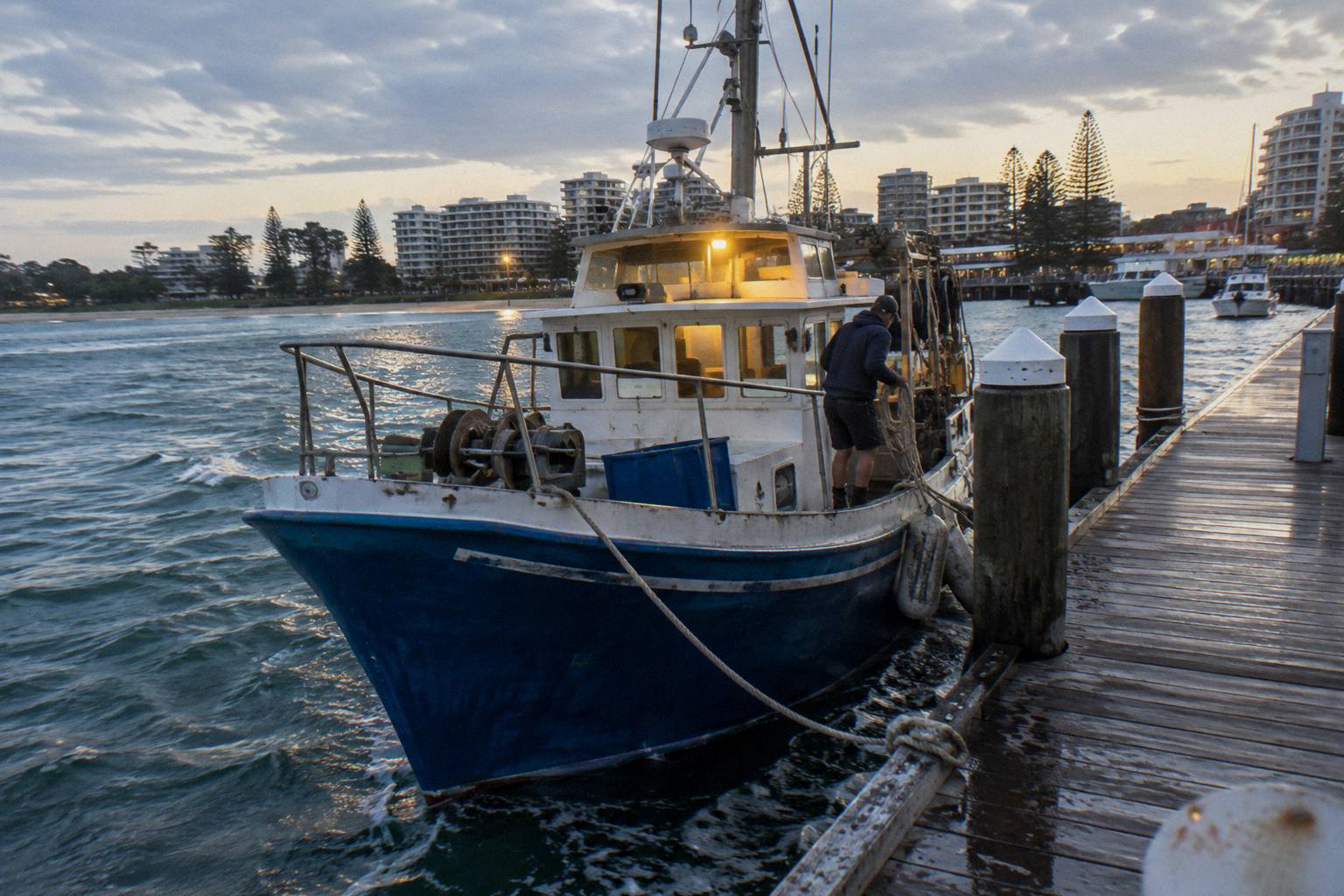
The fifth is arrival. Adventure Rafting asks its own guests to arrive 30 minutes before sailing because parking can be difficult during peak times; parking at The Wharf is time-limited, so allow extra time in peak season whatever trip you choose. The check-in and parking guide covers the details.
Questions To Ask Before You Book Either One
Five questions settle most doubts before payment: whether your date falls inside the product's stated season, what the price for your date and group is on the booking page, what age and fitness requirements apply to the specific trip, what the cancellation terms are beyond the 24 hour free cancellation, and, for the swim, what the operator's own in-water procedures involve. Each has a factual answer from the operator or the booking page, and none of them is guesswork.
A worked checklist keeps the two products straight at the moment of booking.
| Question | Cruise answer to expect | Swim answer to expect |
|---|---|---|
| Does my date fall in the season? | early June to very early November on Sunreef's statement | July to mid October on Sunreef's statement |
| What will it cost? | from A$89 to A$115 per person for the Mooloolaba cruises | from A$269 per person; booking page shows your date |
| Any age limit? | no numeric minimum at Sunreef; minimum age 5 on Adventure Rafting trips | not published; ask the operator |
| What if conditions are poor? | operator rebooks or refunds per its policy | operator rebooks or refunds per its policy |
| What do I need in the water? | nothing; you stay aboard | ask the operator; no published fitness or equipment facts |
The value question sits underneath all of it. Whether a whale trip on the Sunshine Coast is worth the money depends on what you want from the day: the cruise delivers the migration from a deck for the lower from-price and the longer season, the swim delivers time in the water under a tighter rulebook and a shorter window, and no review count or rating can make that choice for you. The is whale watching on the Sunshine Coast worth it discussion works through the value question directly.
Whatever the choice, the Mooloolaba Whale Watching decision comes down to format, dates and comfort in the water, in that order, and all three are answerable before you pay anything.
A last practical note for the cruise side of the fence: the choice among cruises is its own small decision, and the small group or large boat comparison covers it, including where the 20 guest maximum on Adventure Rafting's own trips fits.
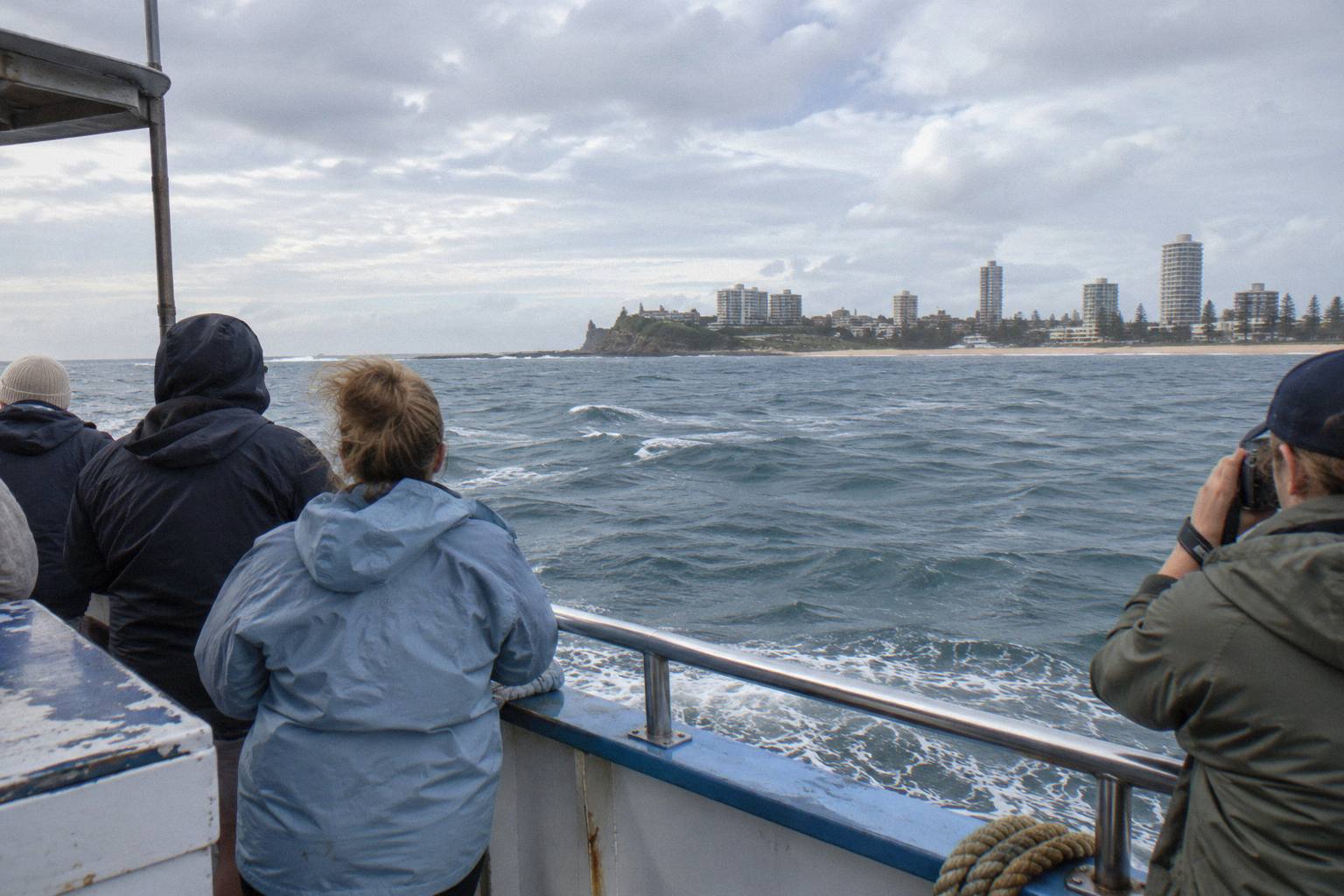
The short version of the whole page: book the cruise if you want the longer season, the lower from-price and the simplest boarding rules; book the swim if your dates fall inside July to mid October, the from-price fits, and being in the water is the point of the day. The trips covered here all show free cancellation on the booking page, so an early choice is a reversible one.
Common Questions About Choosing A Whale Cruise Or A Swim
Is Swimming With Whales Better Than Watching From A Boat?
Better depends on what you want. The swim is 4 hours from A$269 per person in a season Sunreef states as July to mid October; the cruises are 2 to 3 hours from A$89 to A$115 per person over a longer season. Neither promises a sighting or an in-water encounter.
Can You Swim With Whales In Mooloolaba?
Yes, Swim With Humpback Whales runs from The Wharf Mooloolaba, 123 Parkyn Parade, 4 hours, from A$269 per person, in a season Sunreef states as July to mid October. Its age and fitness requirements are not published: ask the operator.
Do Whale Trips Promise You A Whale?
No trip covered here promises a sighting.
Is The Swim Worth The Extra Cost Over A Cruise?
That is a personal call. The swim costs from A$269 per person against from A$89 to A$115 for the Mooloolaba cruises, runs an hour or two longer, and puts you in the water under the national guidelines the operator says it follows. If being in the water is the point, the price difference buys that; if it is not, the cruise delivers the migration for less.
Can Children Do The Swim With Whales Trip?
The swim's age requirement is not published, so ask the operator before booking. For the cruises, Sunreef states no numeric minimum age, with children under 16 accompanied by an adult, and Adventure Rafting states minimum age 5 on its own trips.
When Does The Swim Season Run Compared With The Cruise Season?
Sunreef states the swim season as July to Mid October, while its whale watching season runs from early June with Whale One tours until very early November. June and late October are cruise-only windows on those statements.