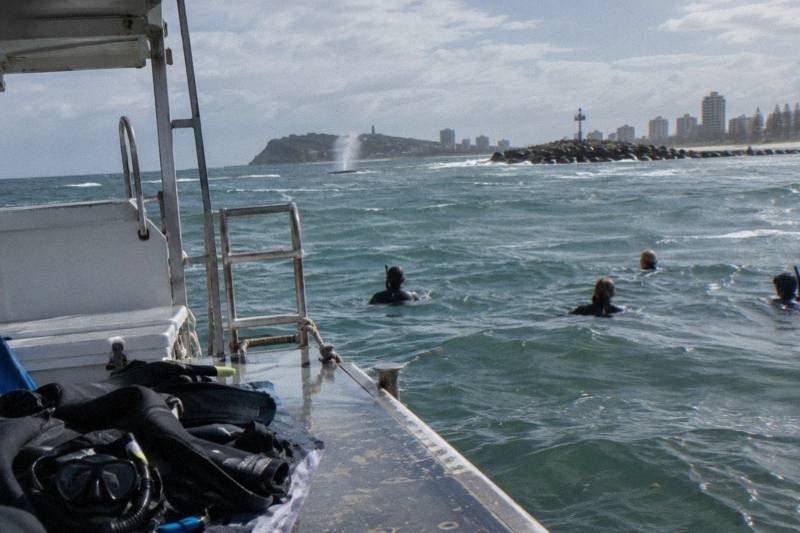
Swim With Whales On The Sunshine Coast: Rules, Safety And What Operators Must Follow
A whale swim is the most rule-bound way to meet a humpback. Here is what Queensland law says about people in the water near whales, what the national guidelines require of swim programmes, and what the operator's own rules add.
Short answer
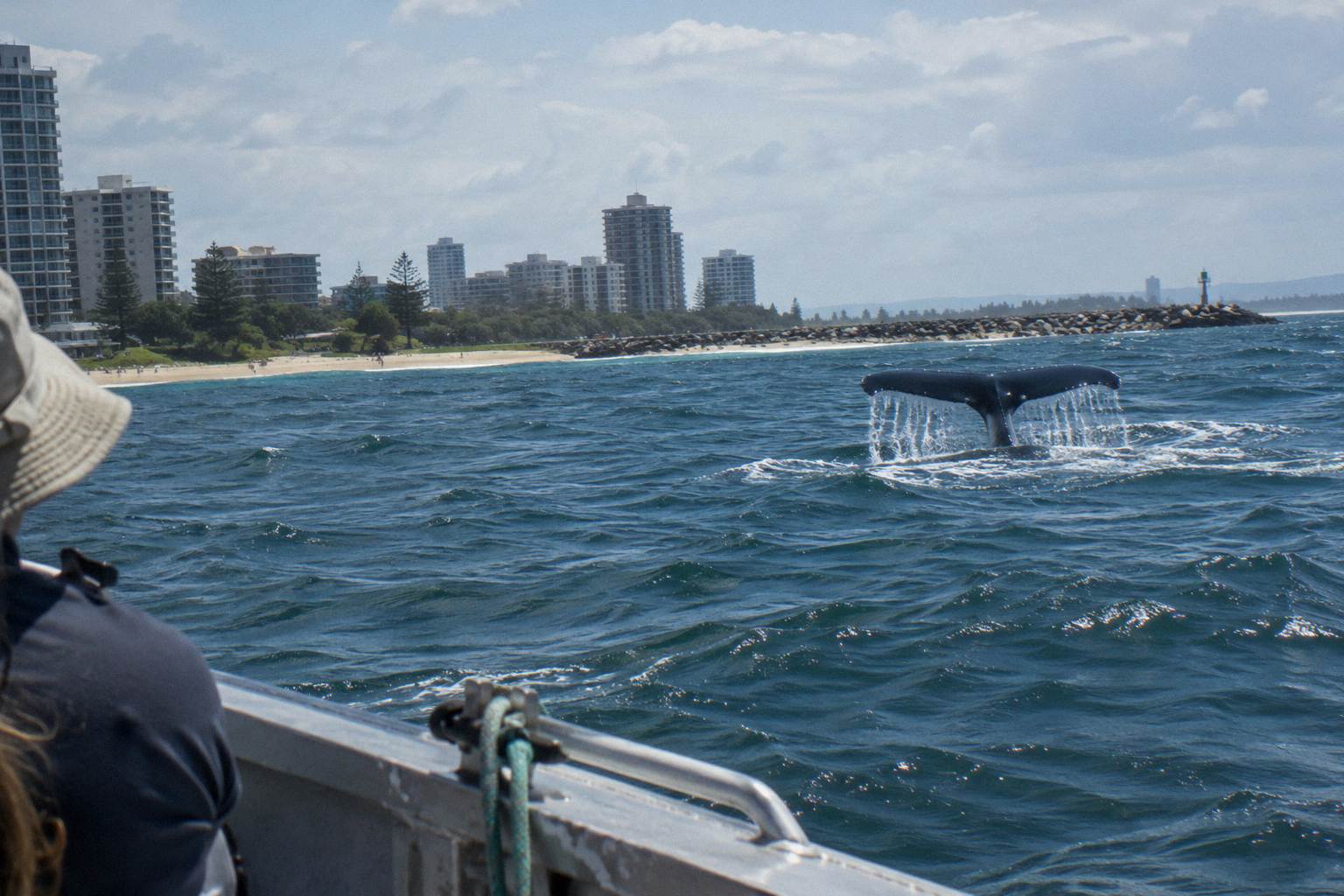
Queensland law keeps a person in or entering the water at least 100 m from a whale. The 2017 national guidelines let authorised swim programmes enter no closer than 100 m and approach no closer than 30 m, and never with calves. Sunreef runs its swim season from July to Mid October and says encounters follow the national guidelines. The swim trip runs from A$269 per person.
A whale swim sits closer to the rules than any cruise does. The moment a person enters the water near a humpback, a separate set of Queensland distances applies, and a national guideline sits on top of those for commercial swim programmes. The operator's own conditions then fill the space the law leaves open, which is larger than most people expect.
The trip that runs this format from Mooloolaba is Swim With Humpback Whales, a 4-hour trip from The Wharf Mooloolaba at 123 Parkyn Parade, from A$269 per person, with free cancellation on the booking page. Amounts on the booking pages are Australian dollars. Before treating that booking button as a decision, it helps to know exactly which rules bind the boat, which bind you, and which are simply the operator's own policy.
What The Queensland In-Water Rule Says
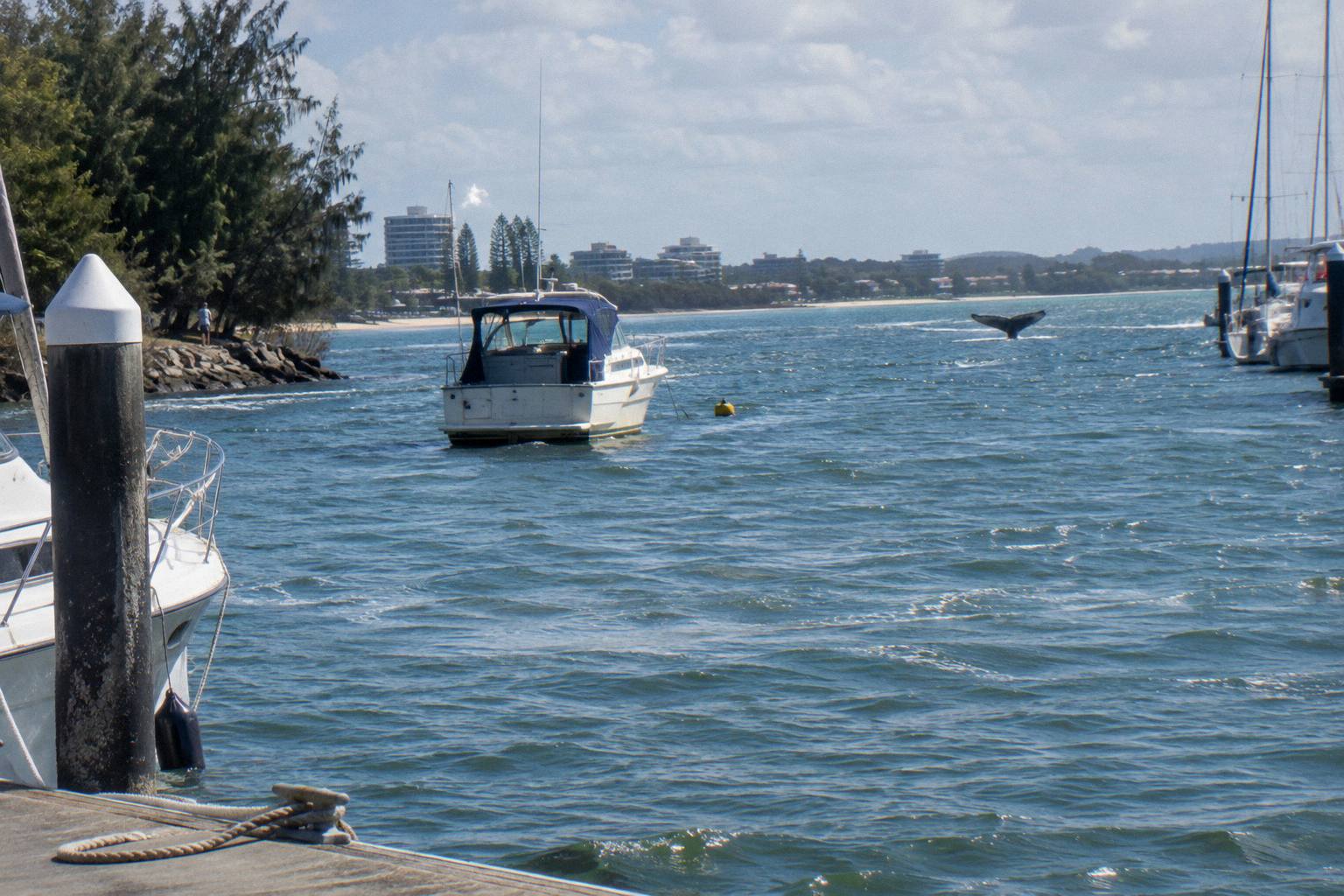
Queensland law states that a person in or entering the water must not come within 100 metres of a whale, or within 50 metres of a dolphin, and a breach is an offence under sections 284(4) and 313 of the Nature Conservation (Animals) Regulation 2020. That rule binds the swimmer, not the operator, and the distance is measured from the animal. The Queensland rules page states it plainly: a person in or entering the water must stay outside 100 metres of a whale and 50 metres of a dolphin. For context, a humpback is usually up to 16 m long and 30 to 45 tonnes, per the Queensland Government's whales page, so 100 metres is roughly six whale-lengths of clear water between you and the animal. Keeping that distance also gives you a front-row seat when a humpback launches itself skyward, and the guide to why humpback whales breach explains what scientists think is behind the spectacle.
That in-water distance sits inside a wider framework of boat distances. The no approach zone for a vessel is 100 m all round, extending to 300 m in front of and behind the animal, and the caution zone reaches out to 300 m from a whale, per the Queensland rules for watching marine mammals. The Share the Water brochure adds the details on jet skis, aircraft and drones. Swimmers, boats and drones each get their own numbers.
The table below gathers the distances in one place, by instrument, because each number belongs to the rule that created it and none of them transfers to another activity.
| Instrument | Who or what it binds | Whale distance | Dolphin distance |
|---|---|---|---|
| Queensland in-water rule (ss 284(4), 313) | A person in or entering the water | 100 m | 50 m |
| Queensland no approach zone | Vessels | 100 m all round, 300 m in front of and behind | 50 m / 150 m |
| Queensland caution zone | Vessels | 300 m | 150 m |
| Queensland drone rule | Drones | 100 m | 100 m |
| White whale no approach zone | Vessels | 500 m | Not listed |
One line in that table deserves its own sentence. White whales, meaning humpbacks that are more than 90 percent white, carry a 500 m no approach zone under Queensland rules, and the Queensland Government notes that sightings of such whales are rare and not guaranteed each season. No operator may promise one, and no swim programme targets one.
How The National Guidelines Treat Swim Programmes
The 2017 Australian National Guidelines for Whale and Dolphin Watching say a swim programme is run only by authorised operators, that swimmers must not enter the water closer than 100 m to a whale or 50 m to a dolphin, must not approach closer than 30 m to any whale or dolphin, and that swimming should not occur with calves or pods containing calves. Those exact distances come from the national guidelines document, which also says vessels must not enter the caution zone when a calf is present, and defines a calf as a whale less than half its mother's length. The calf line matters more than any other: a pod with a calf ends the swim before it starts, whatever the ticket says.
Sunreef, the operator that runs the Mooloolaba swim, states that encounters follow the Australian National Guidelines for Whale and Dolphin Watching, and that its swim season runs from July to Mid October. That season statement is the operator's own, and it is narrower than the whale watching season generally, which runs roughly June to October and into early November depending on whose page you read. Planning a swim for late October or early November therefore collides with the operator's own window: the cruise may run, the swim may not.
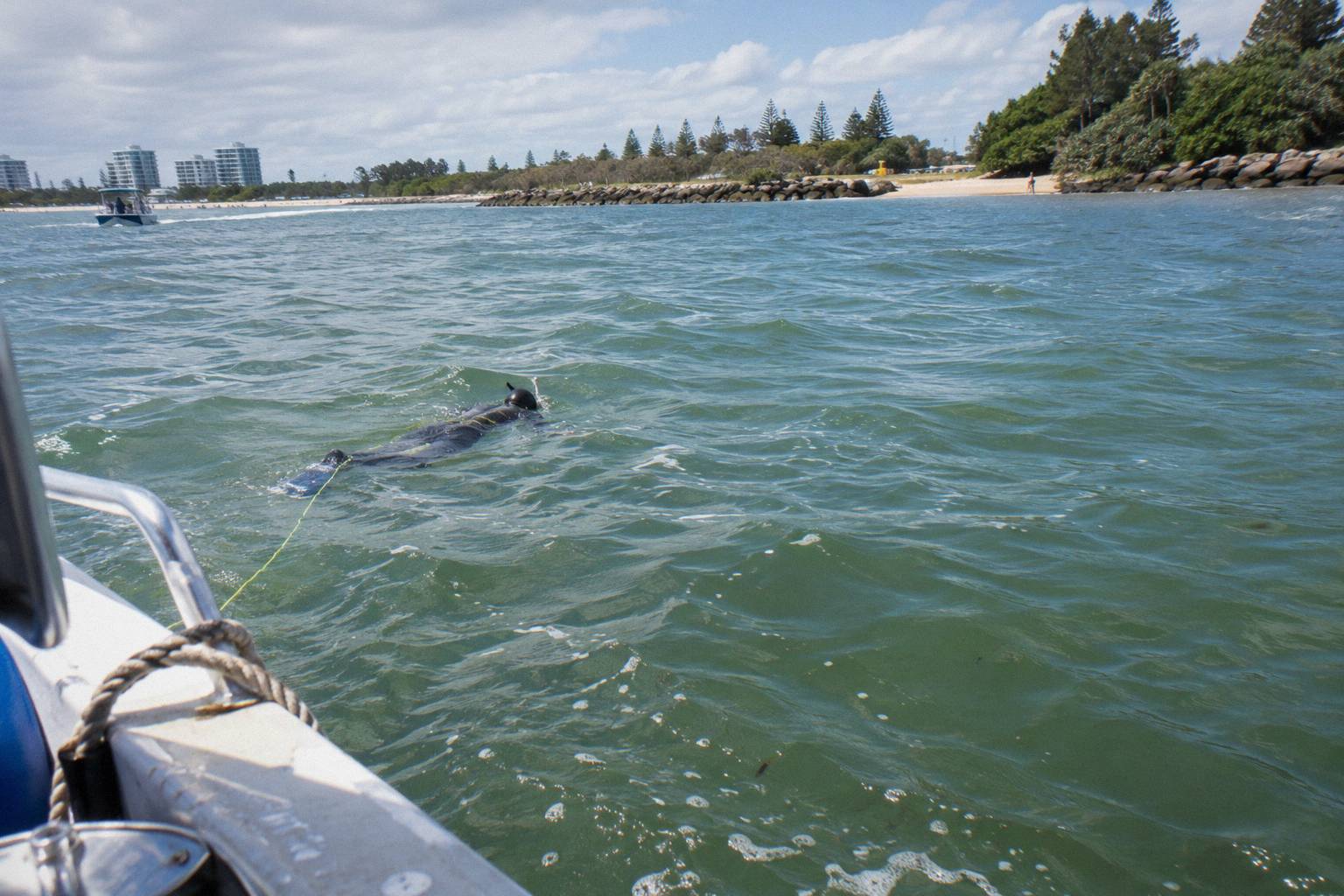
The gap between the state rule and the national guideline is worth understanding, because it explains why swim programmes exist at all. Queensland's 100 m in-water rule has no exception written into it for swimmers on a commercial trip; the 2017 national guidelines allow authorised programmes a different regime, with the 100 m entry and 30 m approach limits described above. How those two instruments interact in state waters off Mooloolaba is not something a booking page settles, and it is a fair question to put to the operator before you pay. What a reader can hold onto is the set of distances themselves, which are consistent across both: nothing closer than 30 m, nothing entered into inside 100 m, nothing at all near a calf.
Whether a swim or a cruise suits you better is a separate decision with its own trade-offs, covered in the cruise versus swim comparison; the rules above are what make the two formats different products rather than two prices for the same thing.
Who Sets The Conditions For A Mooloolaba Swim
No Queensland instrument was found that authorises a Mooloolaba swim programme or sets its conditions, such as swimmer numbers or line length, so the operator's own rules are what govern the trip in practice, on top of the distances above. That is a gap stated once, plainly, and it shapes what you should ask before booking. It also means the phrase "licensed whale swim" should be treated with caution when you meet it anywhere: if an authorisation exists for a given trip, the operator can show it, and the question to ask is exactly that. Meanwhile, one permit fact is clear: a permit is not required to conduct a commercial whale watching activity in Queensland state waters outside marine parks, and Mooloolaba lies outside the Moreton Bay and Great Sandy marine parks, per the Queensland environment department's whale watching page.
The practical consequence is that the booking conversation carries real weight. The distances in the first two sections are law or national guideline; everything else, from how swimmers are briefed to what happens if whales are not in a suitable mood, sits with the operator's own conditions. Sunreef's own page carries its swim season statement and its guideline reference, and the trip's booking page carries the price for your date and the free cancellation. The operator says encounters follow the national guidelines, which is the strongest statement available about how the trip is conducted.
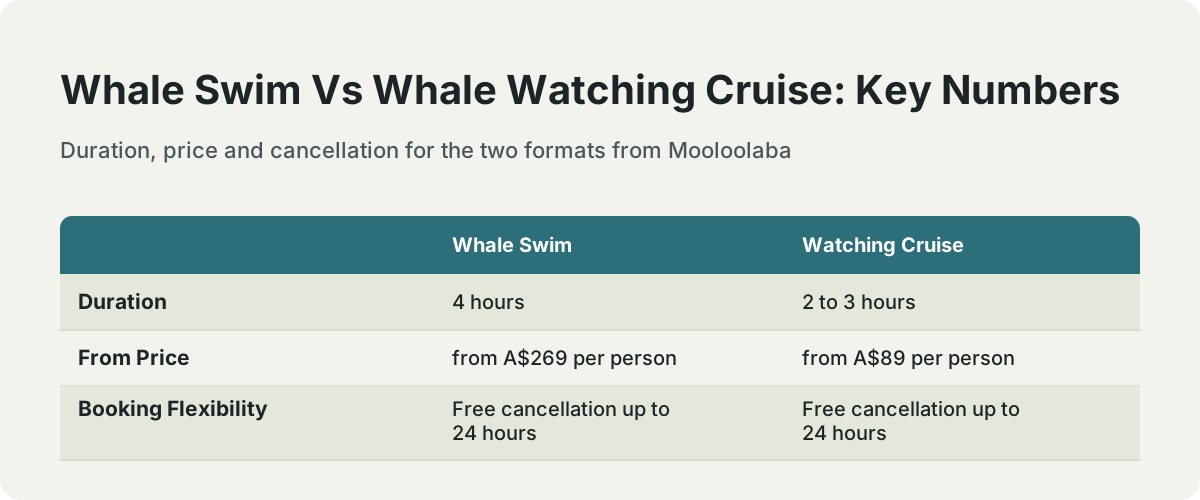
For readers comparing formats rather than reading rules, the swim is a 4-hour commitment from The Wharf Mooloolaba, against 2 to 3 hours for the cruises. The table below separates what the rules say from what a cruise ticket involves, since the two products are governed quite differently.
| Question | Whale swim | Whale watching cruise |
|---|---|---|
| Governing distances for you | 100 m in-water rule, 30 m guideline limit | You stay aboard; boat distances apply |
| Calf rule | No swimming with calves or calf pods, per 2017 guidelines | Vessels must not enter the caution zone when a calf is present, per the same guidelines |
| Season statement | Sunreef: July to Mid October | Roughly June to October, into early November, sources differ |
| Duration | Swim With Humpback Whales, 4 hours | 2 to 3 hours on the Mooloolaba trips |
| From price | Swim With Humpback Whales, from A$269 per person | Sunreef 3-Hour Whale Cruise, from A$89 per person |
| Booking flexibility | Free cancellation on the booking page | Free cancellation on the booking page |
Safety On The Day: The Bar, The Boat And The Briefing
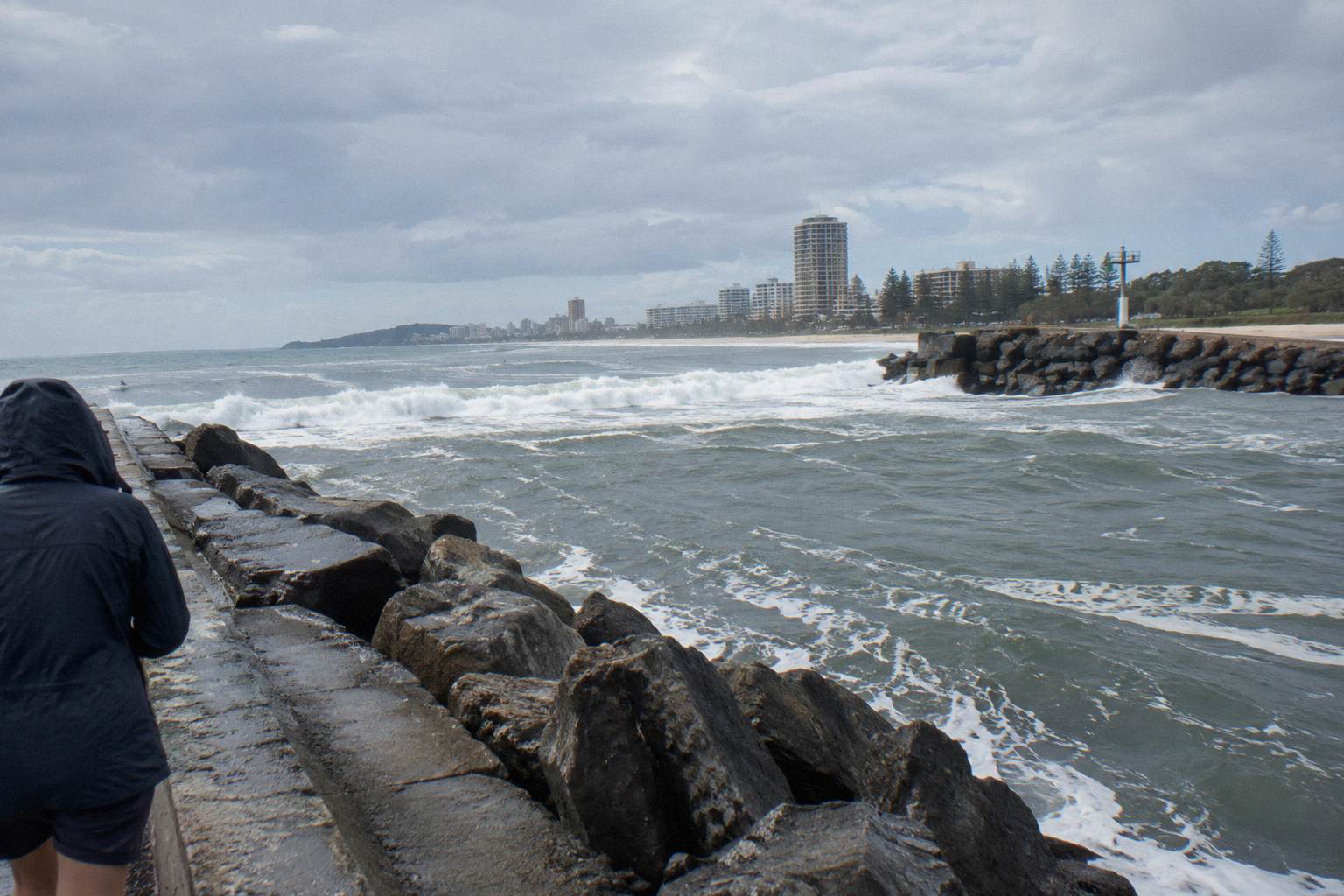
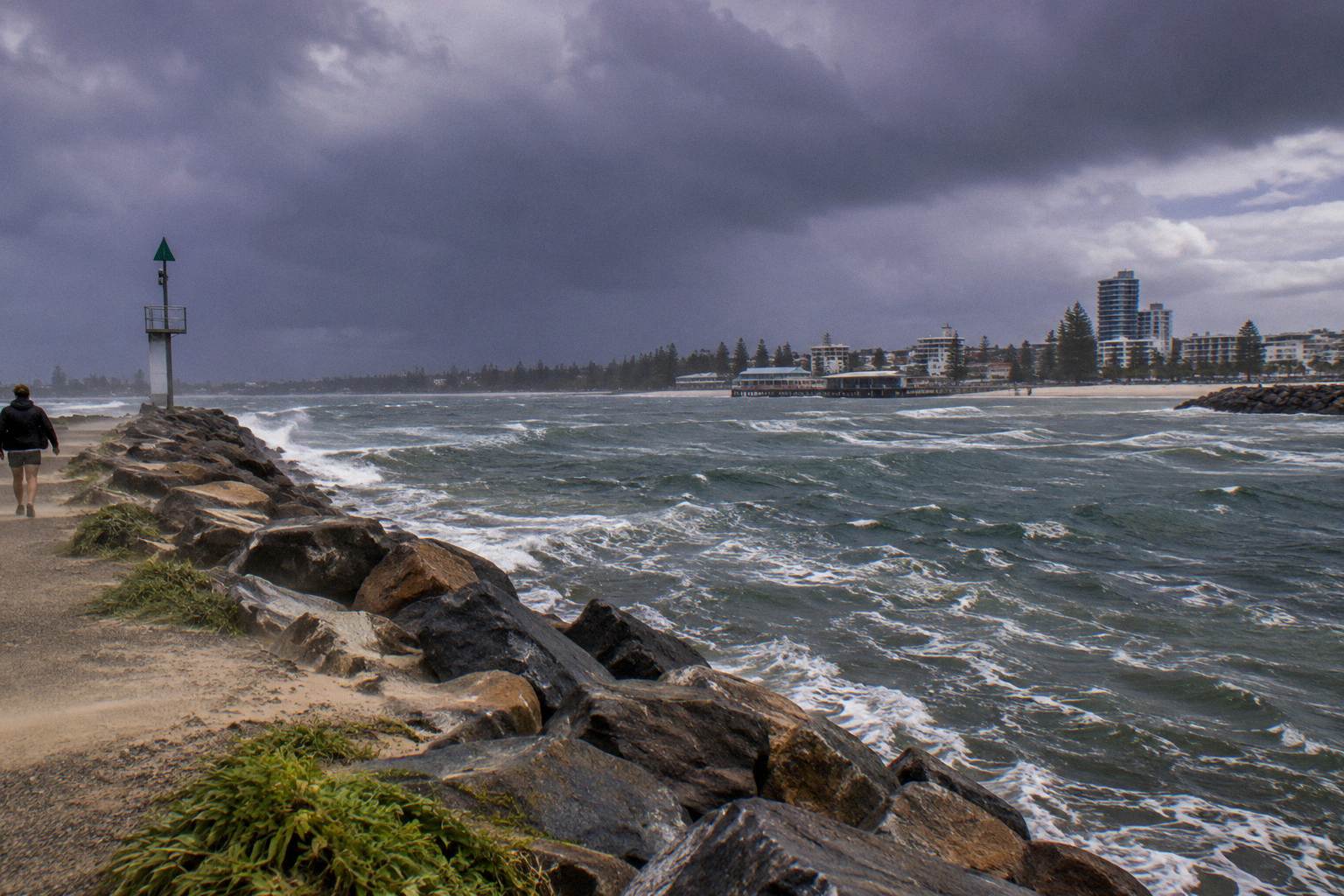
Every Mooloolaba trip, swim or cruise, leaves through the Mooloolah River mouth, a designated coastal bar where lifejackets are compulsory for everyone on open boats or open areas while crossing, and where conditions can change quickly and without warning, even on a good day, per Maritime Safety Queensland. The bar crossing page is the authority for both statements, and the second one is the one swimmers should sit with: a fine morning on the beach does not describe the conditions offshore. Whale One's own page makes the same point about offshore conditions differing from the beach.
No safety statistics belong on a page like this, and none are needed. What the sources give is narrower and more useful. If the sea conditions stop a trip running, the operator's own policy governs what happens next, and that policy is stated per operator, not across the coast. For the swim specifically, check the cancellation and rebooking terms on the booking page for your date before you assume anything. Medical questions belong with your doctor: if seasickness tablets are part of your usual routine on the water, both Mooloolaba operators advise considering them, and that advice is theirs, attributed.
The briefing is where the rules reach you. By the time you are in the water, every distance in the first section has become the crew's job to manage and yours to respect, and the operator's own conditions fill anything the guidelines leave silent. Ask what the crew's own limits are for ending an encounter, and ask what happens to your ticket if no suitable encounter occurs. Those two questions, asked before payment, tell you more about the trip than any description can.
If the swim decision has settled itself while reading the rules, the 4-hour trip can be held with free cancellation on the booking page, so a date can be reserved while the remaining questions go to the operator.
What To Ask The Operator Before You Book A Swim
Ask four things in writing before paying for a whale swim: what the operator's own in-water limits are beyond the guidelines, what the calf protocol means for your day, what happens to the ticket if the trip cancels or no swim occurs, and what fitness or swimming ability the operator expects of you. None of those answers are published in a standard form; all of them are the operator's to give. The decision on swimming ability is one readers also weigh in whether you need to be a strong swimmer, and the safety question more broadly is covered in is swimming with humpback whales safe, while the deeper background on the format itself sits in the swim with whales guide.
| Question to ask | Why it matters | Where the answer sits |
|---|---|---|
| What are your own in-water limits beyond the guidelines? | The 30 m and 100 m figures are guidelines; operator conditions govern the rest | The operator |
| What happens if a calf is present? | The 2017 guidelines end the swim for calf pods | The operator, applying the guidelines |
| What if the trip cancels or no swim occurs? | Cancellation and rebooking terms are per operator | The booking page for your date |
| What swimming or fitness level is expected? | Not published; ask the operator | The operator |
| What does the 4 hours include if the swim cannot proceed? | The trip may still run as a watch | The operator |
The reason to ask in writing is simple: the rules give you fixed distances but a movable experience. A whale swim depends on the whales, the weather and the swell, and the only promised elements are the departure point, the duration and the price on the booking page. Everything else is the operator managing what the day allows within the framework above.
For travellers who want the water between themselves and the whales to be optional, the cruise format does the same migration at a different remove. The Sunreef 3-Hour Whale Cruise keeps you aboard for 3 hours from Parkyn Parade, from A$89 per person, rated 4.3 from 200+ reviews, and free cancellation is on the booking page.
A faster, smaller-format alternative is Fast Boat, Free Cancellation, a 2-hour Adventure Rafting trip from The Wharf Mooloolaba, from A$115 per person, rated 4.6 from 100+ reviews, with the same free cancellation on the booking page. Its crew cannot guarantee sightings, the operator says, and its own page carries the arrival advice to allow 30 minutes before sailing because parking can be difficult at peak times.
Common Mistakes When Booking A Whale Swim
Three mistakes trip up swim bookings: assuming the swim is licensed by Queensland when no authorising instrument is published, assuming the July to Mid October season is the same as the cruise season, and assuming the calf rule is negotiable on the day. Each one is avoidable with a single question to the operator before payment.
The first mistake leads people to skip the due diligence above. No Queensland instrument setting swim conditions was found, so the operator's own statements are the substance; ask to see any authorisation the operator holds and treat the answer as information, not a formality. The second mistake costs a trip: the swim season is narrower than the whale season, and a late-October booking lands outside the operator's own stated window even while cruises still run. The third mistake misunderstands the guidelines: a pod with a calf ends the encounter, and that line comes from the national document, not from the crew's mood.
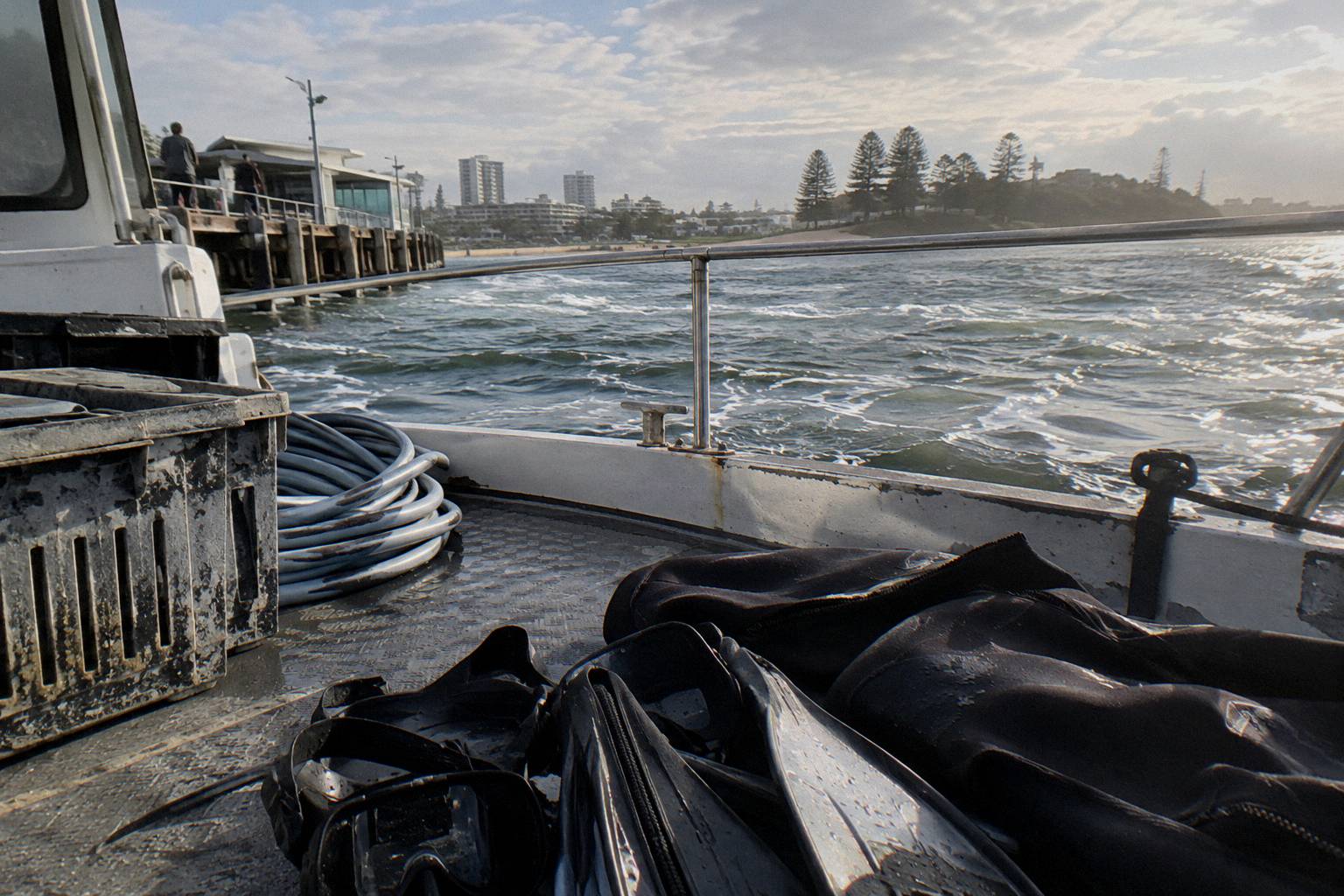
Other avoidable errors sit in the planning layer. Assuming the same minimum age applies to every boat fails, because Adventure Rafting states a minimum age of 5 for its own trips while Sunreef states no numeric minimum for whale watching. Assuming a sighting is promised fails on any trip: no operator here promises one. And assuming swim gear or wetsuits are included without asking fails because inclusion details are the operator's to state. The fuller month by month season breakdown helps with timing; the questions table above handles the rest.
Making The Decision With The Rules In Front Of You
The rules decide more of a whale swim than most bookings acknowledge: the 100 m and 30 m limits define the encounter, the calf rule can end it, the July to Mid October season bounds it, and the operator's own conditions govern everything the instruments leave open. A reader comfortable with all four of those, and with a 4-hour trip from The Wharf Mooloolaba at from A$269 per person, is deciding with the full picture rather than the brochure version.
Traveller type sharpens the choice. Confident ocean swimmers who want the water-level encounter and accept that the guidelines, not the whales, set the distances should weigh the swim. Families with children should note that no single age rule covers every boat, and that the swim has no published age line at all: ask the operator. Readers prone to seasickness have a 4-hour exposure rather than 2, and the operator advice to consider seasickness tablets applies with more force, though medical choices belong with a doctor. Anyone who wants whales without conditions attached to their own body in the water should choose a cruise and enjoy the same migration from the deck.
Between the cruise options, a calmer planning route runs through Sunshine Coast Afloat, 3 Hours, a 3-hour cruise from 21 Parkyn Parade rated 4.8 from 136 reviews, from A$105 per person, with free cancellation on the booking page. It carries the same migration, the same guideline framework for the boat, and none of the in-water questions.
The framework in the sections above is the part that does not move. Distances, guidelines, season statements and the operator's own conditions are the four fixed points; the whales supply everything else. A booking made with those four points understood is a booking made on the facts rather than on a photograph, and the Swim With Humpback Whales step can then be taken for the right reasons. For the wider picture of Mooloolaba Whale Watching across every format, the same rules sit underneath all of it, and among the three ways to spend a season morning, the real choice sits between the 4-hour swim from A$269 per person, the 3-hour cruise from A$89 per person and the 2-hour fast boat from A$115 per person, each with free cancellation on the booking page.
Common Questions About Whale Swim Rules On The Sunshine Coast
Is Swimming With Whales Legal In Queensland?
Queensland law keeps a person in or entering the water at least 100 m from a whale, an offence under sections 284(4) and 313 of the Nature Conservation (Animals) Regulation 2020. The 2017 national guidelines set a different regime for authorised swim programmes: entry no closer than 100 m, approach no closer than 30 m. No Queensland instrument was found that authorises or sets conditions for a Mooloolaba swim programme, so the operator's own rules apply alongside the distances.
How Close Can You Swim To A Whale?
Under the 2017 national guidelines, a swimmer on an authorised programme must not enter the water closer than 100 m to a whale and must not approach closer than 30 m. Queensland's in-water rule for a person entering the water independently is 100 m.
Can You Swim With Whale Calves?
No. The 2017 national guidelines state that swimming should not occur with whale or dolphin calves, or pods containing calves, and that vessels must not enter the caution zone when a calf is present. A calf is defined as a whale less than half its mother's length.
When Does The Whale Swim Season Run?
Sunreef states its swim season runs from July to Mid October. That is narrower than the whale watching season generally, which runs roughly June to October and into early November depending on the source.
Does Any Trip Promise A Whale Sighting?
No trip covered here promises a sighting. Adventure Rafting says it cannot guarantee sightings, and Whale One's own policy is a free return trip if no whales are seen on its tours, attributed to that operator only.
What Should You Ask The Operator Before Booking A Swim?
Ask for the operator's own in-water limits beyond the guidelines, the calf protocol for your day, the cancellation and rebooking terms for your date, and the swimming or fitness level expected. None of those are published in a standard form; all are the operator's to answer.