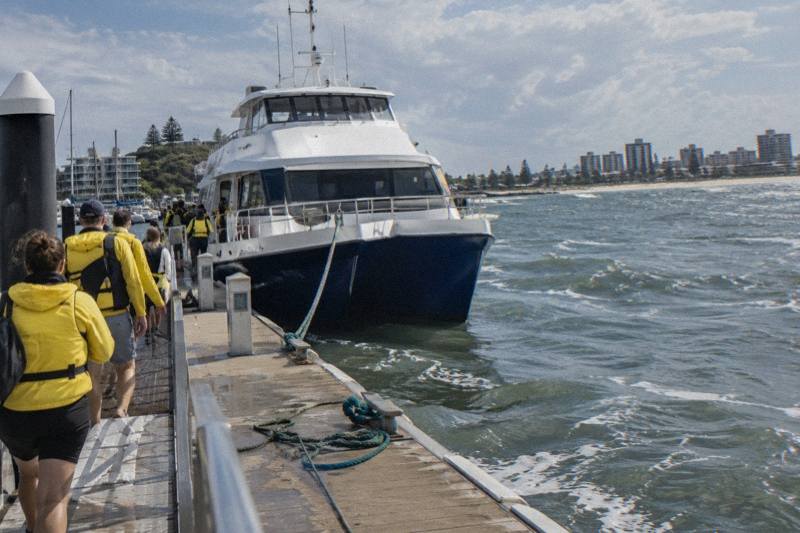
Why Do Humpback Whales Breach?
No scientist can yet say for certain why humpback whales breach, and the reasons are still debated; here is what is known about the animals, the rules that govern boats near them, and what to ask before you book.
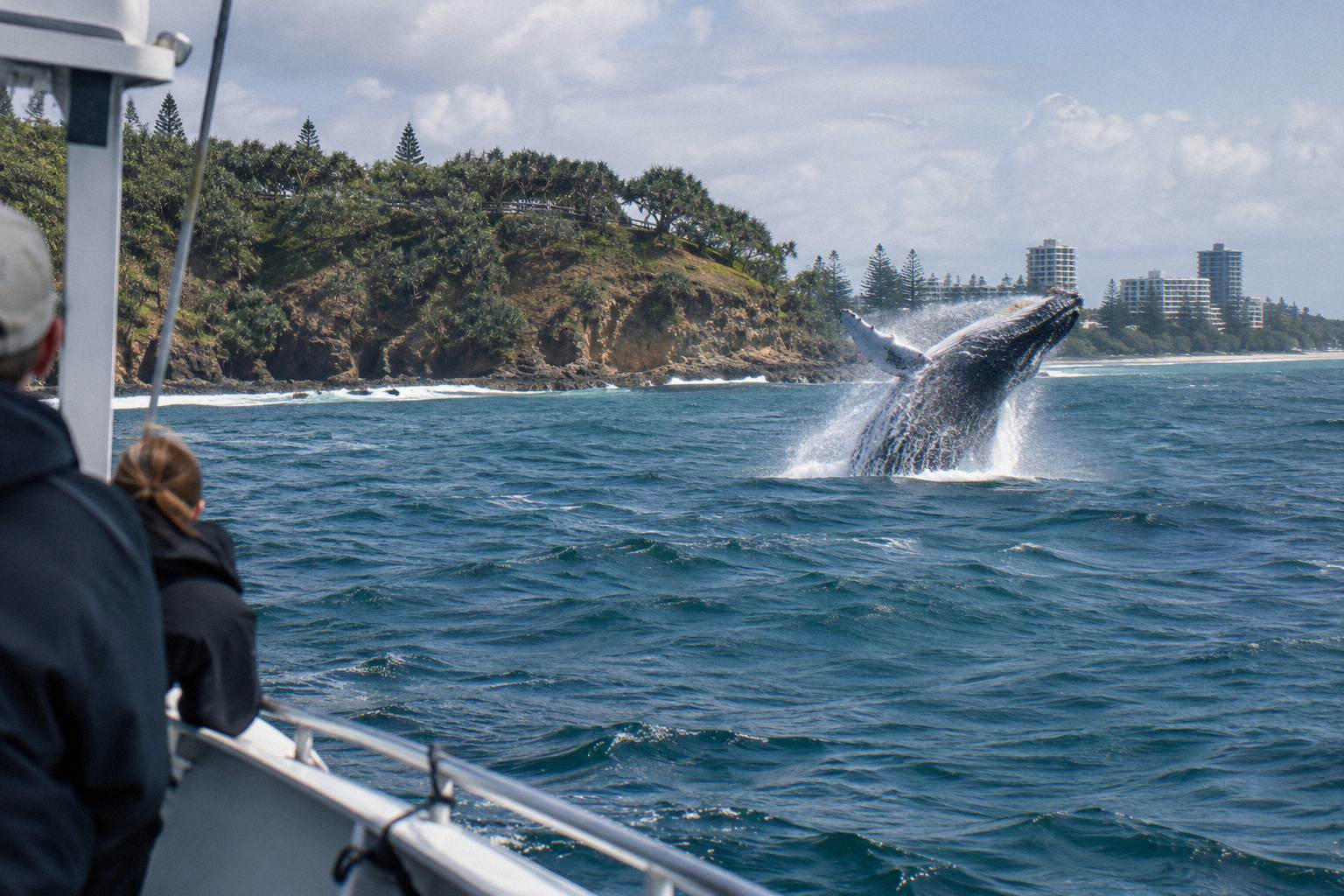
The short answer is that nobody knows for certain: the reasons humpback whales breach are still debated among scientists, and proposed explanations include communication, dislodging parasites, stunning prey and play, with no single cause proven and different breaches possibly happening for different reasons. What is well documented is the animal itself. An adult humpback is usually up to 16 m long and weighs 30 to 45 tonnes, per the Queensland Government's whales page, which makes a full breach one of the most powerful movements any animal performs.
That size is worth pausing on. Lifting 30 to 45 tonnes out of the water takes an enormous effort, and a whale that clears the surface entirely then falls back with a sound that carries a long way across the water. The Queensland page also records that humpbacks make a round trip migration of about 9,000 km each year, that a typical dive lasts 10 to 15 minutes and can stretch to about 30, that calves are 4 to 5 m long at birth, and that gestation runs 11 to 12 months. Those are the measured facts; the reason for the leap itself stays open.
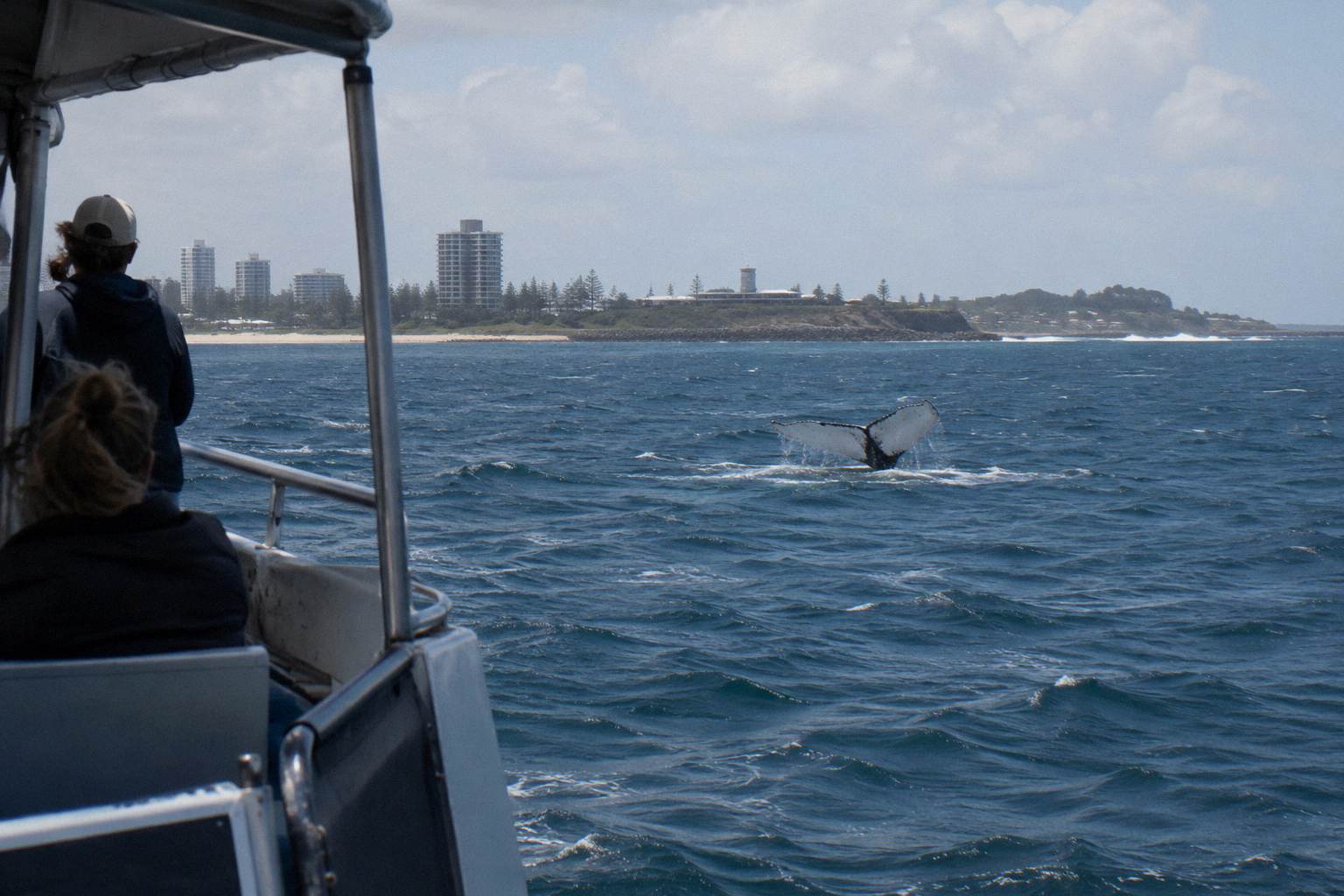
Because no cause can be stated as fact, any boat trip that promises a breach, or promises to show you a particular behaviour, is promising something nobody can control. The whales decide. What a good trip can do is put you in the migration corridor, in the season, under the approach rules, with a crew that follows them. If you are already warming to the idea of being on the water when something like this happens, these are the three Mooloolaba options most readers compare first.
The season that brings these animals past Mooloolaba runs roughly June to October, into early November, and the operators disagree mildly on the end month, so treat any single date with caution. The Queensland Government describes the general pattern: humpbacks migrate northwards along the Queensland coast between May and July, then turn south in July and August after time in the tropical breeding grounds. The current population estimate is around 50,000 eastern Australian humpbacks, per the Queensland Government, which counted approximately 12,000 in 2008 and increasing by around 10 percent each year since. More animals passing means more chances of surface activity, but never a certainty on a given day.
White whales deserve a note here, because they attract disproportionate attention. The Queensland page states that sightings of Migaloo-type white whales, humpbacks over 90 percent white, are rare and not guaranteed each season, and special approach distances apply to them. No trip can promise one, and any that implies otherwise is overselling. For more on what the animals are actually doing on the passage north and south, the humpback migration along the Sunshine Coast is covered in detail elsewhere, as is humpback behaviour on a whale watching cruise.
How Big Is The Animal Behind The Splash?
An adult humpback is usually up to 16 m long and weighs 30 to 45 tonnes, calves are 4 to 5 m at birth, gestation runs 11 to 12 months, and a typical dive lasts 10 to 15 minutes, up to about 30, all figures from the Queensland Government's whales page, and together they explain why a breach is so startling. The animal involved is longer than a bus and heavier than several of them. A whale that has just been at the surface may not reappear where you expect, which is one reason boats leave the watching to the skipper rather than chasing a splash.
| Fact | Figure | Source |
|---|---|---|
| Adult length | Usually up to 16 m | Queensland Government whales page |
| Adult weight | 30 to 45 t | Queensland Government whales page |
| Round trip migration | About 9,000 km | Queensland Government whales page |
| Typical dive | 10 to 15 minutes, up to about 30 | Queensland Government whales page |
| Calf length at birth | 4 to 5 m | Queensland Government whales page |
| Gestation | 11 to 12 months | Queensland Government whales page |
| Population estimate | Around 50,000 eastern Australian humpbacks | Queensland Government |
The 2008 baseline of approximately 12,000 animals, increasing by around 10 percent each year, is the Queensland Government's own framing of the recovery, and the current estimate of around 50,000 is the same source. That recovery is why whale watching off the Sunshine Coast exists at the scale it does: a corridor that was once thinly populated now carries one of the great animal movements on the planet past a relatively short stretch of coast twice a year, north and south. The same Queensland whales page carries all of the figures in the table above.
What the numbers do not tell you is when any individual animal will throw itself skyward. Dives, travel direction and surface time follow the whale's own schedule, not the boat's, and a trip that finds a whale resting between dives looks very different from one that finds active animals. Neither outcome is a fault of the operator, and no operator covered here claims otherwise. If you are deciding between trips, the Whale One and Sunreef Mooloolaba guide explains how the biggest cruise operation works, and the choice between a whale cruise or a swim with whales is a separate decision again.
For readers whose curiosity about the animals extends to what they sound like, the Hydrophone Whale Adventure puts a listening element at the centre of a two-hour trip from The Wharf Mooloolaba, from A$115 per person, with free cancellation up to 24 hours on the booking page. All amounts on trips mentioned here are Australian dollars. Hearing the animals adds a dimension a breach cannot, and it works even when the whales stay below the surface. Check availability
What Rules Keep Boats Near A Breaching Whale?
Queensland approach rules keep every vessel at least 100 m from a whale, extending to 300 m in front of and behind the animal, inside a caution zone that reaches 300 m, where boats are limited to 6 knots with no wake. The rules are set by the Queensland Government, and they apply in the state waters off Mooloolaba, which sit outside the marine parks where extra permits are needed. A whale that approaches the boat is handled by its own rule: the operator must turn engines off or disengage gears, or withdraw at under 6 knots without a wake, so if a curious animal closes the distance it does so on its own terms.
| Zone or situation | Distance or speed rule | Applies to |
|---|---|---|
| No approach zone, whale | 100 m all round, extending 300 m in front of and behind | All vessels |
| Caution zone, whale | Out to 300 m; max 6 knots, no wake | All vessels |
| Whale approaches the boat | Engines off or gears disengaged, or withdraw under 6 knots, no wake | All vessels |
| No approach zone, dolphin | 50 m, extending 150 m in front of and behind | All vessels |
| Caution zone, dolphin | Out to 150 m | All vessels |
| Person in or entering the water | Not within 100 m of a whale, 50 m of a dolphin | Swimmers and divers |
| Drones | Not within 100 m of a whale or dolphin | Uncrewed aircraft |
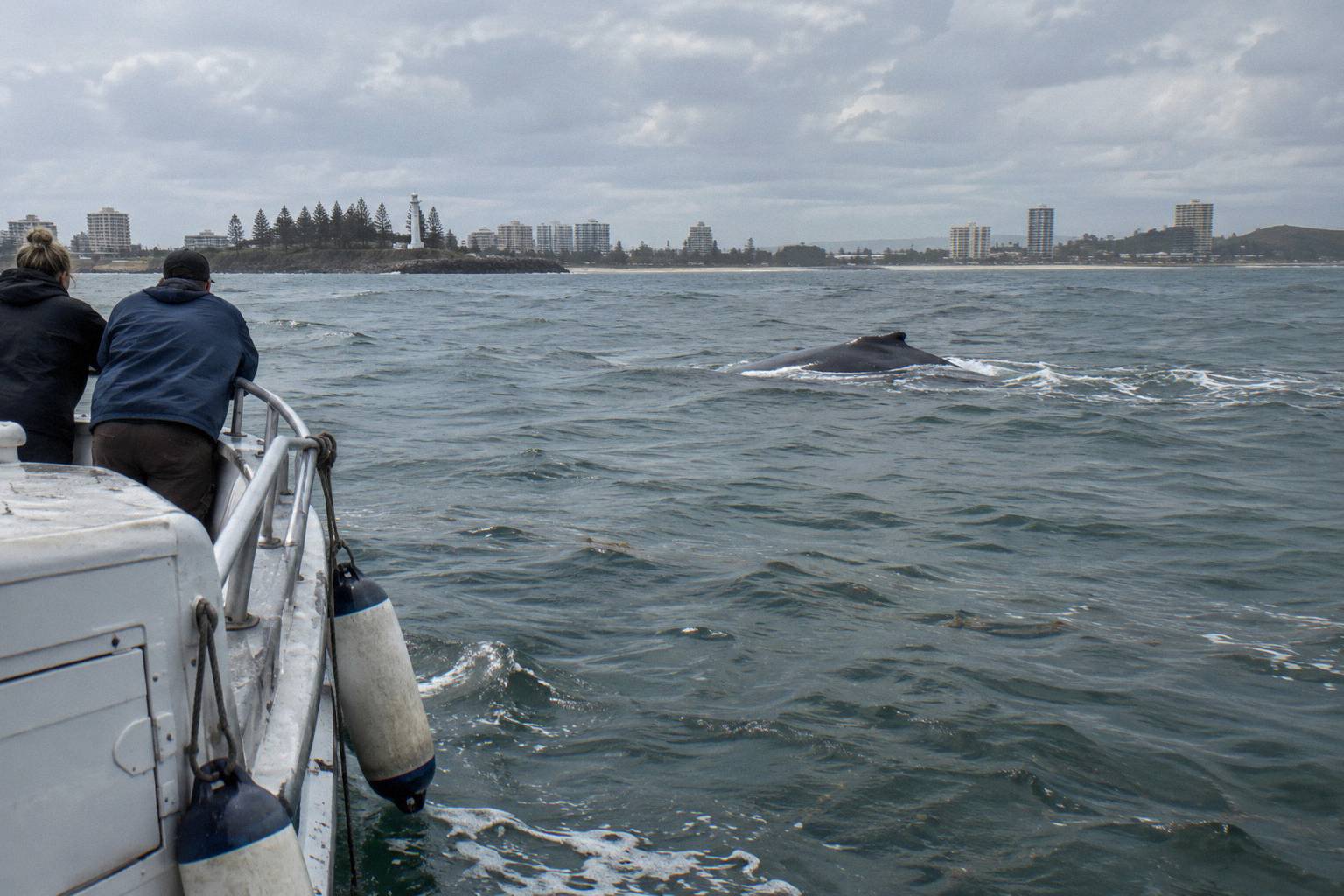
The full set of distances is on the Queensland rules for watching marine mammals page, with a brochure covering the same zones in plainer language. These distances shape every licensed trip you can take from Mooloolaba, and they explain why a good crew sometimes holds position rather than closing in: the law, and good practice, put the animal's choice first. A breach seen from 100 m or more loses nothing in scale; 16 m and 30 to 45 tonnes reads clearly from well outside the no approach zone.
One point worth knowing if you swim: the rule that a person in or entering the water must not be within 100 m of a whale sits in the same Queensland framework, and the commercial swim programmes run under the operators' own arrangements within those limits. If a swim trip appeals, the rules and safety around swimming with whales are set out in a dedicated guide, and the question of whether you need to be a strong swimmer is answered elsewhere too.
What Should You Ask The Operator Before Booking?
Ask three things before you hand over money: whether the trip runs on the date you want, since schedules vary through the season; what the operator itself says about sightings and its own cancellation terms, since these are operator statements that differ between boats; and where the specific trip boards and how early, since Mooloolaba departure points are spread along Parkyn Parade. The trip pages here carry the published figures for each option, and the operator's own pages carry the detail that changes between boats.
A short checklist of questions worth asking covers the practical ground. Does the trip have a toilet onboard if that matters to you, since only some boats do? What is the minimum age, since Adventure Rafting states a minimum age of 5 for its own trips while Sunreef states no numeric minimum and sells tickets in bands of children 4 to 14 and under 4? Where exactly do you board, since Mooloolaba trips leave from The Wharf Mooloolaba or from 21 Parkyn Parade depending on the operator, and the Noosa and Buddina trips use their own departure points entirely? And what happens if the weather turns, since operators state their own sea-condition cancellation terms?
The published figures give you a starting frame for cost. The Sunreef 3-Hour Whale Cruise runs from A$89 per person, 3 hours, rated 4.3 from 200+ reviews. Fast Boat, Free Cancellation runs from A$115 per person, 2 hours, rated 4.6 from 100+ reviews. Sunshine Coast Afloat, 3 Hours runs from A$105 per person, rated 4.8 from 136 reviews. All three carry free cancellation (up to 24 hours before departure on most, up to 3 days on the Sunreef 3-Hour Whale Cruise and Swim With Humpback Whales) on the booking page, as does every other trip in the comparison. For trips with no published from-price, including the Coastal Express Small Boat and the jet boat from Buddina, the booking page shows the price for your date.
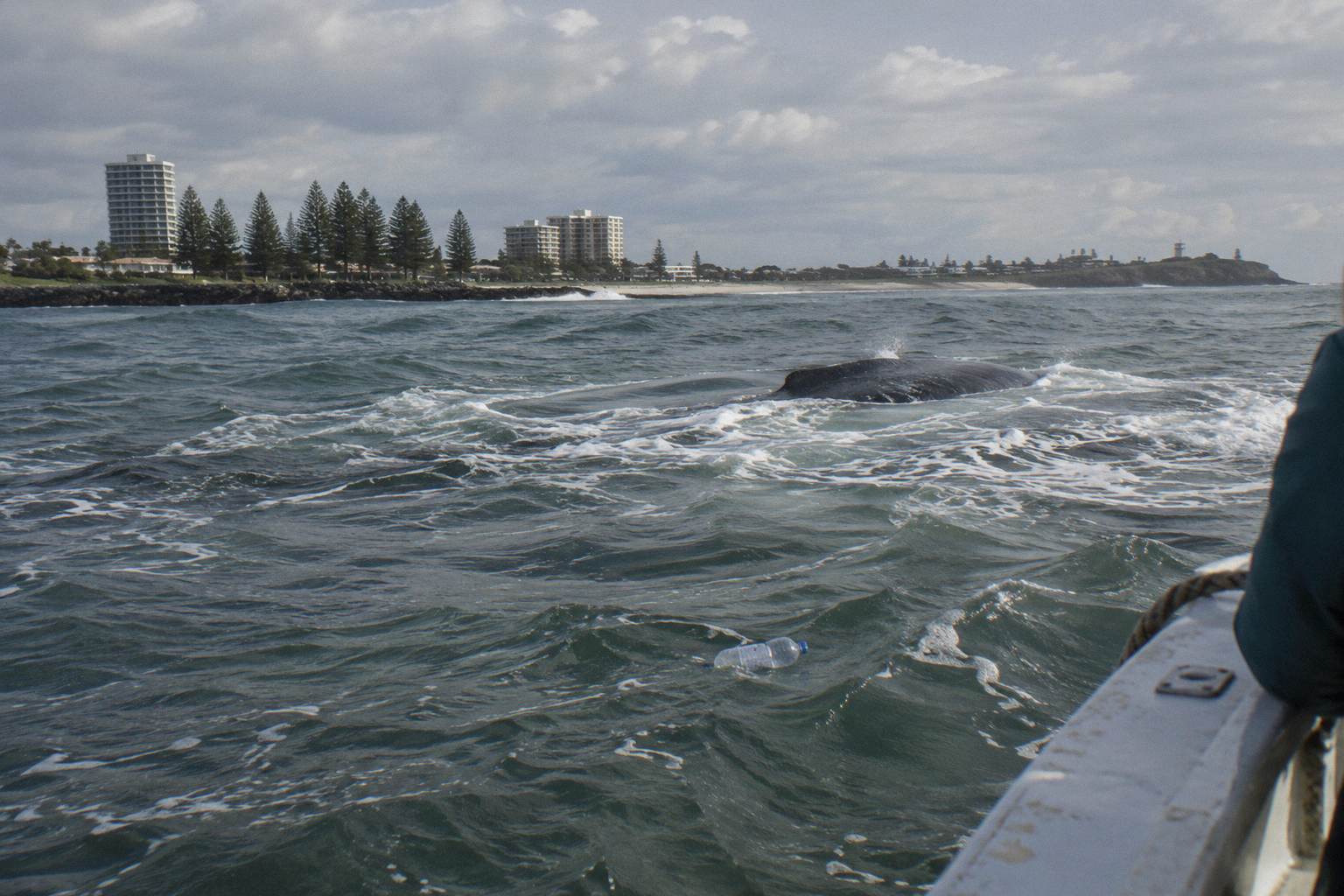
The three-hour Sunreef cruise suits readers who want maximum time on the water for the lowest published from-price of the group, while the two-hour fast boat trades an hour of watching for a livelier ride, and the two are compared directly on the Sunreef 3-Hour Whale Cruise and Fast Boat, Free Cancellation pages. If your interest in the animals is as much about sound as sight, the hydrophone trip named above is the natural pick of the three, since it keeps working even in the quiet stretches when the whales stay below the surface.
What Trips People Up Before Boarding?
The common mistakes are turning up at the wrong meeting point, arriving too late for check-in, assuming every boat carries the same age rule, and expecting a breach or any named behaviour as part of the ticket when no operator can promise one. Meeting points differ along Parkyn Parade and beyond: Sunreef and Whale One meet at The Wharf Mooloolaba with check-in at the Sunreef desk for a boarding pass, Adventure Rafting boards at its berth next to Prawn Star at the same complex, and Sunshine Coast Afloat leaves from 21 Parkyn Parade. Getting these mixed up is easy and costly.
| Mistake | What goes wrong | The fix |
|---|---|---|
| Wrong meeting point | You are at The Wharf when the boat leaves from 21 Parkyn Parade, or vice versa | Check the address for your specific trip before leaving |
| Arriving late | Parking at The Wharf is time-limited and difficult in peak season | Adventure Rafting advises arriving 30 minutes before sailing for its trips |
| Assuming a breach is promised | No operator can promise any behaviour | Ask what the operator says about sightings before booking |
| Assuming one age rule for all boats | Adventure Rafting states minimum age 5; Sunreef states no numeric minimum | Ask the operator for the trip you booked |
| Assuming a swim is part of a cruise ticket | Swim trips are separate products, four hours, from A$269 per person | Book the swim trip specifically if that is what you want |
The assumption that a sighting or a breach is promised is the one that causes the most disappointment. Adventure Rafting says plainly on its own page that it cannot guarantee sightings, and no trip covered here promises a breach or any named behaviour. The one guarantee-type statement in print anywhere belongs to Whale One, whose own policy is a free return trip if no whales are seen on its tours. Read that as what it is, one operator's stated policy, not a general rule of the coast.
The last mistake is treating the sea like the beach. Whale One's own advice notes that although the weather sometimes looks fine on the beach, it does not always reflect conditions offshore, and both Sunreef and Adventure Rafting suggest considering seasickness tablets. The seasickness guide for whale watching goes further, and the question of whether cruises run in rough weather is answered in its own piece, including the Mooloolah Bar, a designated coastal bar where Maritime Safety Queensland warns conditions can change quickly and without warning even on a good day, with lifejackets compulsory for everyone on open boats while crossing.
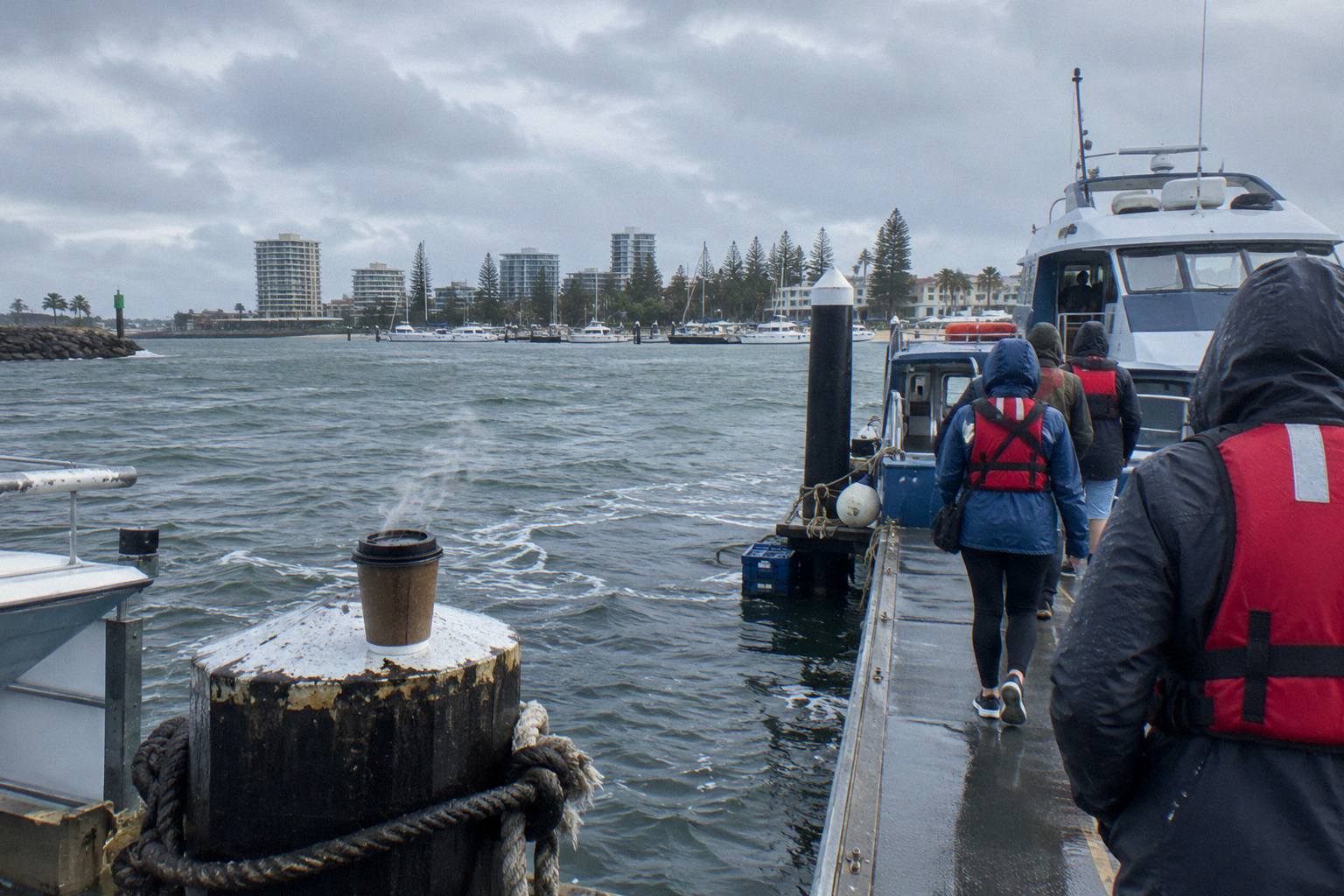
The bar is why crews, not passengers, make the call on the day, and it is the practical backdrop to every cancellation policy quoted above. Trust the operator's judgement on conditions; it is better to rebook than to cross a bar the crew does not like. More on the animal side of the trip, including what the whales are doing at each point of the season, is in the month by month whale season guide. For the wider picture across the coast, Mooloolaba Whale Watching exists to answer exactly these questions in one place, from breaching science to booking logistics.
If a breach happens on your trip it will be because a 30 tonne animal decided, for reasons still debated, to leave the water. Everything a good operator controls, the season window, the approach rules, the departure point and the time on the water, is in the trip pages below, and the choice between them comes down to hours, pace and price.
Common Questions About Humpback Whales Breaching
Why Do Humpback Whales Breach?
The reasons are debated and no single cause has been proven. Proposed explanations include communication, dislodging parasites, stunning prey and play. What is documented is the animal: usually up to 16 m long and 30 to 45 tonnes, making a full breach one of the most powerful movements in the animal kingdom.
Can A Whale Watching Tour Promise A Breach?
No. No trip covered here promises a breach or any named behaviour, and Adventure Rafting states it cannot guarantee sightings.
How Close Can A Boat Get To A Breaching Whale?
Queensland rules set a no approach zone of 100 m around a whale, extending to 300 m in front of and behind the animal, inside a caution zone of 300 m where boats travel at no more than 6 knots with no wake. If a whale approaches the boat, the operator must turn engines off or disengage gears, or withdraw slowly.
How Big Are Humpback Whales?
Per the Queensland Government, adults are usually up to 16 m long and weigh 30 to 45 tonnes, calves are 4 to 5 m at birth, and gestation runs 11 to 12 months. They dive typically 10 to 15 minutes, up to about 30.
When Is The Best Chance Of Seeing Surface Activity?
No month promises activity, but the season runs roughly June to October, into early November, and Visit Sunshine Coast says July and August carry the largest northbound numbers. Around 50,000 humpbacks migrate past, per the Queensland Government, so more animals pass in mid-season than at the edges.