Is Swimming With Humpback Whales Safe?
Swimming with humpback whales off Mooloolaba is governed by Queensland in-water distance rules, national guidelines on calves and approach distances, the operator's own rules, and the Mooloolah Bar crossing. Here is what each one says.
Swimming with humpback whales can be safe, but no regulator or operator can answer that question definitively for you, because it depends on the operator's programme rules, the conditions on the day, and your own health and swimming ability, so you must weigh those factors yourself before getting in the water. No trip publishes a safety verdict, and none should be read as one. What can be stated plainly is the framework around the swim: Queensland law sets a distance a person in the water must keep from a whale, national guidelines set extra conditions for swim programmes including a ban on swimming with calves, and the boat crosses a designated coastal bar where lifejackets are compulsory. The sections below set out each of those in turn, and a checklist of questions to put to the operator covers the rest.
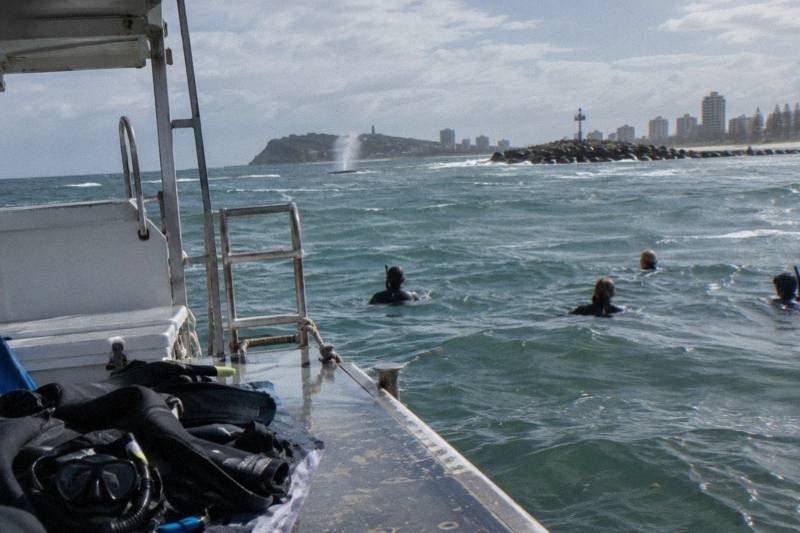
A swim trip is a different product from a whale watching cruise. You travel out on the boat, and when the crew decides the situation suits a swim, swimmers enter the water under the operator's own procedures. The trip covered here is Swim With Humpback Whales, run by Sunreef with Whale One from The Wharf Mooloolaba at 123 Parkyn Parade, a 4 hour trip from A$269 per person, amounts in Australian dollars. If the water part is not for you, the same operator runs the Sunreef 3-Hour Whale Cruise, from A$89 per person, and you can read more in the cruise or swim comparison.
Sunreef's own page states that its swim season runs July to Mid October and that encounters follow the Australian National Guidelines for Whale and Dolphin Watching. That is an operator statement about its own programme, and it is the right starting point for what follows: the guidelines, the state rules, the operator's rules, and the boat journey itself each add a layer worth understanding before you commit.
What The Queensland Rules Say About People In The Water
Queensland's marine mammal rules state that a person in or entering the water must not be within 100 metres of a whale, or within 50 metres of a dolphin, and breaching that distance is an offence under the nature conservation legislation. The rule sits on the same Queensland rules page for watching marine mammals as the boat distances, and it applies to anyone in the water, not only to commercial swim programmes. For context, the same rules set a whale caution zone out to 300 metres and a no approach zone for boats of 100 metres all round, extending 300 metres in front of and behind the animal.
That 100 metre in-water distance is the baseline in state law. The question a nervous swimmer usually asks next is how a swim programme can operate at all if swimmers must stay 100 metres away, and the answer sits in the national guidelines rather than in a Queensland swim licence. No Queensland instrument was found that authorises or sets conditions, such as swimmer numbers or line length, for a Mooloolaba swim programme, while the national guidelines allow authorised programmes a different regime. The next section covers exactly what those guidelines say.
The distinction matters because it tells you where to direct your questions. Distance rules for boats and people in the water are Queensland law. The conduct of a swim programme, including how close a swimmer may be taken and when a swim is called off, comes from the national guidelines and the operator's own rules. Neither layer is a promise about what the whales will do, and no trip can promise an encounter.
What The National Guidelines Say About Swim Programmes
The 2017 Australian national guidelines allow swimming with whales only under authorised programmes, with swimmers not entering the water closer than 100 metres to a whale and not approaching closer than 30 metres to any whale or dolphin, and no swimming at all with calves or pods containing calves. The guidelines also state that vessels must not enter the caution zone when a calf is present, defining a calf as a whale less than half its mother's length. Those conditions come from the national guidelines for whale and dolphin watching, and Sunreef states its programme follows them.
Two of those clauses answer the questions nervous swimmers ask most. First, the calf ban: a swim should not occur with a whale calf or a pod containing one, which removes the situation many people worry about most, a mother with a young calf. Second, the approach limit: even within a programme, the guidelines cap how close a swimmer may approach, at 30 metres, and entering the water happens at 100 metres or more. The whales themselves decide whether to come nearer, and no guideline or operator can promise that they will.
It is worth being precise about what the guidelines are not. They are national guidelines, not a Queensland licence, and no Queensland instrument was found that authorises a Mooloolaba swim programme or sets its swimmer numbers. What that means in practice is that the operator's own procedures carry real weight: how the crew briefs swimmers, when they call off a swim, and what gear is provided are questions for the operator, not for a regulator's published conditions. Sunreef states its encounters follow the guidelines, and you can check availability and ask the crew directly before you commit.
The calf rule in the guidelines is a national one, and it should not be confused with the 300 metre boat distance for whales with calves that applies in the Great Barrier Reef Marine Park and other Commonwealth waters. Queensland state waters off Mooloolaba have no separate calf distance in the state rules, so the guideline clause above is the operative one for a swim programme there. More background on the rules is in the swim rules and safety guide.
Who Runs The Swim And What The Operator's Rules Cover
Swim With Humpback Whales is run by Sunreef with Whale One, departs The Wharf Mooloolaba at 123 Parkyn Parade, lasts 4 hours and starts from A$269 per person, with free cancellation up to 3 days on the booking page. Sunreef states its swim season runs July to Mid October, shorter than its whale watching season, which it runs from early June with tours until very early November. The booking page shows the departure for your date, and the price shown there is in Australian dollars.
The operator layer is where most of the practical safety questions live. Queensland law does not set swimmer numbers, line length or fitness requirements for a Mooloolaba swim programme, so those details belong to the operator's own rules. Ask the operator directly: how many swimmers enter the water at once, what briefing is given before entry, what flotation gear is provided, and under what conditions a swim is called off. Where a detail is not published, ask the operator rather than assuming it.
One piece of regulatory context is worth knowing because it shapes who can run the trip. The Queensland environment department states that a permit is not required to conduct a commercial whale watching activity in state waters outside marine parks, with permits or agreements needed inside marine parks such as Moreton Bay and Great Sandy, and Mooloolaba sits outside both, per the department's whale watching permits page. The operator's own Sunreef whale season page carries the season and programme statements quoted here, and it is the source to check before booking.
If a 4 hour swim trip sounds like more than you want, a cruise covers the same waters from the deck. The Sunreef 3-Hour Whale Cruise is from A$89 per person, rated 4.3 from 200+ reviews, and both it and the swim carry free cancellation up to 3 days on the booking page.
The Bar Crossing, Lifejackets And The Trip Out To The Whales
Every Mooloolaba whale trip crosses the Mooloolah Bar, a designated coastal bar where Maritime Safety Queensland requires everyone on open boats or in open areas to wear a lifejacket while crossing, and the authority warns that conditions on a bar can change quickly and without warning, even on a good day. That is a stated fact from the Maritime Safety Queensland bar crossing page, and it applies to the journey component of a swim trip as much as to any cruise. The bar is part of the trip out of the Mooloolah River, and it is the one part of the day governed by a hard equipment rule rather than by discretion.
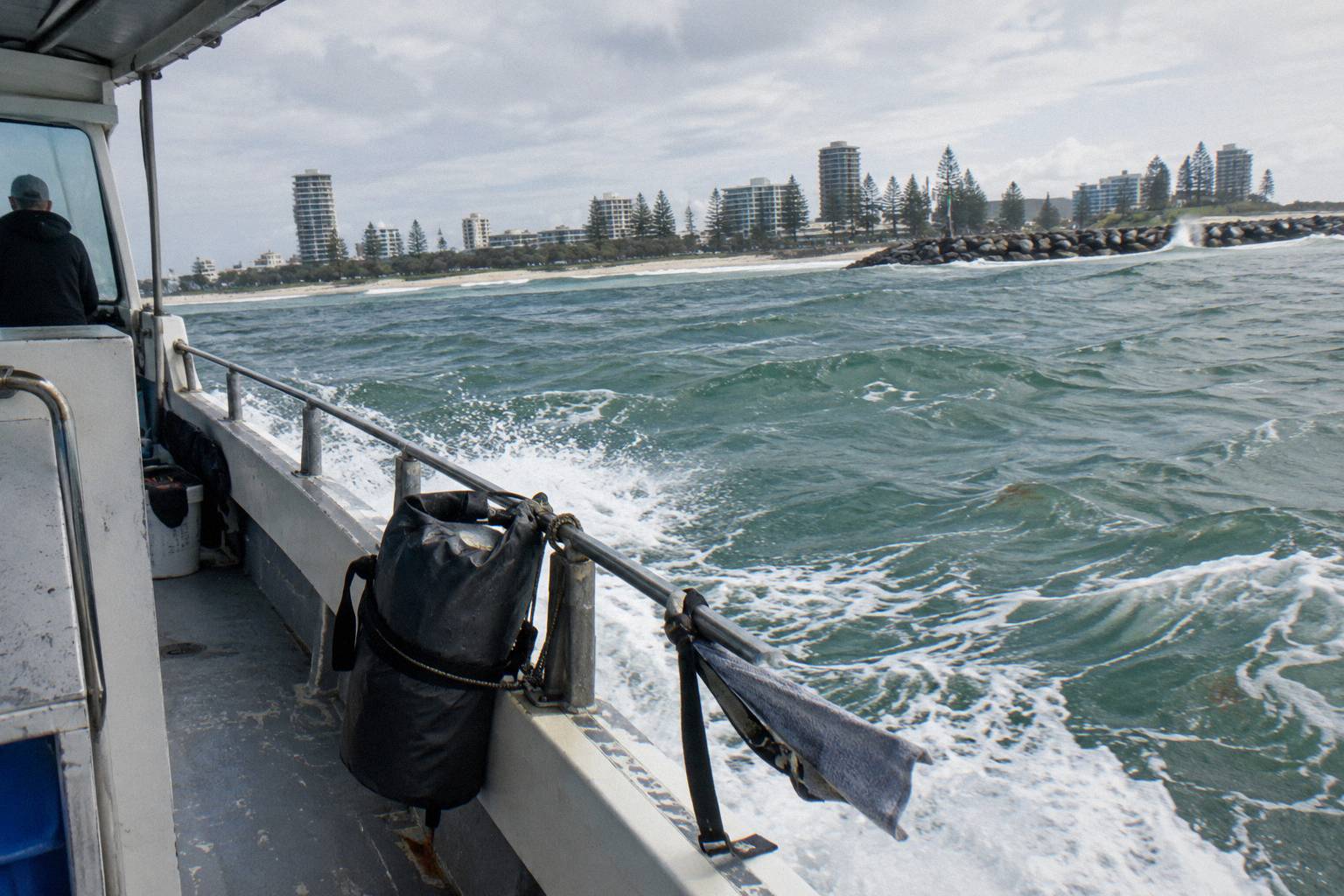
The bar crossing is worth raising with the operator if you have never been through one on a small vessel. Ask how long the crossing takes, where you should be seated, and what happens if the crew judges the bar unsuitable on the day. Operators state their own weather cancellation policies, and the booking page for your date shows the terms that apply, so read the cancellation and rebooking conditions before you pay rather than after. The rest of the planning pages sit on Mooloolaba Whale Watching.
The other boat-journey fact worth carrying is the operator advice on conditions offshore. Whale One notes that although the weather sometimes looks fine on the beach, it does not always give an accurate picture of conditions offshore, which is why the crew, not the beach, makes the call on the day. Both operators named in the fact lines advise considering seasickness tablets, and if you are prone to motion sickness or have any medical question about the trip, check with your doctor once before you book.
Ages, Pregnancy And Health Questions
Sunreef states that pregnant guests cannot board its trips, that children under 16 must be accompanied by an adult, and that it sets no numeric minimum age for whale watching, with ticket bands of children 4 to 14 years and under 4 free. Those are Sunreef's own rules for its own trips, published on the Whale One page, and they are the only age and pregnancy rules stated for any operator covered here. For any other trip, including other operators' whale watching cruises, no age or pregnancy rule is published, so ask the operator.
For the swim specifically, no fact line states an age minimum, a swimming ability requirement or a fitness standard for entering the water. That silence is a real gap, not an implied all-welcome policy, and it is exactly the kind of detail to confirm with the operator before booking. If you are not a confident swimmer, say so when you ask, and read the companion piece on whether you need to be a strong swimmer for how that question is usually framed.
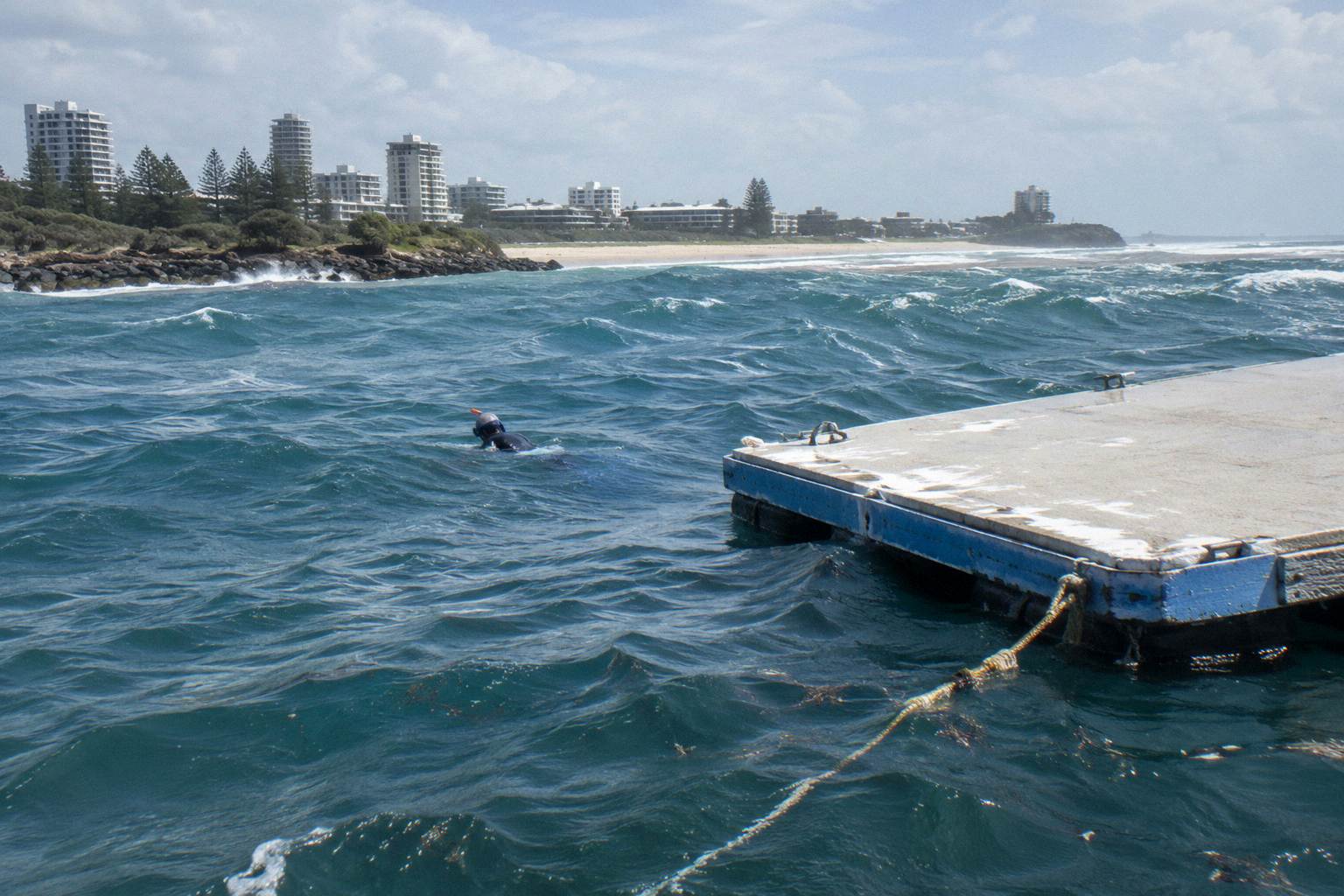
Health questions belong to you and your doctor, not to a booking page. The only medical advice stated by the operators is to consider seasickness tablets, plus the note that conditions offshore can differ from the beach. Anything beyond that, from pregnancy to heart conditions to cold water tolerance, is a matter to raise with your doctor and then with the operator in the same breath.
What To Ask The Operator Before You Book
A short, direct set of questions to the operator covers every gap the published rules leave open: swimmer numbers per entry, briefing content, flotation gear, when a swim is called off, the bar crossing, and the age and health rules for the swim specifically. No Queensland instrument sets those details for a Mooloolaba swim programme, so the operator's answers are the authoritative source. Ask them before you pay, and keep the answers with your booking confirmation.
| Question To Ask | Why It Matters | Where The Rules Stand |
|---|---|---|
| How many swimmers enter the water at once? | Sets how crowded the entry is | Not set by Queensland; operator's own rules |
| How close will swimmers be taken? | National guidelines cap approach at 30 m, entry at 100 m | 2017 national guidelines |
| Is a wetsuit or flotation line provided? | Gear affects confidence in open water | Operator's own rules; ask directly |
| What happens if a calf is present? | Guidelines say no swimming with calves or calf pods | 2017 national guidelines |
| What is the bar crossing like, and are lifejackets worn? | Lifejackets compulsory crossing the designated bar | Maritime Safety Queensland |
| What ages and health conditions can join the swim? | Only Sunreef's cruise rules are published; swim rules are not | Ask the operator |
| What is the cancellation policy? | Free cancellation up to 3 days on the booking page | Booking page for your date |
The distance rules in that table come from two layers, and it helps to see them side by side. The table below sets out the stated distances by who or what they apply to, drawn from the Queensland rules page and the national guidelines.
| Who Or What | Stated Distance | Source |
|---|---|---|
| Boat, no approach zone for a whale | 100 m all round, 300 m front and rear | Queensland rules |
| Boat, caution zone for a whale | Out to 300 m | Queensland rules |
| Person in or entering the water, whale | 100 m | Queensland rules |
| Swimmer in an authorised programme, approach limit | 30 m, entry at 100 m or more | 2017 national guidelines |
| Swimming with calves or calf pods | Not to occur | 2017 national guidelines |
| Drone near a whale | 100 m | Queensland rules |
| Jet ski or hovercraft near a whale or dolphin | 300 m | Queensland rules |
If the answers you get leave you uneasy about the water component, the cruise option still puts you on the same grounds. Fast Boat, Free Cancellation from Adventure Rafting is from A$115 per person, 2 hours, rated 4.6 from 100+ reviews, meeting at The Wharf Mooloolaba, with free cancellation up to 24 hours on the booking page.
Common Mistakes When Booking A Whale Swim
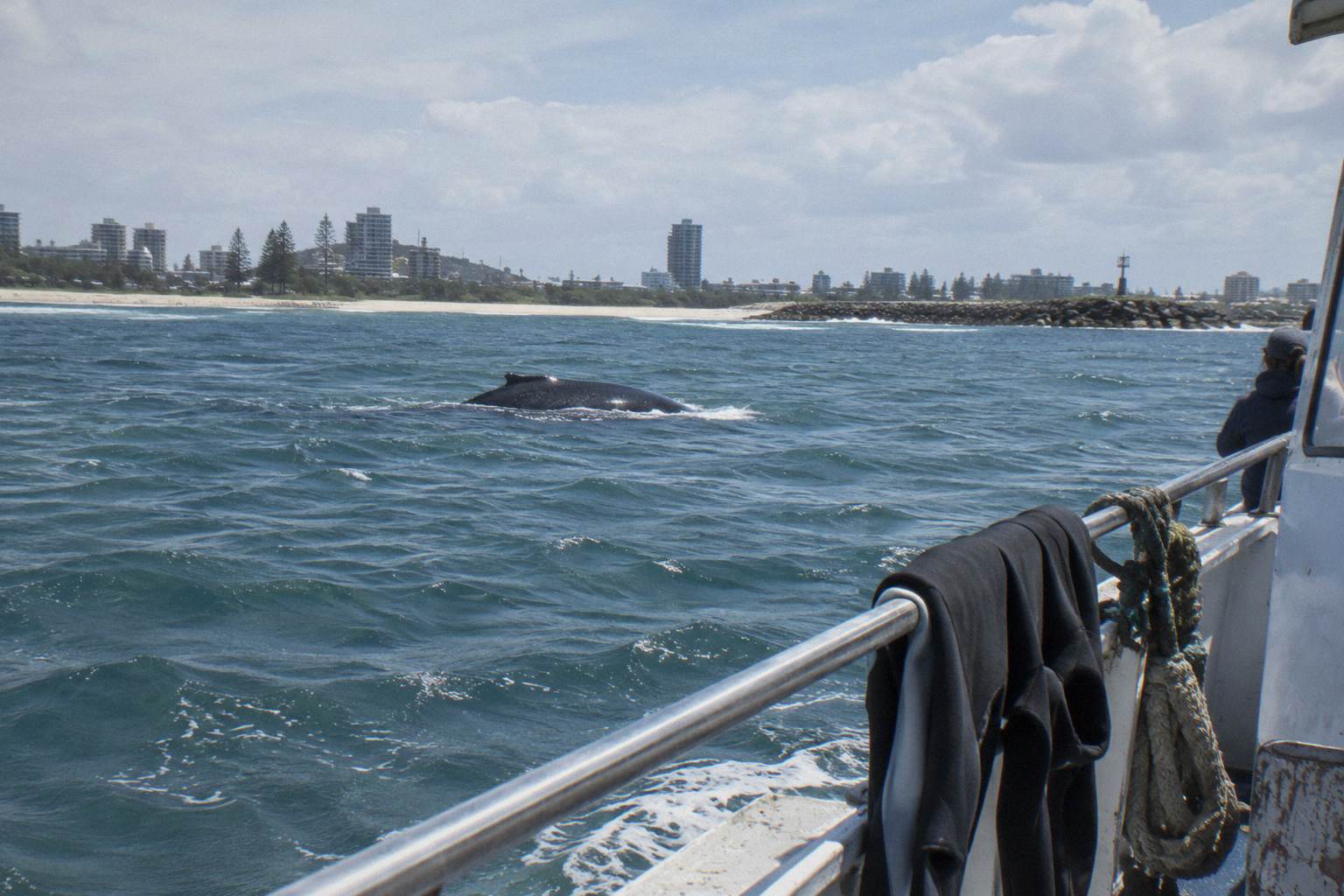
The three mistakes that trip up most whale swim bookings are assuming the swim is included in your cruise ticket, assuming every operator follows the same age and pregnancy rules, and assuming a whale encounter is promised the moment you book. Checking these details before you pay can save you from disappointment, denied boarding, or paying twice for an experience you expected to be included. Each of those is wrong in a way that costs money or confidence, and each is easy to avoid with one extra question before you pay. The swim is a separate 4 hour product with its own price and season, age and pregnancy rules differ by operator and are published only for Sunreef, and no trip covered here promises a sighting or an in-water encounter.
The first mistake is the costliest. A whale watching cruise ticket buys a seat on the boat, not a place in the water, and the swim product runs on its own schedule, from A$269 per person against from A$89 per person for the 3 hour cruise. Check which product you are actually booking before you pay, because the names are similar and the experiences are different. The second mistake, assuming one operator's rules apply everywhere, catches families and pregnant travellers: Sunreef states pregnant guests cannot board and children under 16 must be accompanied by an adult, while other operators publish no comparable rules, so ask yours.
The third mistake is expecting a promise of a sighting. No trip covered here promises a whale, and Adventure Rafting says outright that it cannot guarantee sightings on its trips. For the swim, the whales decide whether to approach, and the guidelines' 30 metre approach limit is a ceiling, not a target. Booking with a clear picture of that, and with the operator's answers to the checklist above in hand, is what a well-prepared swimmer does differently.
Common Questions About Swimming With Humpback Whales
Is Swimming With Humpback Whales Safe?
That depends on the operator's programme rules, the conditions on the day, and your own health and swimming ability. The published framework includes Queensland's 100 metre in-water rule, the national guidelines' 30 metre approach limit and calf ban, compulsory lifejackets crossing the Mooloolah Bar, and the operator's own swim procedures. No regulator publishes a safety verdict, so ask the operator the checklist questions and check with your doctor once.
How Close Can You Swim To A Humpback Whale?
In Queensland a person in the water must not be within 100 metres of a whale. Under the 2017 national guidelines, swimmers in an authorised programme must not enter the water closer than 100 metres to a whale and must not approach closer than 30 metres. Any closer approach is the whale's choice, not the programme's.
Can You Swim With Whale Calves?
The 2017 national guidelines state that swimming should not occur with whale or dolphin calves, or pods containing calves, and that vessels must not enter the caution zone when a calf is present. A calf is defined there as a whale less than half its mother's length.
Do You Need A Permit To Run Whale Watching At Mooloolaba?
The Queensland environment department states a permit is not required for commercial whale watching in state waters outside marine parks, and Mooloolaba is outside the Moreton Bay and Great Sandy marine parks. That statement covers commercial whale watching, not a safety judgement about any particular swim programme.
Is The Swim Licensed Or Approved By Queensland?
No Queensland instrument was found that authorises or sets conditions for a Mooloolaba swim programme. The operator runs the programme under its own rules, which Sunreef states follow the Australian National Guidelines for Whale and Dolphin Watching.
What Should Nervous Swimmers Ask Before Booking?
Ask how many swimmers enter at once, what briefing and flotation gear is provided, when a swim is called off, how the bar crossing is handled, and what ages and health conditions can join. Check with your doctor about seasickness and any medical question, and read the free cancellation terms on the booking page for your date.