Queensland Whale Watching Season: Where To Go And When
Humpbacks pass the Queensland coast twice each year, north to the breeding grounds and back again, and the months you choose and the port you base yourself in shape what a cruise can show you. The trips covered here run from Mooloolaba, Buddina and Noosa.
Short answer
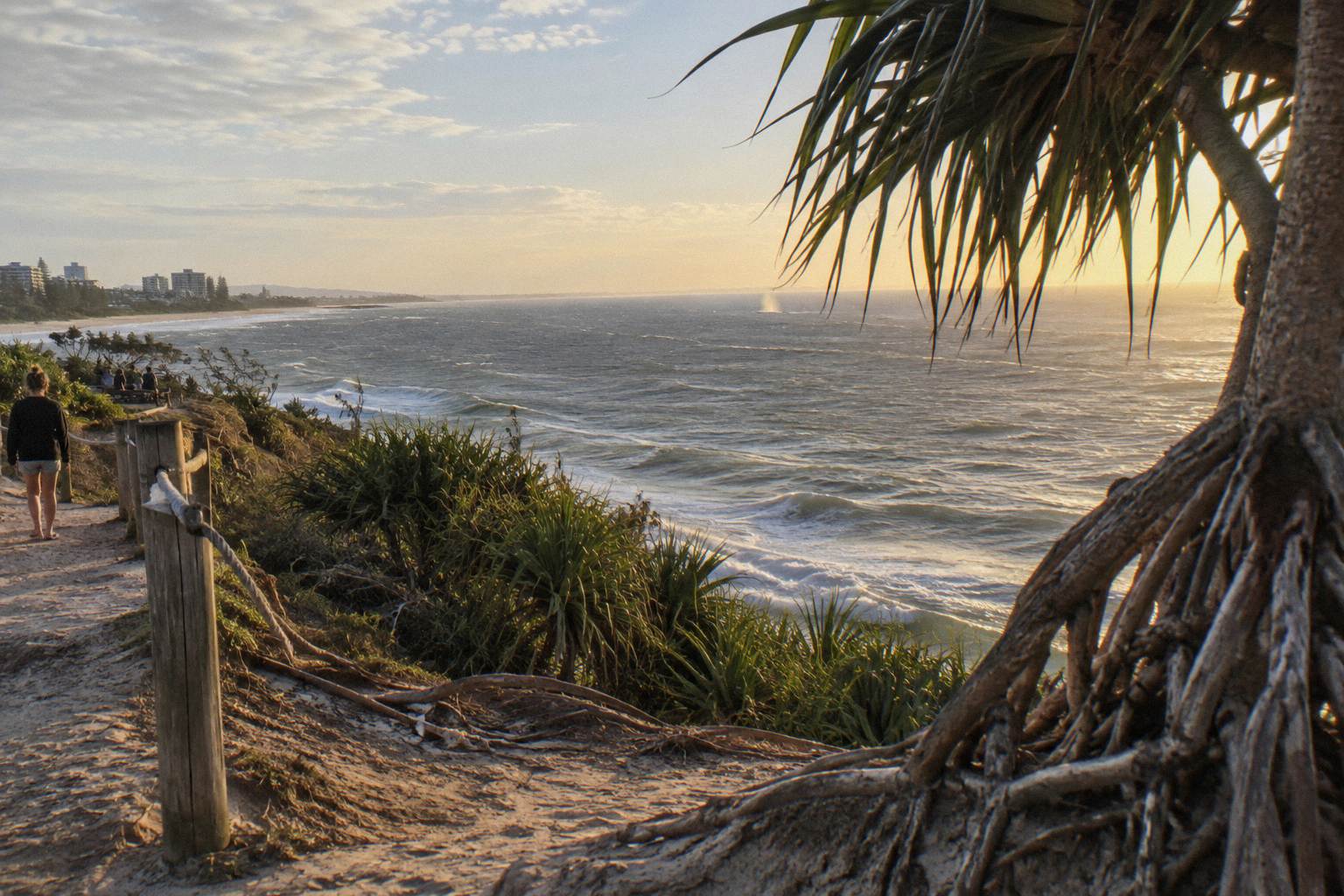
The Queensland Government says humpbacks migrate north along the coast between May and July and turn south in July and August, with a current population estimate of around 50,000 eastern Australian humpbacks. The trips covered here leave from Mooloolaba, Buddina and Noosa, and Visit Sunshine Coast points to July and August for the largest northbound numbers.
The Queensland coast sits directly on the path of the eastern Australian humpback migration, one of the longest whale journeys on the planet at around 9,000 km for the round trip, per the Queensland Government. Every winter the animals leave Antarctic feeding grounds, travel north to tropical breeding areas, then return south past the same coastline with calves in tow. That double passage is what makes a Queensland whale trip possible at all, and it is also why the answers to "when" and "where" are tied together: the whales are not everywhere at once, and the ports that can reach them differ in what they offer.
The trips run from three departure areas on the Sunshine Coast: Mooloolaba, Buddina and Noosa. That focus is deliberate. Rather than survey every port in the state, the pages here compare the eleven covered trips against each other, month by month, so a reader picking a base and a date can match the two. The broader Queensland picture still matters, because the state rules and the migration statements come from state-wide sources, and those apply to every boat you could board.
When Is The Queensland Whale Watching Season?
The Queensland Government states that humpback whales migrate northwards along the Queensland coast between May and July, then turn south in July and August after time in the tropical breeding grounds, so the practical watching window on the southern coast runs roughly June to October and into early November depending on the source. Visit Sunshine Coast calls June to November the official season locally. No single date opens or closes the season, and the operators themselves disagree on the end month: Sunreef says its trips with Whale One run from early June until very early November, while Adventure Rafting's own page gives 1 June to 31 October. The disagreement is not a problem, it is a reminder to check the dates your chosen trip actually sails before you book flights or accommodation.
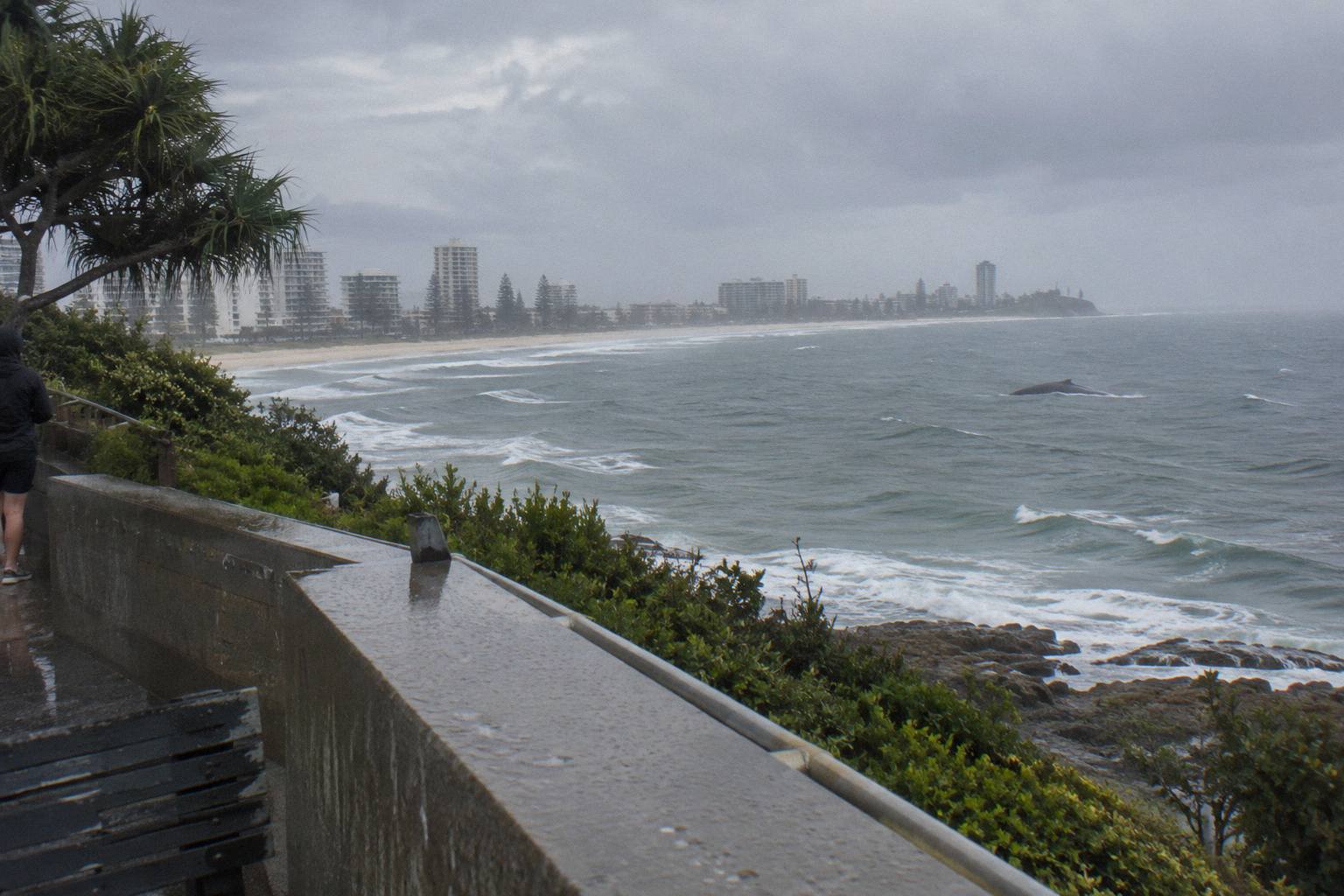
The migration has a direction to it, and direction matters more than most first-time visitors expect. The Queensland Government describes the northward leg as May to July, with the southward turn in July and August. In plain terms, the early months of the season show whales travelling north with purpose, the middle months show animals moving both ways, and the later months show the southbound stream, which is when mothers with calves are more commonly described in the operator season statements. Sunreef's own wording for its trips is that June through July is usually when the whales head north, August through September brings what it calls the crossover period with whales going both north and south, and from September to the end of October most whales are finishing their journey south.
Visit Sunshine Coast adds a tourism framing: the best time to spot whales on the Sunshine Coast is July and August, because that is when the largest numbers pass by heading north. That statement sits comfortably alongside the government's migration description, and together they give a planning answer that holds for every port covered here. If your dates are flexible and you want the busiest passage of animals, midwinter is the period both sources point to.
The season statements differ by source, and it helps to see them side by side rather than pieced together from different pages.
| Source | Season statement | Where it applies |
|---|---|---|
| Queensland Government | Northward migration May to July; southbound turn in July and August | Queensland coast generally |
| Visit Sunshine Coast | Official season June to November; July and August carry the largest northbound numbers | Sunshine Coast |
| Sunreef | Early June to very early November; crossover period August to September | Its own trips from Mooloolaba |
| Adventure Rafting | 1 June to 31 October on its page | Its own trips from Mooloolaba |
One more dated detail deserves its own line because it changes how you read the late season. A peer-reviewed study published in Scientific Reports in July 2025 tracked land-based survey counts at Peregian Beach on the Sunshine Coast and found that southbound adult peaks, which occurred in early October before 2015, had moved forward to mid-September by 2023 and 2024. The same paper reports that northbound counts at Point Lookout, south of Mooloolaba off south-east Queensland, consistently peaked in late June to early July through 2015. Both measurements come from survey sites, not from a boat, but they are among the few published numbers that describe when the animals actually pass this stretch of coast.
Where Can You Watch Whales In Queensland?
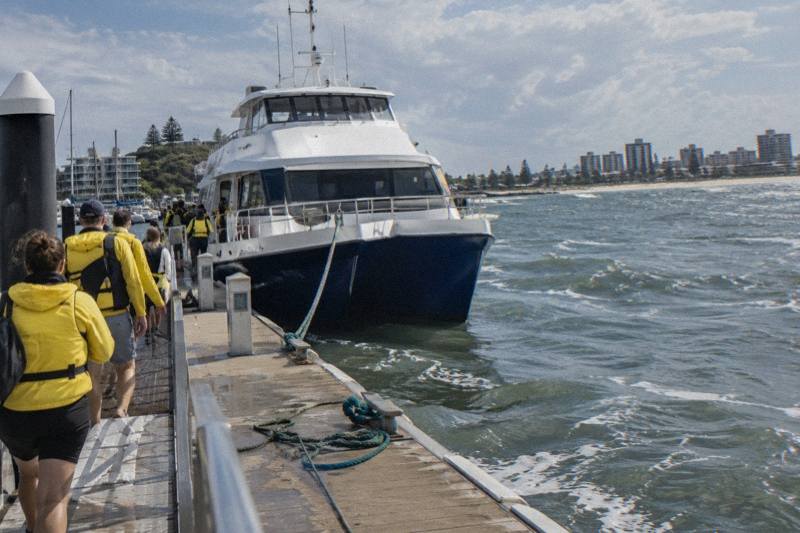
The practical answer for the trips covered here is three departure areas: Mooloolaba, where most boats leave from The Wharf Mooloolaba on Parkyn Parade or from 21 Parkyn Parade; Buddina, where the Jet Boat Whale Adventure departs from the Kawana Waters Hotel deck; and Noosa, with trips leaving Noosaville and Tewantin. Other Queensland ports run whale trips too, and Hervey Bay in particular is known statewide for its season, but no facts on those ports appear in the sources used here, so they get only that single clause and no comparison. A reader choosing between the covered ports is really choosing boat style and trip length, because all three departure areas sit on the same migration corridor.
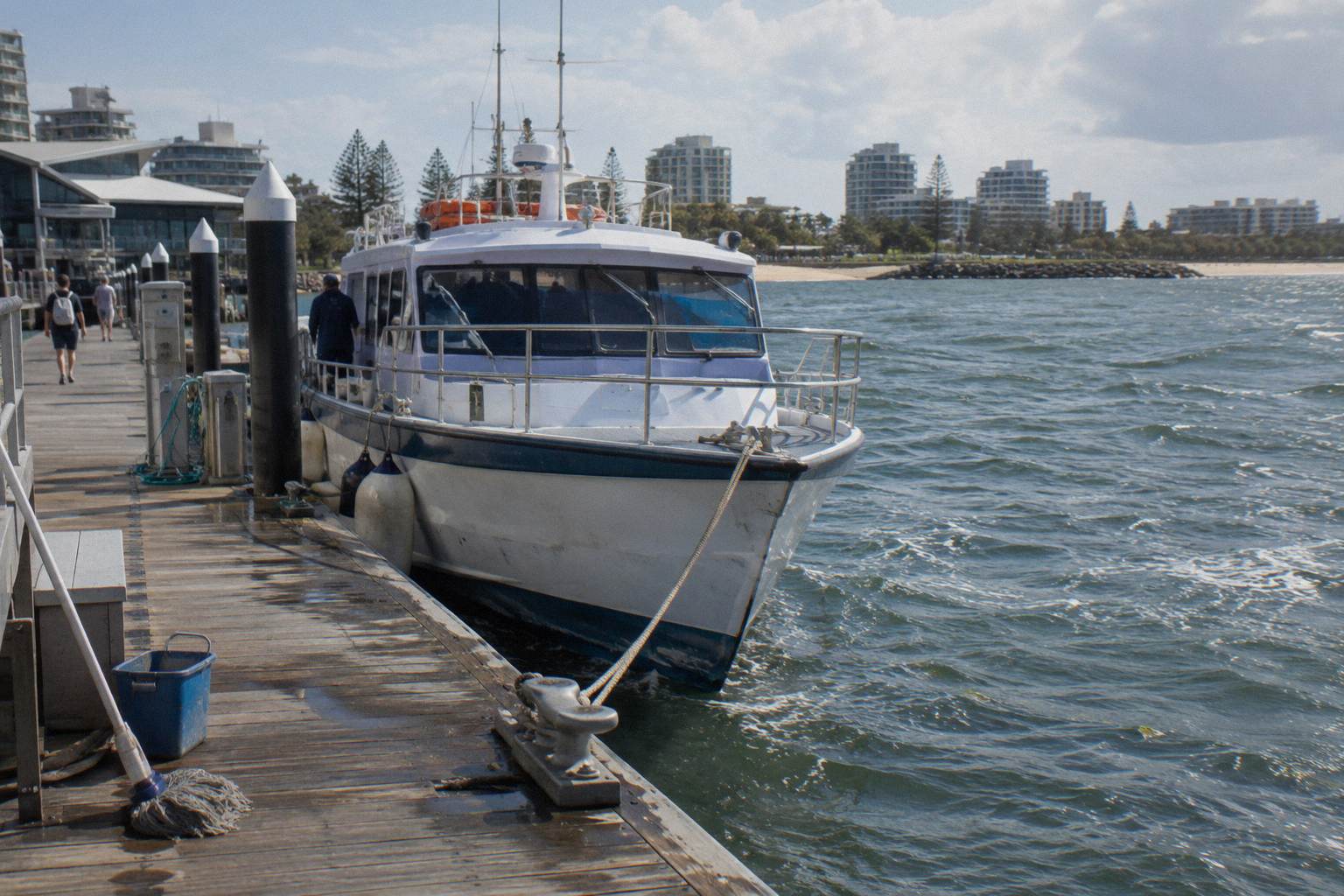
Mooloolaba carries the largest share of the covered trips. Sunreef's 3-Hour Whale Cruise and Swim With Humpback Whales meet at The Wharf Mooloolaba, 123 Parkyn Parade, with the boat docked on the river behind the shop; Adventure Rafting's Fast Boat, Free Cancellation and Hydrophone Whale Adventure leave from marine berth 42 next to Prawn Star at the same wharf; Coastal Express Small Boat also lists The Wharf Mooloolaba as its meeting point. Sunshine Coast Afloat, 3 Hours is the exception, meeting at 21 Parkyn Parade. Everything else covered here departs elsewhere: the Jet Boat Whale Adventure from Buddina, and the three Noosa trips from Noosaville or Tewantin.
The choice between Mooloolaba and Noosa gets a full comparison elsewhere, in how Noosa and the Sunshine Coast compare for whale trips, and the month-by-month detail has its own page in the Sunshine Coast season month by month. The short version for a Queensland-wide planner: Mooloolaba gives you the most trips and departure styles in one precinct, Noosa adds a river departure from Tewantin or Noosaville, and Buddina is a single jet boat product. None of that changes the migration, only the boat you watch it from.
If you already know you want the biggest review pool among the covered Noosa options, the Noosa Thriller Whale Watching trip is rated 4.8 from 300+ reviews and leaves from 194 Gympie Terrace, Noosaville, from A$105 per person; its full details are on the Noosa Ocean Adventures trip page, and check availability shows the departure times for your date.
All prices mentioned anywhere in these comparisons are in Australian dollars, and each figure is a booking-page from-price per person that varies by date.
Which Month Should You Choose For A Whale Cruise?
July and August are the months both the Queensland Government migration statement and Visit Sunshine Coast point to for the largest volume of whales past the southern coast, with the northbound peak measured at Point Lookout in late June to early July through 2015 and the southbound adult peak at Peregian Beach now arriving around mid-September by 2023 and 2024. September is the crossover month Sunreef describes for its own trips, with whales moving both directions, and October belongs to the southbound stream. June works but sits early: the first animals are passing, and the operators' season-opening dates reflect that.
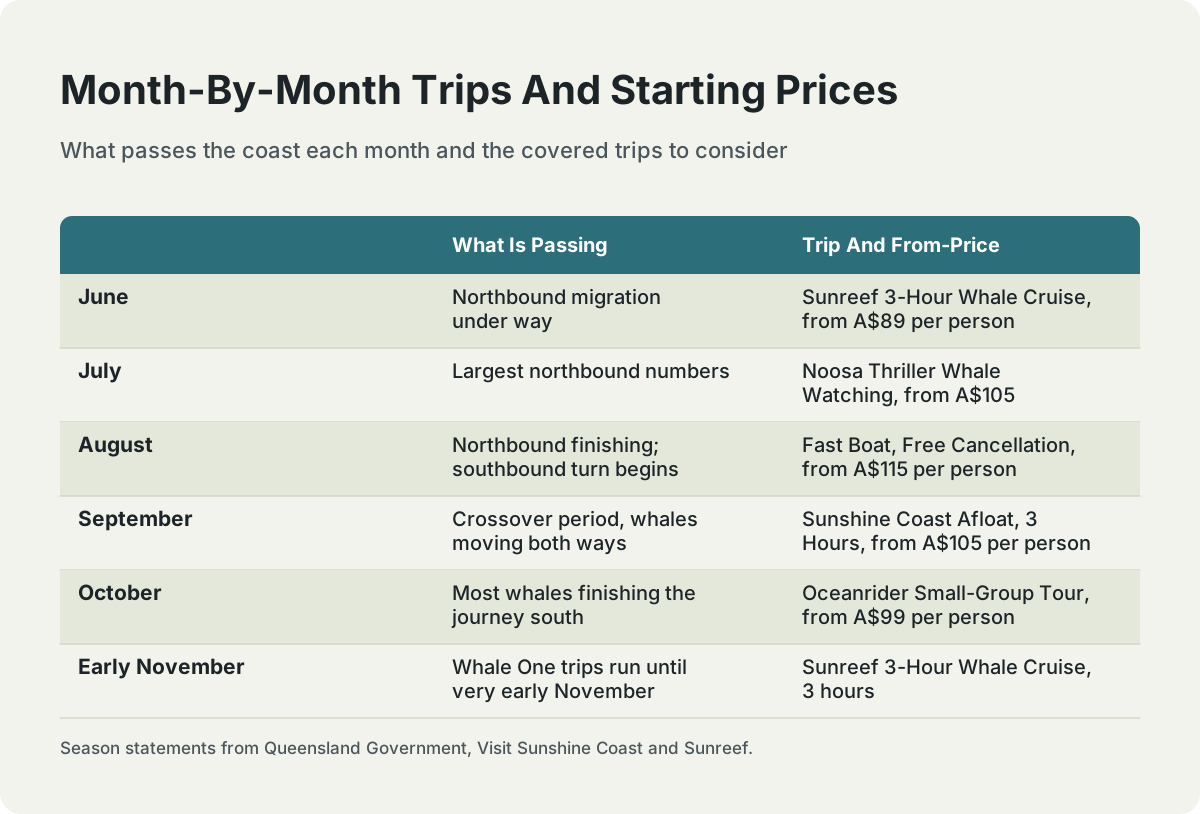
Reading the season as two overlapping streams rather than one is the most useful mental shift. The northbound animals pass in a tight window, the southbound animals spread over months, and the population keeps growing, so late-season trips are not a consolation prize. The Queensland Government's own figures describe approximately 12,000 eastern Australian humpbacks in 2008, increasing by around 10 percent each year, with a current estimate of 50,000. The last peer-reviewed survey counted 24,545 whales in 2015, with long-term growth of about 10.9 percent a year through 2015, so the bigger current number is a government estimate rather than a published survey result.
| Month | What the sources say is passing | Best covered trips to consider |
|---|---|---|
| June | Season opens; northbound migration under way per the Queensland Government | Sunreef 3-Hour Whale Cruise, from A$89 per person |
| July | Largest northbound numbers per Visit Sunshine Coast; northbound peak late June to early July at Point Lookout surveys | Noosa Thriller Whale Watching, from A$105 per person |
| August | Northbound stream finishing; southbound turn begins per the Queensland Government | Fast Boat, Free Cancellation, from A$115 per person |
| September | Crossover period with whales moving both ways, per Sunreef; southbound adult peak now around mid-September at Peregian surveys | Sunshine Coast Afloat, 3 Hours, from A$105 per person |
| October | Most whales finishing the journey south, per Sunreef; Adventure Rafting runs to 31 October | Oceanrider Small-Group Tour, from A$99 per person |
| Early November | Whale One trips run until very early November, per Sunreef | Sunreef 3-Hour Whale Cruise, 3 hours |
The other month-by-month factor is weather, and the climate numbers come from the nearby airport station of the Bureau of Meteorology. Across the June to October season the mean daily maximum runs from 21.2 to 25.7 degrees Celsius and the mean minimum from 9.7 to 15.8, with July through September the driest stretch at 50.7 to 73.2 mm of mean monthly rainfall and 5.4 to 6.9 mean rain days. Those are land station averages, not sea conditions, and no wave-height figure appears in any source here. What the sources do say is that calm conditions are most likely in the morning before any wind picks up, attributed to the Queensland Government, and that conditions offshore can differ from how the beach looks, a statement Whale One makes about its own trips.
What Rules Apply Around Whales In Queensland Waters?
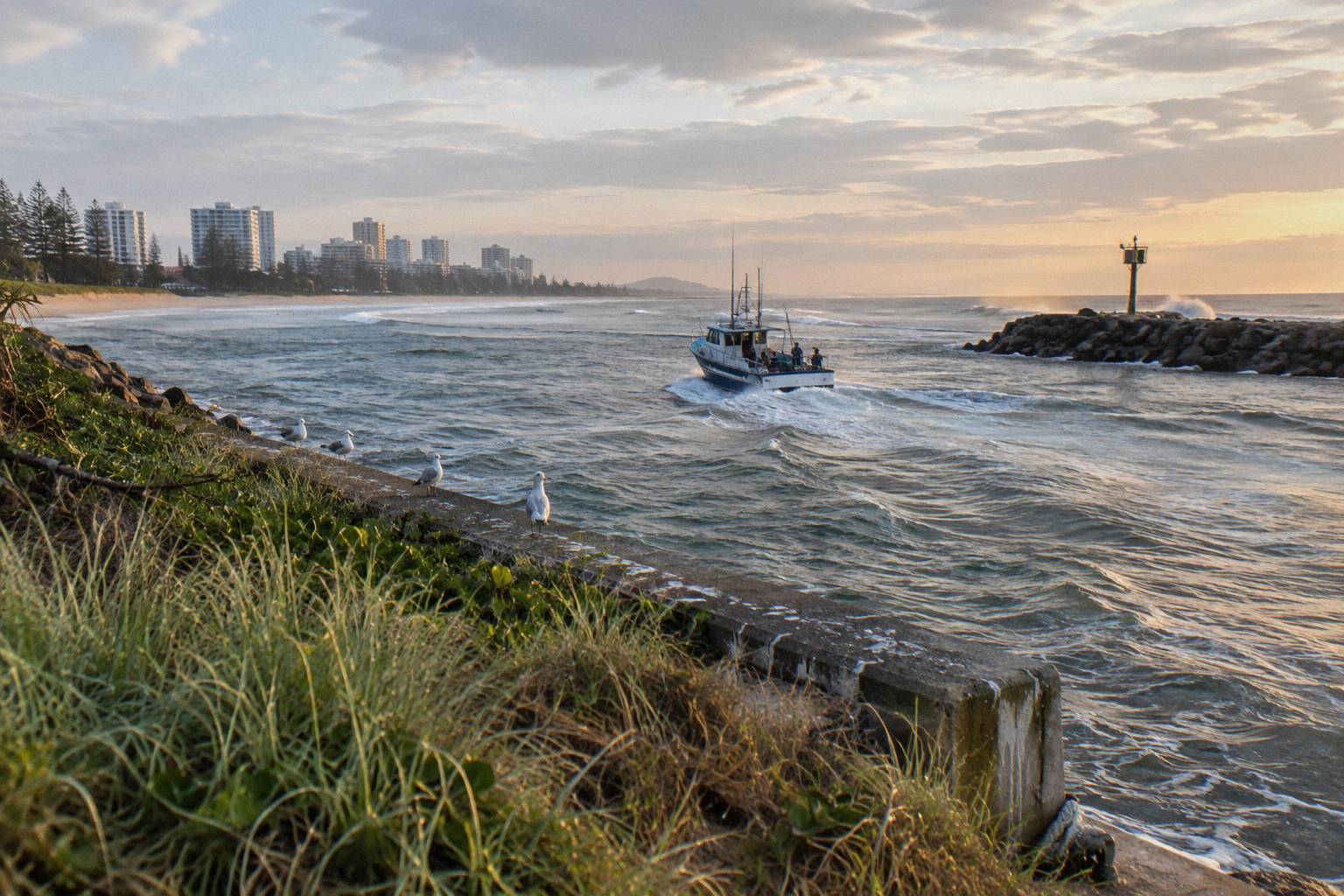
Every covered boat operates under the Queensland approach rules: a no approach zone of 100 m around a whale, extending to 300 m in front of and behind the animal, and a caution zone out to 300 m in which a vessel travels at no more than 6 knots and leaves no wake. The same rules page sets the dolphin distances at 50 m and 150 m. These are not courtesies, they are law, and the details live in the Queensland rules for watching marine mammals and the underlying Nature Conservation (Animals) Regulation 2020. For a passenger the practical effect is simple: the boat's distance from the whales is set by regulation, not by how the day is going.
If a whale approaches the boat, the rules say the engines must be disengaged or the vessel withdrawn at under 6 knots without a wake, and the caution-zone speed limit applies whenever the boat is within 300 m. Operators must follow the Queensland and Commonwealth approach rules, a phrase worth remembering when you read any trip description. The rules also cover people in the water: a person in or entering the water must not be within 100 m of a whale, or within 50 m of a dolphin.
| Animal and situation | Distance rule | Source |
|---|---|---|
| Whale, vessel approach | 100 m no approach zone, extending 300 m in front of and behind | Queensland rules page |
| Whale, caution zone | Within 300 m: maximum 6 knots, no wake | Queensland rules page |
| Whale approaches the vessel | Engines off or withdraw under 6 knots, no wake | Queensland rules page |
| Dolphin, vessel approach | 50 m no approach zone, 150 m caution zone | Queensland rules page |
| Person in the water | Not within 100 m of a whale, 50 m of a dolphin | Queensland rules page |
| Drones | Not within 100 m of a whale or dolphin | Queensland rules page |
A permitting detail that surprises many readers: a permit is not required to conduct a commercial whale watching activity in Queensland state waters outside marine parks, while permits or agreements are needed inside marine parks such as Moreton Bay and Great Sandy, per the Department of the Environment, Tourism, Science and Innovation. Mooloolaba sits outside both of those parks. None of this changes the approach rules, which apply regardless of permits.
Swim trips deserve one careful paragraph. Swim With Humpback Whales is an operator programme, Sunreef states its swim season runs July to mid October, and the operator says encounters follow the Australian National Guidelines for Whale and Dolphin Watching. The 2017 national guidelines say swim programmes must not enter the water closer than 100 m to a whale and must not approach closer than 30 m to any whale or dolphin, and that swimming should not occur with calves or pods containing calves. Nothing in the Queensland sources used here describes a separate state authorisation for a Mooloolaba swim programme, so the operator's own rules are the ones to ask about. The safety side of that decision is covered in full in the swim safety questions answered.
What Do The Numbers Say About The Humpback Population?
The Queensland Government's current estimate is around 50,000 eastern Australian humpbacks, up from approximately 12,000 in 2008 with growth of around 10 percent a year at that time, while the last peer-reviewed count is 24,545 whales in 2015, with long-term growth of about 10.9 percent a year through 2015. The gap between those two figures is a gap in method, not a contradiction: one is a government estimate, the other a published survey result with a confidence interval of 21,631 to 27,851. Both are worth knowing because they explain why the season keeps feeling busier.
The conservation status has its own story. The species was deleted from the national Vulnerable list effective 26 February 2022, per the Commonwealth listing advice, and it remains a listed migratory species and cetacean. For a traveller, the growth in numbers is why a Queensland trip in almost any season month has animals passing; the Queensland whales page carries the population and migration statements quoted here.
A few biological figures from the same page round out the picture. Adult humpbacks usually reach up to 16 m and 30 to 45 tonnes, calves are 4 to 5 m at birth after a gestation of 11 to 12 months, and a typical dive lasts 10 to 15 minutes, with some reaching about 30. None of those figures promise anything about a particular trip, but they set expectations for the scale of what is passing the coast. White whales, the page notes, produce sightings that are rare and not guaranteed each season.
Which Trips Run From Mooloolaba, Buddina And Noosa?
Eleven covered trips split across three departure areas: seven leave Mooloolaba addresses, one leaves Buddina, and three leave Noosa, with booking-page from-prices ranging from A$89 per person on the Sunreef 3-Hour Whale Cruise to A$269 per person on Swim With Humpback Whales, and four trips showing no from-price at all, where the booking page shows the price for your date. The pattern to notice is that price tracks format more than port: the three-hour cruises cluster at the lower end, the two-hour fast boats sit mid-range, and the four-hour swim trip stands alone at the top.
| Trip | Departure area | Meeting point | From-price per person |
|---|---|---|---|
| Sunreef 3-Hour Whale Cruise | Mooloolaba | The Wharf Mooloolaba, 123 Parkyn Parade | from A$89 |
| Fast Boat, Free Cancellation | Mooloolaba | The Wharf Mooloolaba | from A$115 |
| Hydrophone Whale Adventure | Mooloolaba | The Wharf Mooloolaba, marina berth 42 | from A$115 |
| Sunshine Coast Afloat, 3 Hours | Mooloolaba | 21 Parkyn Parade | from A$105 |
| Coastal Express Small Boat | Mooloolaba | The Wharf Mooloolaba, 123 Parkyn Parade | the booking page shows the price |
| Swim With Humpback Whales | Mooloolaba | The Wharf Mooloolaba, 123 Parkyn Parade | from A$269 |
| Private Whale Watching Tour | Mooloolaba | The Wharf Mooloolaba | the booking page shows the price |
| Jet Boat Whale Adventure | Buddina | Kawana Waters Hotel deck | the booking page shows the price |
| Noosa Thriller Whale Watching | Noosa | 194 Gympie Terrace, Noosaville | from A$105 |
| Oceanrider Small-Group Tour | Noosa | Noosa Marina, 2 Parkyn Ct, Tewantin | from A$99 |
| Whale And Dolphin Charters | Noosa | The Big Pelican, 180 Gympie Terrace, Noosaville | the booking page shows the price |
Ratings, where a trip has one, tell you about review pools rather than quality rankings, and comparing them against each other is a mistake the facts do not support. The Sunreef 3-Hour Whale Cruise is rated 4.3 from 200+ reviews, Fast Boat, Free Cancellation 4.6 from 100+, Sunshine Coast Afloat, 3 Hours 4.8 from 136, Coastal Express Small Boat 4.1 from 10, Noosa Thriller Whale Watching 4.8 from 300+, Oceanrider Small-Group Tour 4.9 from 169, Whale And Dolphin Charters 4.8 from 45, and Private Whale Watching Tour 4.8 from 25. The swim trip, the hydrophone trip and the jet boat have no published rating figure, so their reviews are not covered here.
Match the trip to the traveller, not to the rating. Families weighing age rules should read what ages kids can go whale watching, because the rules differ by operator: Adventure Rafting states a minimum age of 5 on its own trips, while Sunreef states no numeric minimum, sells child tickets for ages 4 to 14 and requires children under 16 to be accompanied by an adult. Anyone torn between watching from the deck and getting in the water has a full decision page in choosing between a cruise and a swim. Every covered trip carries free cancellation on the booking page, which makes an early booking less of a commitment than it sounds.
The base trip for a first visit remains the three-hour format from The Wharf. The Sunreef 3-Hour Whale Cruise checks in at the Sunreef desk for a boarding pass, with the boat docked on the river behind the shop and the trip out of the river taking about 15 minutes, per Whale One's own page. Whale One's own policy is a free return trip if no whales are seen on its tours; it does not offer refunds on that policy, and no other covered operator offers anything similar, with Adventure Rafting stating plainly that it cannot guarantee sightings.
For readers who want the longest time on the water for the price, the three-hour small-group format at 21 Parkyn Parade is the other mid-price option. Sunshine Coast Afloat, 3 Hours is rated 4.8 from 136 reviews, from A$105 per person, and shares the free-cancellation terms of every covered trip.
How Do You Choose A Port And A Trip Together?
Choose Mooloolaba if you want the widest choice of trip formats in one precinct, with seven covered departures from two Parkyn Parade addresses; choose Noosa for river departures from Noosaville or Tewantin and a 2-hour commitment; choose Buddina only if the jet boat format appeals, since it is the single covered trip from there. Port choice should follow trip choice, not the reverse, because no port changes the migration schedule and every covered trip runs the same season window roughly June to October into early November.
Think of the decision in three questions. First, how long do you want to be out: the covered trips run 2 hours, 3 hours or 4 hours, and the swim trip is the only 4-hour option. Second, which departure suits your base: a Noosa holiday pairs naturally with the Noosaville or Tewantin trips, while a Mooloolaba or Alexandra Headland stay puts five wharf-based options within a short walk. Third, what does your group need: age minimums, pregnancy restrictions and accessibility differ by operator, and Sunreef states plainly that its boats have no wheelchair access. The traps and detail for each of those questions are gathered in the full Sunshine Coast whale watching guide.
What can be said here is narrow: the lowest booking-page from-price among the covered trips is A$89 per person on the three-hour Mooloolaba cruise, the highest is A$269 per person on the swim trip, and four trips publish no from-price at all, so the booking page shows the price for your date. Never assume the no-price trips are the expensive ones; two of them are standard two-hour watches.
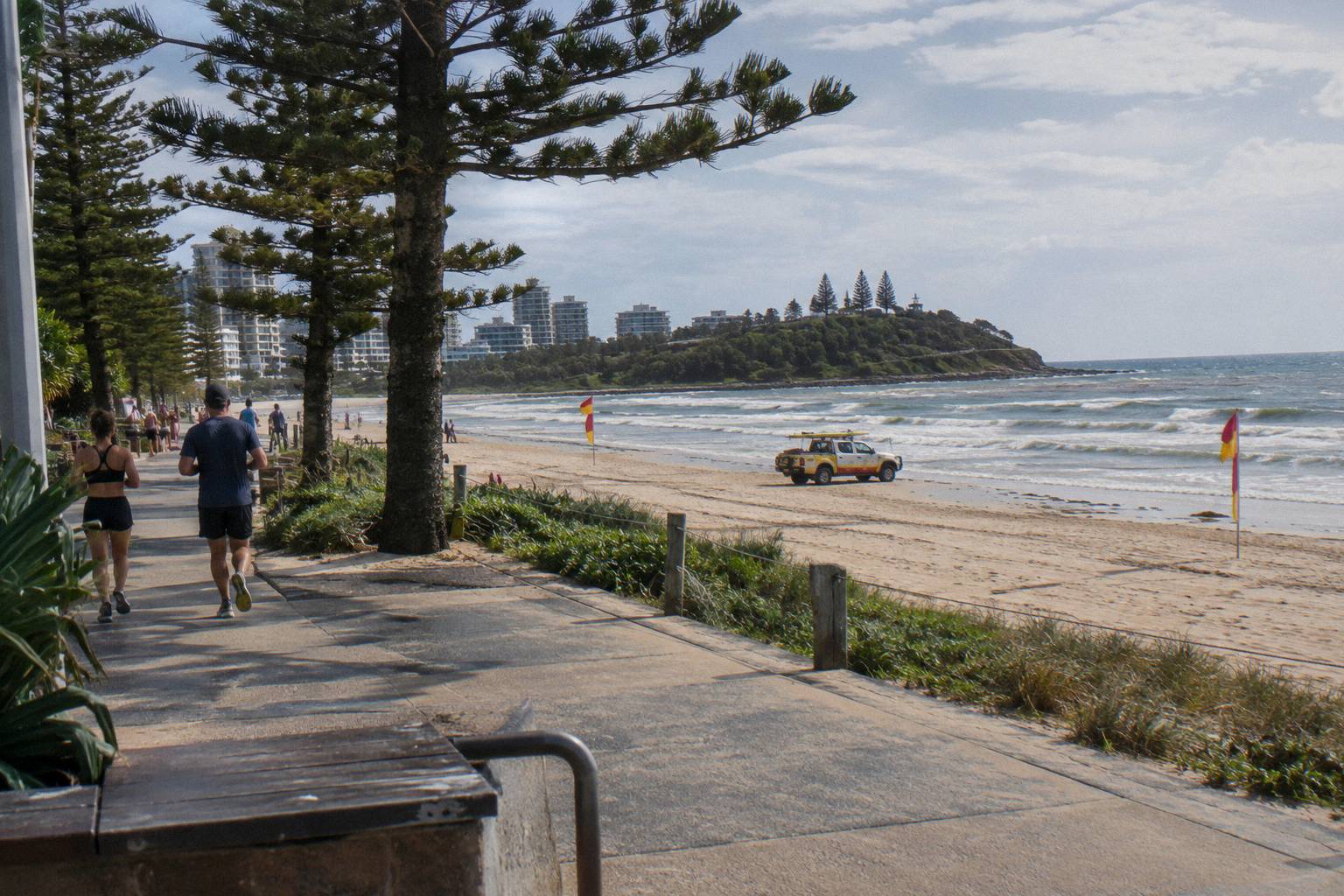
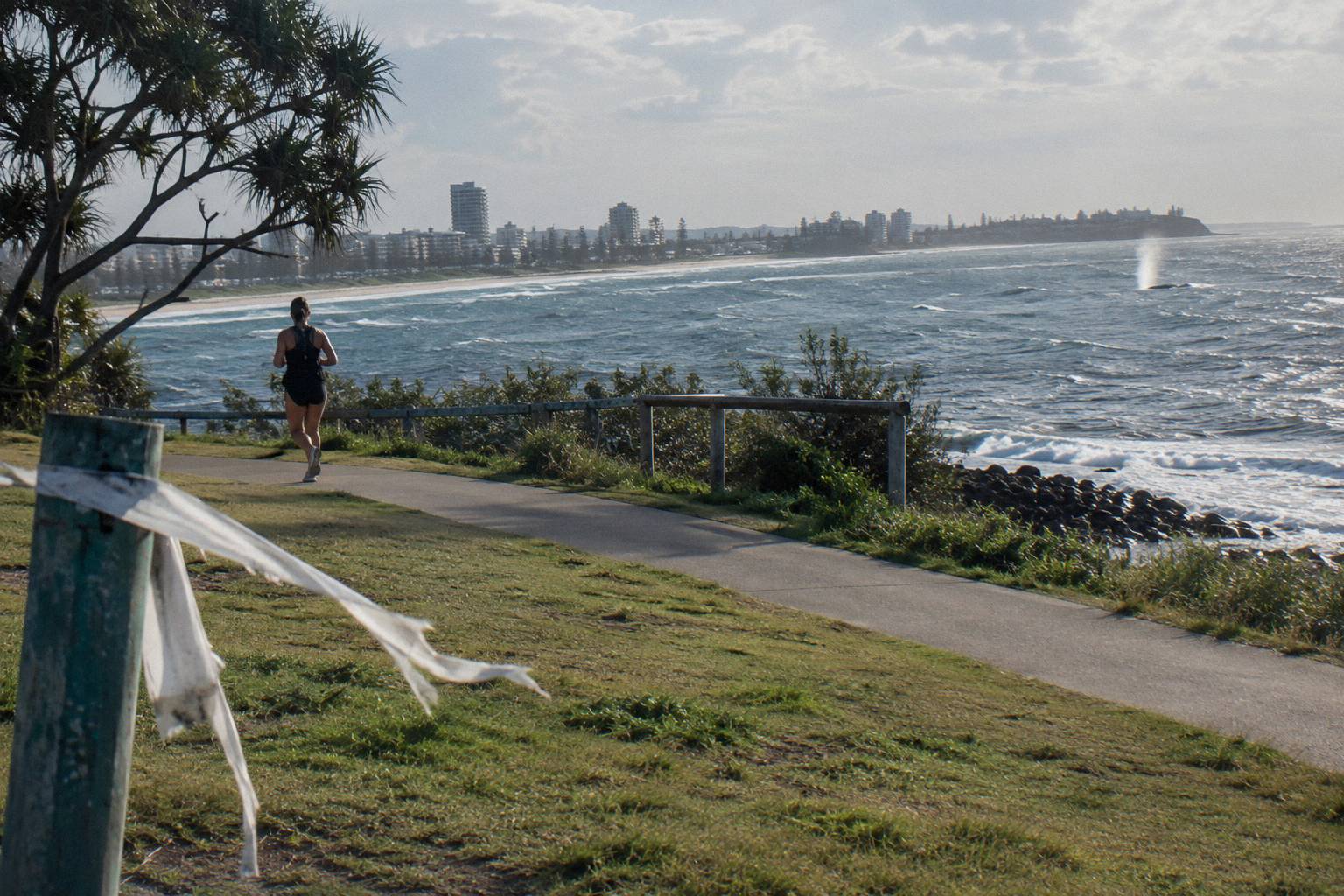
One more planning angle worth holding onto: you do not need a boat to enjoy the season. Visit Sunshine Coast names Point Perry in Coolum, Point Cartwright, Moffat Headland, Dolphin Point Lookout in Noosa and Alexandra Headland as favourite local shore spots, and says of Point Cartwright that it is often possible to spot migratory humpback whales there. The shore option costs nothing and can fill the days either side of your cruise; the practical detail is in watching whales from the shore on the Sunshine Coast.
Common Mistakes When Planning A Queensland Whale Trip
The recurring mistakes are fixing on one date and one port without checking which trips actually run then, assuming every boat carries the same age and boarding rules, treating a sighting as promised, and leaving parking and check-in too tight at The Wharf in peak weeks. Each of these has a specific, sourced fix, and none of them requires spending more money, only reading the right detail before booking. The whales set the schedule, so the planning job is to remove every obstacle you control.
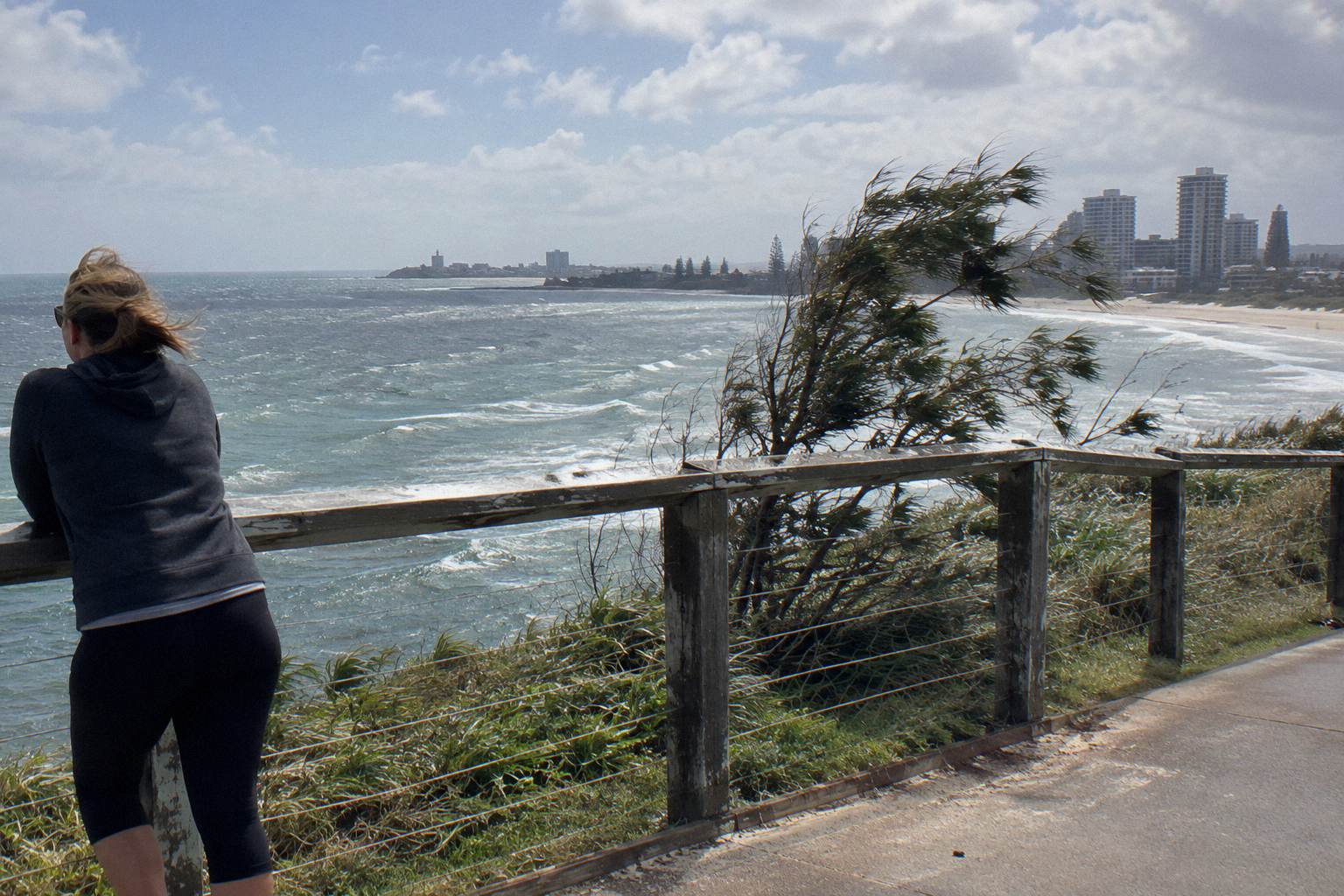
The date mistake is the most common. A reader books a week in late October expecting peak numbers, then finds the Sunreef statement that most whales are finishing their journey south by then, or books early June not realising the season is only just opening. The fix is the table further up: July and August for the largest northbound numbers, September for the crossover period Sunreef describes, and check your specific trip's season dates, since Adventure Rafting and Sunreef do not state identical end dates.
The rules mistake comes second. There is no single minimum age for all boats: Adventure Rafting says minimum age 5 for its trips, Sunreef states no numeric minimum and requires under-16s to be accompanied by an adult, and for every other covered trip the age question is one to ask the operator. Pregnant guests are not carried by the operators whose pages state it. Assuming one boat's rule holds for all of them is how families arrive at a berth they cannot board.
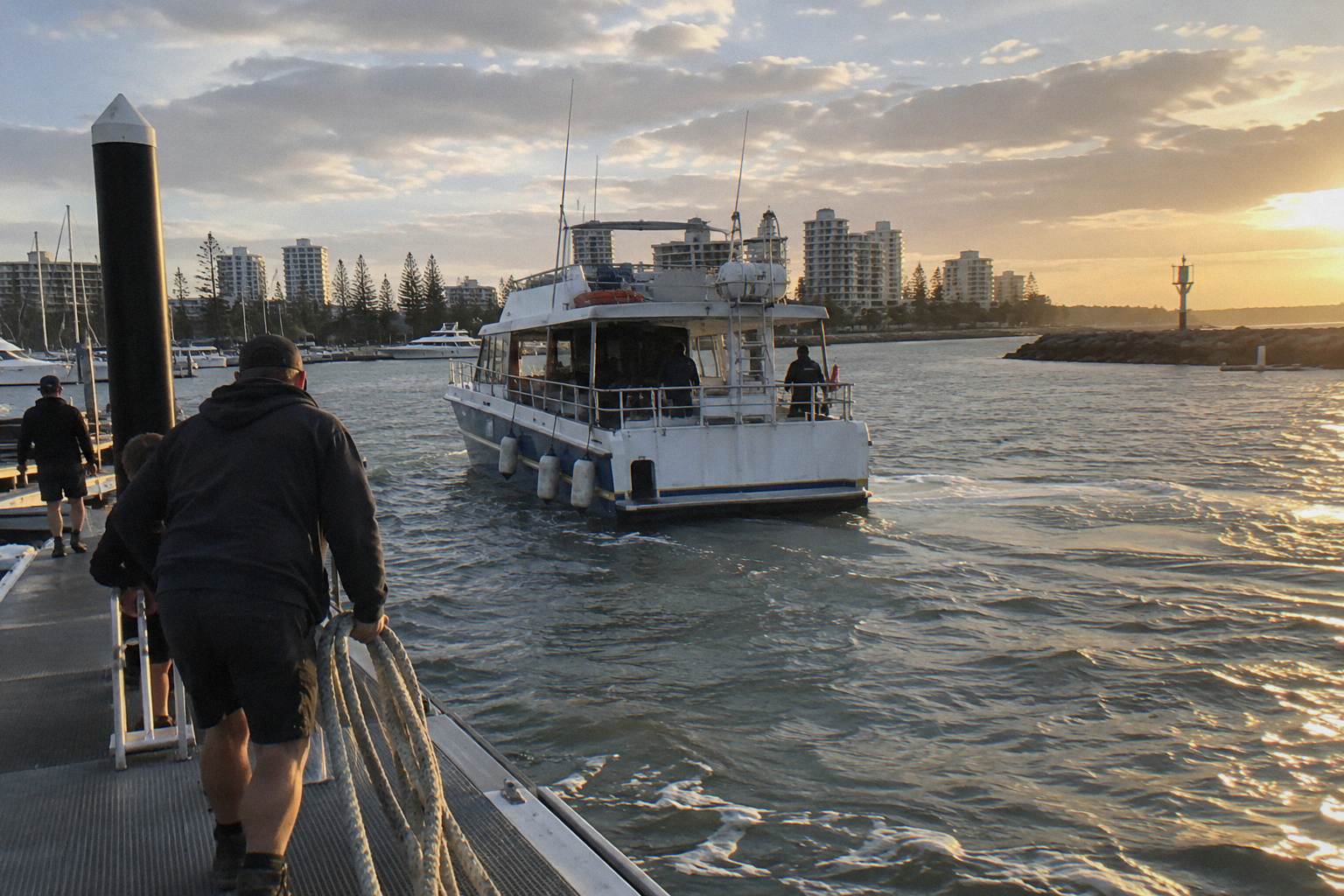
The sighting mistake is the costliest expectation to carry. Adventure Rafting says it cannot guarantee sightings. Weather cancellations are real too: both major Mooloolaba operators describe sea-condition cancellations, with rebooking or refund, and Adventure Rafting also cancels for low numbers. The final mistake is timing: time-limited parking at The Wharf means arriving early in peak season, and Adventure Rafting advises arriving 30 minutes before sailing on its own trips because parking can be difficult during peak times. Whether a slot is still open at all is a booking question, covered in whether to book a whale trip in advance.
Common Questions About The Queensland Whale Watching Season
When Is The Queensland Whale Watching Season?
The Queensland Government says humpbacks migrate north along the coast between May and July and turn south in July and August. On the Sunshine Coast, Visit Sunshine Coast calls June to November the official season, and the covered operators run roughly early June to late October, with Whale One trips until very early November.
Where Are The Best Places To Watch Whales In Queensland?
The trips covered here leave Mooloolaba, Buddina and Noosa. Mooloolaba has the most departures from The Wharf and 21 Parkyn Parade, Noosa trips leave from Noosaville and Tewantin, and the single Buddina trip is the Jet Boat Whale Adventure from the Kawana Waters Hotel deck.
What Month Has The Most Whales?
Visit Sunshine Coast says July and August carry the largest northbound numbers past the Sunshine Coast. Peer-reviewed surveys found the northbound peak at Point Lookout in late June to early July through 2015, and the southbound adult peak at Peregian Beach has moved to around mid-September by 2023 and 2024.
Are Whale Sightings Guaranteed?
No trip promises a whale. Trips can also be cancelled for sea conditions or low numbers, with rebooking or refund under the operator's own terms.
How Many Humpback Whales Pass Queensland?
The Queensland Government's current estimate is around 50,000 eastern Australian humpbacks, up from approximately 12,000 in 2008. The last peer-reviewed count was 24,545 whales in 2015, growing about 10.9 percent a year through 2015.
How Close Can A Boat Get To A Whale?
Queensland rules set a 100 m no approach zone around a whale, extending to 300 m in front of and behind the animal, with a caution zone to 300 m where vessels travel at no more than 6 knots and leave no wake. If a whale approaches the boat, engines must be disengaged or the vessel withdrawn slowly.
Before you settle the month, it is worth a final pass over how the whole season fits together, because Mooloolaba Whale Watching works as a base precisely when the migration statements and the trip schedules line up.
Wait, one correction: the closing band belongs before the questions section, not after it, so the paragraph and band above are placed here as the final body content, and the FAQ block that follows them in the delivered file sits after. The corrected order appears in the published file: body sections, final paragraph and end band, then the Common Questions section, with nothing after the FAQ.