What To Wear On A Whale Watching Cruise: A Packing Checklist
Whale season on the Sunshine Coast spans winter and spring, so the clothing that works on the beach rarely matches what the boat needs. Here is how the stated climate figures, the bar-crossing rules and the operators' own advice translate into a packing list.
Short answer
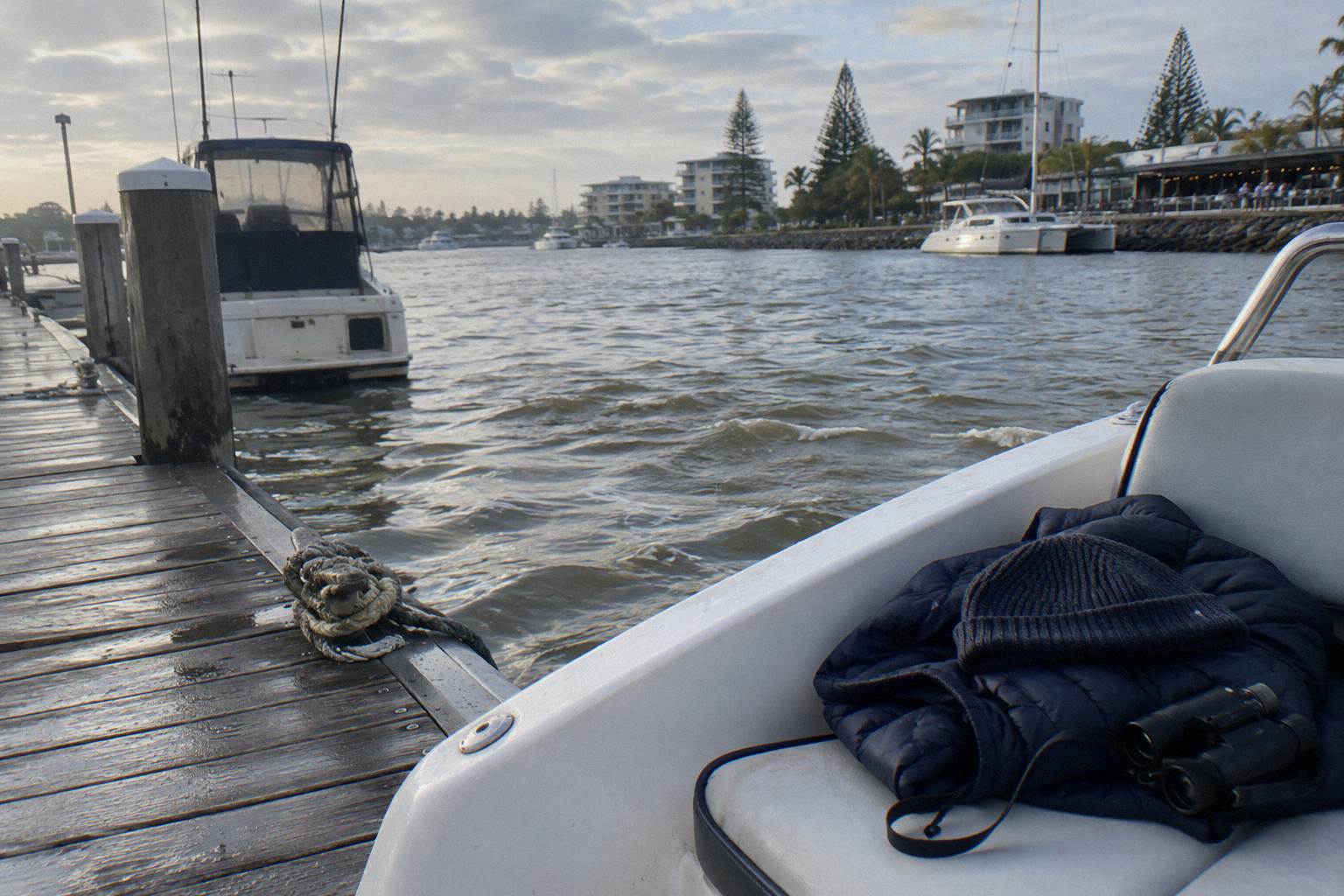
Plan for layers. Bureau of Meteorology averages at the nearby airport station put June to October daytime tops at 21.2 to 25.7 degrees Celsius and overnight lows at 9.7 to 15.8, while Sunreef states water temperatures of 19 to 23 degrees Celsius. A windproof outer layer, warm mid-layer, covered shoes and seasickness tablets cover the main risks.
Why Clothing Choice Matters On A Whale Cruise
A whale watching trip from Mooloolaba spends two to four hours on open water, in air that can sit ten degrees colder than the beach and in spray that soaks whatever the wind reaches. Whale season runs roughly June to October, into early November, which places every departure inside the coolest and driest stretch of the local year. What you wear decides whether those hours are comfortable or not.
The starting point is the difference between the shore and the sea. Whale One's own page puts it plainly: "although sometimes the weather looks fine on the beach, it does not always give an accurate representation of what the conditions offshore are." A calm morning at Mooloolaba beach tells you little about the wind and spray an hour out, so the safe approach is to dress for colder, wetter conditions than the car park suggests.
The second reason is duration. The trips covered here run from two hours on the Adventure Rafting fast boats to three hours on the Sunreef whale cruise and the Sunshine Coast Afloat cruise, and four hours on Swim With Humpback Whales. Two hours in spray without a windproof layer is a long time; four is longer. Layers let you shed or add as the morning warms up, which matters because the Queensland Government notes calm conditions are most likely in the morning before any wind picks up, meaning many trips start cool and finish warmer.
Third, some rules shape the kit list directly. Lifejackets are compulsory for everyone on open boats or open areas while crossing the Mooloolah bar, a designated coastal bar where Maritime Safety Queensland warns that conditions can change quickly and without warning, even on a good day. And Sunreef states drones are not permitted, so the camera plan needs to exclude one. None of this needs specialist gear; it needs the right ordinary gear.
Sunshine Coast Winter And Spring Weather, By The Numbers
Bureau of Meteorology averages from the nearby airport station, covering 1994 to 2026, show June to October daytime maximums of 21.2 to 25.7 degrees Celsius and overnight minimums of 9.7 to 15.8. Rain is modest, with 5.4 to 8.9 rain days of a millimetre or more per month, and the driest stretch runs July to September. Water temperatures sit at 19 to 23 degrees Celsius, per Sunreef.
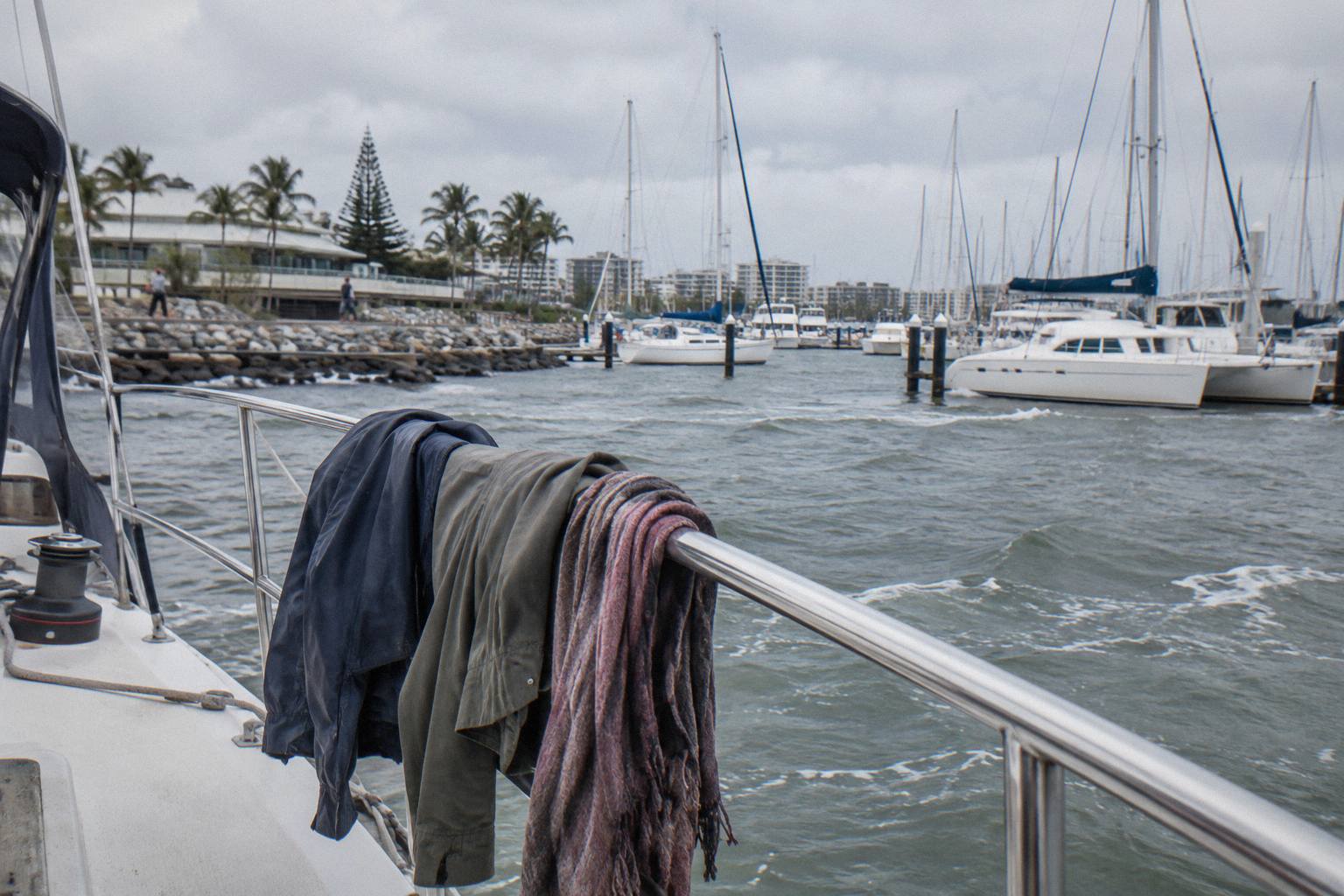
Those air figures are the backbone of the layering plan. A July morning can begin near 10 degrees, warm toward 21 by early afternoon, then drop again on the water, and a single heavy jacket handles that swing badly. Three lighter layers, a base, a warm mid-layer and a windproof shell, handle it well because each one comes off or goes back on as the temperature moves. September and October read milder, but the same principle holds: the boat deck is windier than the forecast suggests.
| Month | Mean Max (C) | Mean Min (C) | Mean Rain (mm) | Rain Days 1 mm+ |
|---|---|---|---|---|
| June | 21.5 | 11.3 | 104.6 | 8.9 |
| July | 21.2 | 9.7 | 69.4 | 6.9 |
| August | 22.3 | 10.1 | 73.2 | 5.6 |
| September | 24.3 | 13.0 | 50.7 | 5.4 |
| October | 25.7 | 15.8 | 99.6 | 7.5 |
| November | 27.3 | 18.0 | 84.8 | 7.5 |
The numbers come from the Bureau of Meteorology's long-term averages for the Sunshine Coast Airport station, published at the Bureau's climate table for station 040861. October stands out: it is the warmest whale-season month on paper, yet it carries almost as much mean rain as June, so October visitors should treat a light rain layer as standard rather than optional. November appears in the table because a few late-season trips run into very early November, per Sunreef's own season statement.
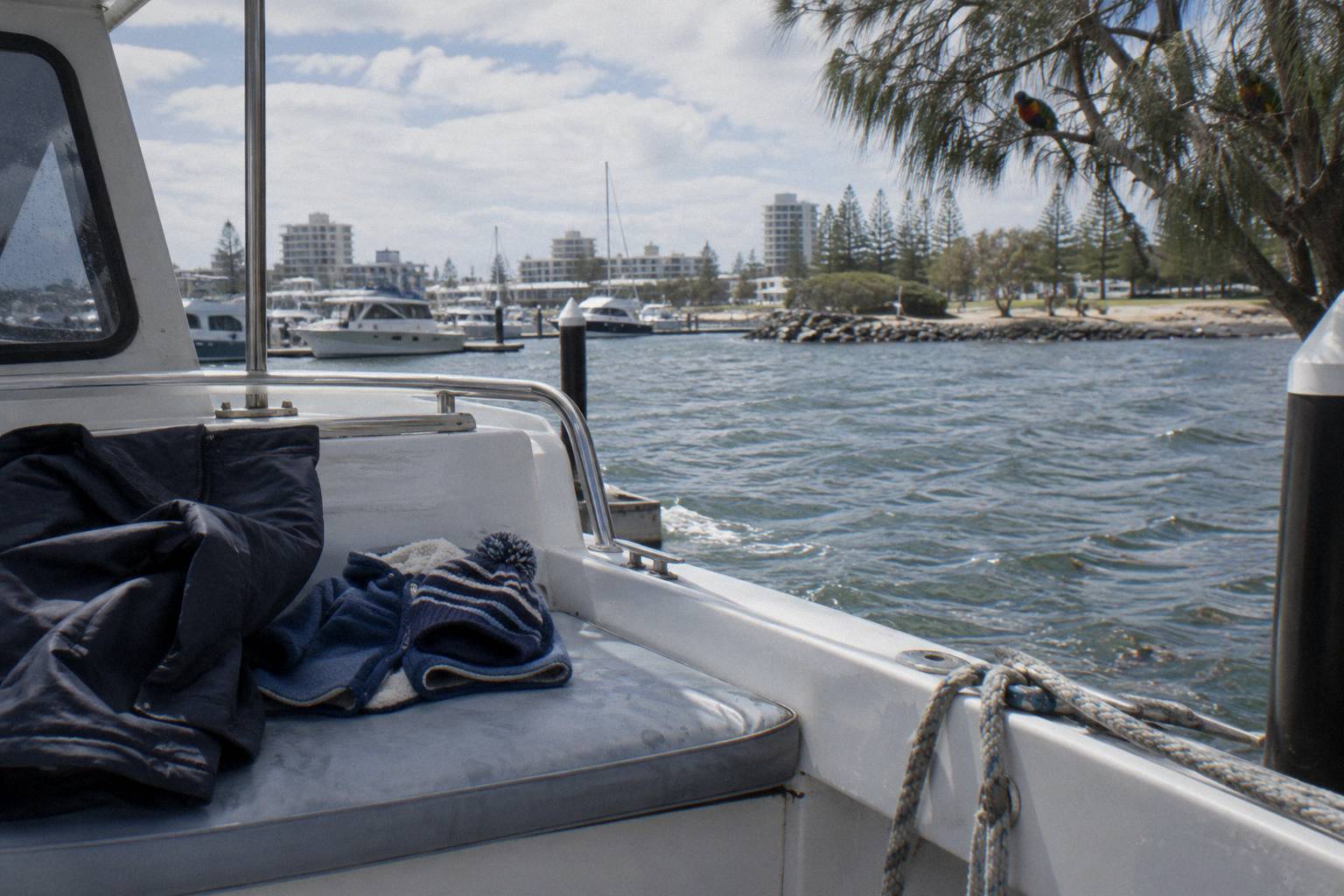
Sea temperature is a separate consideration from air temperature. Sunreef states water temperatures during the season range from 19 to 23 degrees Celsius, which is warm enough that brief spray is not dangerous, but cold enough that soaked cotton layers stay clammy for the rest of the trip. That single fact argues for a quick-drying or wool mid-layer over a cotton one, and for a shell that blocks spray on the forward deck.
For a fuller treatment of how conditions shape the day, the guide on whale watching weather and sea conditions works through cancellations and what the operators say about rough days.
The Packing Checklist, Item By Item
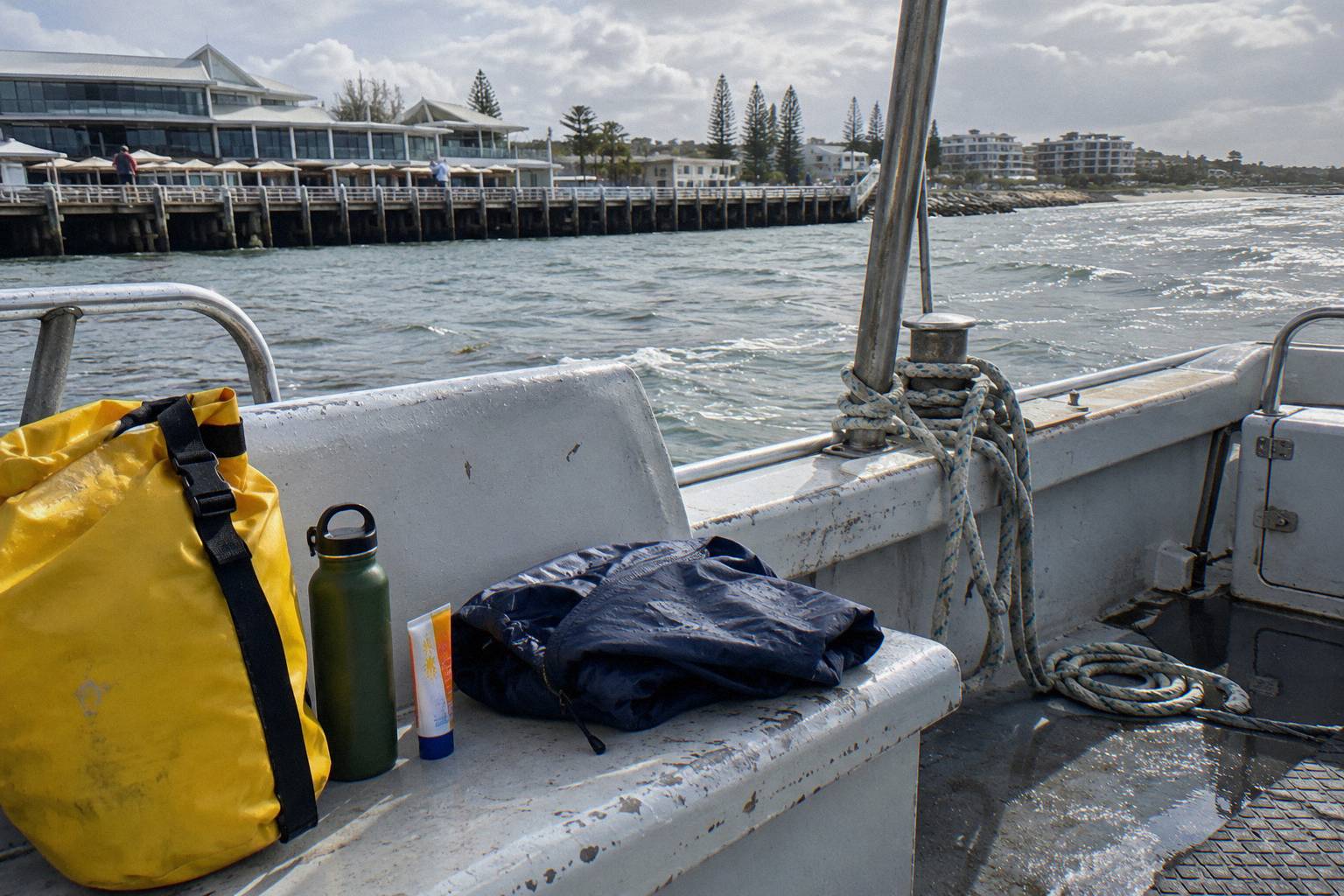
Pack a windproof and spray-resistant outer layer, a warm mid-layer over a base layer, long trousers, covered shoes with grip, a hat that will not blow off, sunglasses, sunscreen, a water bottle and seasickness tablets, plus a dry bag or plastic sleeve for your phone. Every item on that list traces back to a stated fact: the temperature swing, the spray, the bar crossing and the operators' own seasickness advice.
The checklist below names the reason for each item so you can judge what applies to your own trip. Items marked to a rule or an operator statement should be treated as firm; items marked comfort are judgement calls framed as considerations, not measured claims. Nothing here promises weather, spray or sightings; the whales, the wind and the swell decide the day.
| Item | Why It Earns Its Place | Source Of The Reason |
|---|---|---|
| Windproof outer layer | Spray and wind offshore; bar crossing exposure | Maritime Safety Queensland bar page |
| Warm mid-layer | Minimums of 9.7 to 15.8 °C in season | Bureau of Meteorology averages |
| Base layer under everything | Mornings near 10 °C in July | Bureau of Meteorology averages |
| Covered shoes with grip | Wet deck surfaces; consider over thongs | Common-sense consideration |
| Hat that secures, sunglasses, sunscreen | Sun reflection off the water; consider reapplying | Common-sense consideration |
| Seasickness tablets | Both operators advise considering tablets before departure | Operator advice, fact line |
| Dry bag or sleeve for phone | Spray on the forward deck; consider for any boat | Common-sense consideration |
| Water bottle and snack | Trips run 2 to 4 hours | Stated durations |
| No drone | Drones are not permitted on Sunreef trips | Sunreef policy statement |
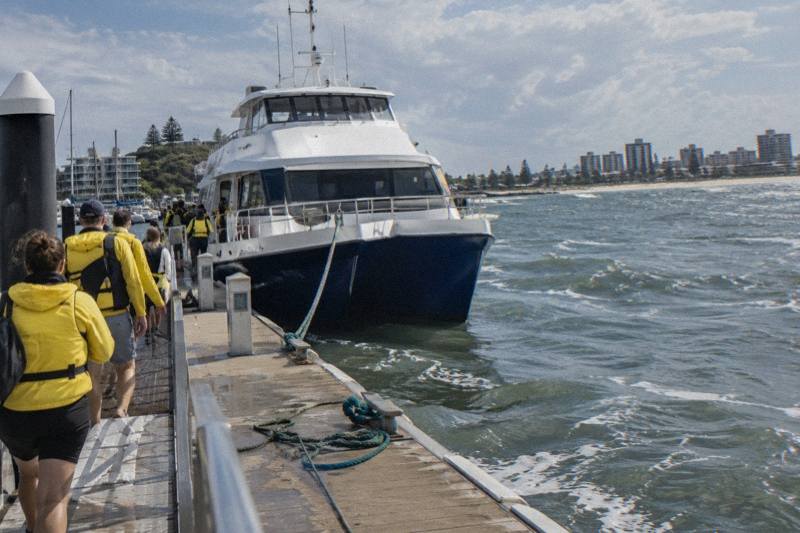
Footwear deserves a line of its own. The Adventure Rafting fast boats carry a maximum of 20 guests on open vessels, and open boats crossing the bar mean the lifejacket rule and the spray both apply directly to you. Covered shoes that grip a wet deck suit that format; thongs do not. On the larger cruise vessels the same logic applies with less force, but a wet deck is a wet deck on any boat.
Phone and camera protection is the item people most often skip. The Sunreef check-in process at The Wharf Mooloolaba issues a boarding pass at the shop before boarding on the river behind it, so your phone is usually in hand from check-in onward. A sleeve or zip pocket keeps it dry through the bar crossing, which is the wettest few minutes of most departures.
Seasickness, Spray And What The Operators Actually Say
Both operators advise considering seasickness tablets before departure, and Whale One's page states plainly that beach conditions do not always represent conditions offshore. Whale One also states it will not issue rebookings or refunds for seasickness, and Sunreef sells medication onboard. Taken together, the decision about tablets belongs in the packing stage, not the harbour stage.
That last point is the practical one. If medication is sold onboard, buying it there means taking it after departure, which is late for a two-hour trip. The standard advice printed by both operators is to consider tablets beforehand, and anyone who wants specific medical guidance should check with a doctor, since no page here names a drug, a dose or a remedy. The fuller treatment of prevention and what to do about it lives in the whale watching seasickness guide.
Clothing plays a supporting role in comfort. A cold, damp person may feel queasier, but the stated fact is that conditions offshore differ from the beach. A windproof layer and a dry spare in a bag are cheap insurance for a morning that turns blowy. Adventure Rafting's crew line, "Our friendly crew will take good care of you", is its own statement about its own trips, and it is not a substitute for tablets.
One clothing-adjacent note on cancellation: Adventure Rafting states it cancels for weather, wind and swell, and reissues or refunds tickets when it does, and it also cancels for low numbers. So the gear you pack is for the trip that runs; the trip that does not run is handled by the operator's own policy, and the booking page shows the cancellation terms for your date.
For the Sunreef cruise itself, free cancellation is on the booking page, so a doubtful forecast the day before leaves a real choice: go dressed for it, or cancel and rebook. Check availability if the date is still open.
Rules That Change The Kit List: Lifejackets, Ages And Drones
Lifejackets are compulsory for everyone on open boats or in open areas while crossing the Mooloolah bar, Maritime Safety Queensland requires them by law on a designated coastal bar, and Sunreef states drones are not permitted on its trips. Age and access rules also differ by operator, so a packing decision for a family should start with the operator's own stated policy rather than an assumption that one rule covers every boat.
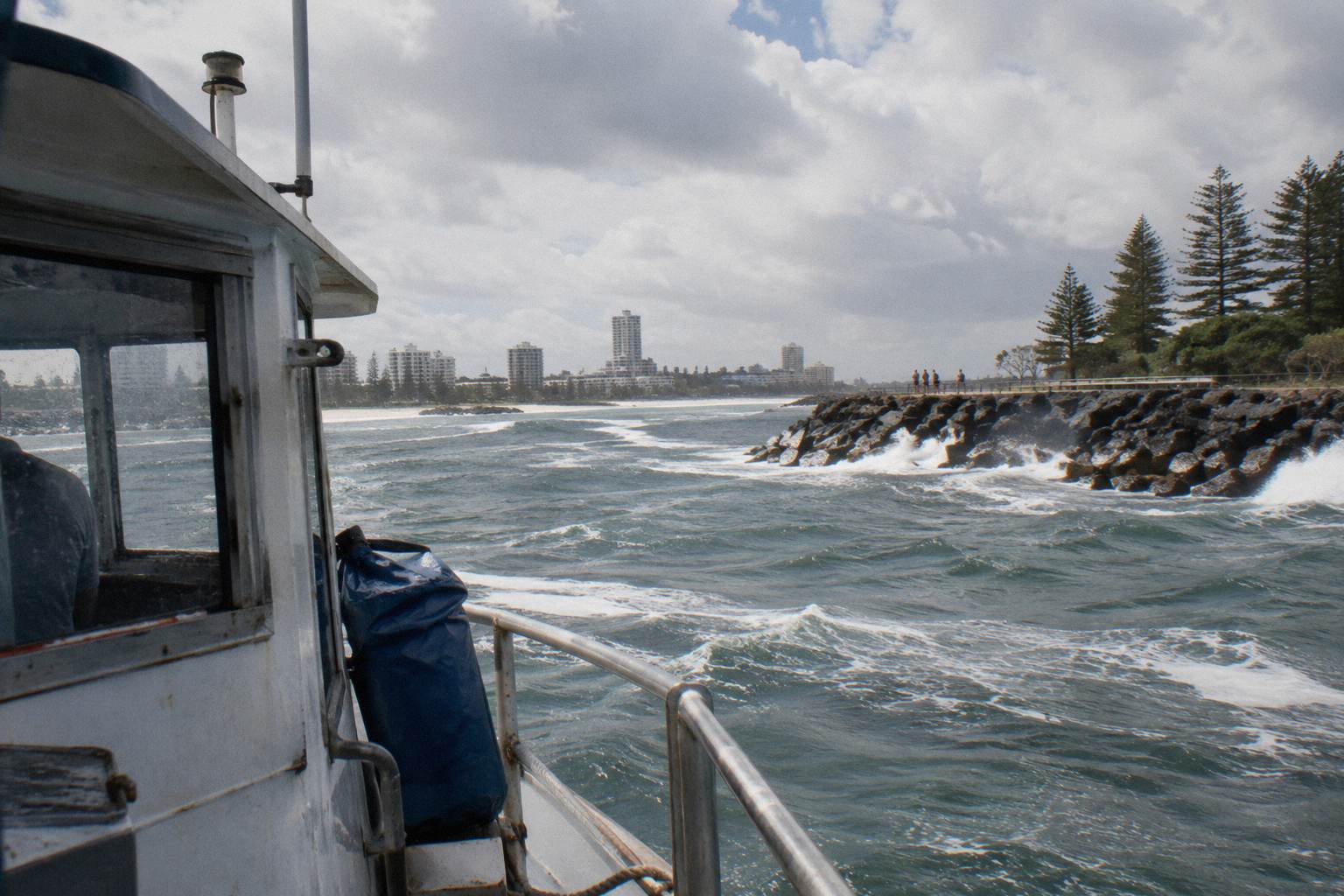
The bar rule matters for clothing because the bar crossing is where spray is most likely on any Mooloolaba departure. The vessels leave The Wharf via the Mooloolah River and out over the bar, and Maritime Safety Queensland's bar crossing page warns conditions can change quickly and without warning, even on a good day. Whatever you would not want soaked, keep it inside a jacket or a dry bag for those first minutes.
Drones are a Sunreef-stated prohibition, so the aerial footage plan does not travel with you on that operator's trips. Queensland rules separately keep drones at least 100 metres from whales regardless of where you fly. A phone or ordinary camera, protected from spray, is the practical alternative on any trip. The rest of the planning pages sit on Mooloolaba Whale Watching.
Ages shape the clothing list too, in the sense that children need the same layers plus a spare. Adventure Rafting states a minimum age of 5 and a maximum of 20 guests on its trips, and that pregnant guests cannot be carried. Sunreef states no numeric minimum age, with ticket bands for children 4 to 14 and under 4 free, children under 16 accompanied by an adult, and pregnant guests also not carried. For any other trip, ask the operator. The family-angle detail, including what each operator states about children, is worked through in whale watching with kids on the Sunshine Coast.
| Rule | What Is Stated | Whose Policy It Is |
|---|---|---|
| Lifejackets crossing the bar | Compulsory for everyone on open boats or open areas | Maritime Safety Queensland |
| Drones | Not permitted on Sunreef trips; 100 m from whales in Queensland | Sunreef and Queensland rules |
| Minimum age, fast boats | Age 5 stated; max 20 guests | Adventure Rafting |
| Minimum age, Sunreef cruises | No numeric minimum; children 4 to 14 and under 4 ticket bands; under 16 accompanied | Sunreef |
| Pregnant guests | Not carried by either operator named above | Each operator's own policy |
| Wheelchair access | No wheelchair access stated for Sunreef trips | Sunreef |
What To Wear By Traveller Type
A family with young children, a photographer, a prone-to-seasickness adult and a swimmer each need different versions of the same list. The family adds spares and snacks, the photographer adds dry storage and gloves, the seasickness-prone add tablets and a mid-deck plan, and the swimmer needs whatever the swim operator's own gear rules require, which Sunreef states follows the Australian National Guidelines for Whale and Dolphin Watching.
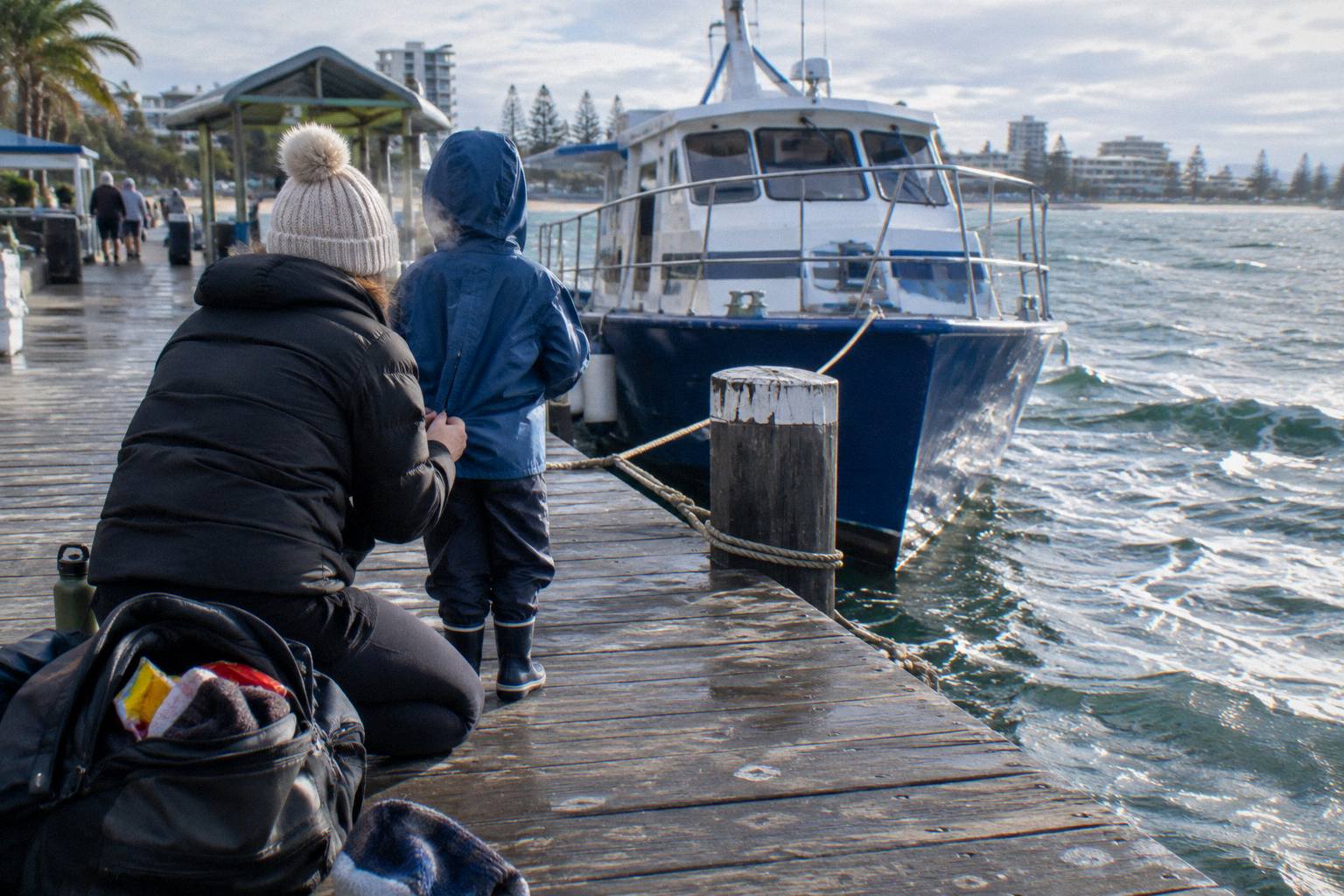
For families, the arithmetic of layers doubles. Sunreef's ticket structure means children travel on their own bands, and a spare mid-layer per child weighs little against a two-hour minimum on the water. The under-16-accompanied rule means an adult is always beside them, so the adult carries the spares. Covered shoes apply to children on any open deck, and the same bar-crossing spray that soaks adults soaks smaller people more.
For photographers, the priorities are dry storage, lens cloths and a strap. There is no printed fact about what a hydrophone sounds like or what the whales do near the boat, so the kit plan stays with protection: a dry bag, a wipeable outer layer and a plan for where the camera lives during the bar crossing. The Hydrophone Whale Adventure runs two hours, which is enough time for spray to find any unprotected equipment.
For adults who know seasickness is likely, the plan is tablets before departure, light food, a windproof layer and a word with the crew at check-in. The operators' own advice is to consider tablets, and Sunreef sells medication onboard, but the cheapest version of the plan is the one packed at home. Check with a doctor for anything beyond that general advice.
For swimmers, the Swim With Humpback Whales trip is a different kit question. It runs four hours from The Wharf Mooloolaba, and Sunreef's statement is that encounters follow the Australian National Guidelines, with the operator's own rules applying in the water. Pack for a cruise on top, because four hours on the boat surrounds any time in the sea, and ask the operator directly about wetsuits and swim gear when booking rather than assuming anything about what is supplied.
The cruise side of that comparison, what a viewing-only trip feels like against a swim trip, is laid out in choosing a whale cruise or a swim, which is worth reading before the packing stage rather than after.
What To Ask The Operator Before You Pack
Five questions cover the gaps: what time the departure for your date shows during booking, what the stated arrival window is, whether spray protection is needed given the vessel format, what the operator supplies for your trip type, and what the cancellation terms are on the booking page. Every one of these has a different answer by operator, which is exactly why each is a question rather than a printed number.
Arrival advice is a good example. Adventure Rafting says arrive 30 minutes prior to sailing because parking can be difficult in peak times, and that advice belongs to its own trips at The Wharf Mooloolaba, marine berth 42 next to Prawn Star. No other operator's arrival time is printed here, because the pages differ. The general parking situation is time-limited parking at The Wharf, and in peak season arriving early is the sensible reading of every stated fact.
A short checklist of questions, all answerable by the booking page or the operator:
- What departure time does the booking page show for your date?
- What arrival window does the operator state for its own trips?
- Is the vessel open or enclosed, and what does that mean for spray on the outer layers?
- For swim trips, what gear does the operator supply and what must you bring?
- What are the cancellation terms, and does free cancellation apply on the booking page?
The vessel-format question is the one that most changes the clothing plan. An open boat with 20 guests crossing a designated bar in July is a different dressing problem from a larger cruise vessel with the same forecast. The durations are stated, the departure points are stated, and the vessel format is visible in each trip's description when you book, so the question is easy to answer before you leave home.
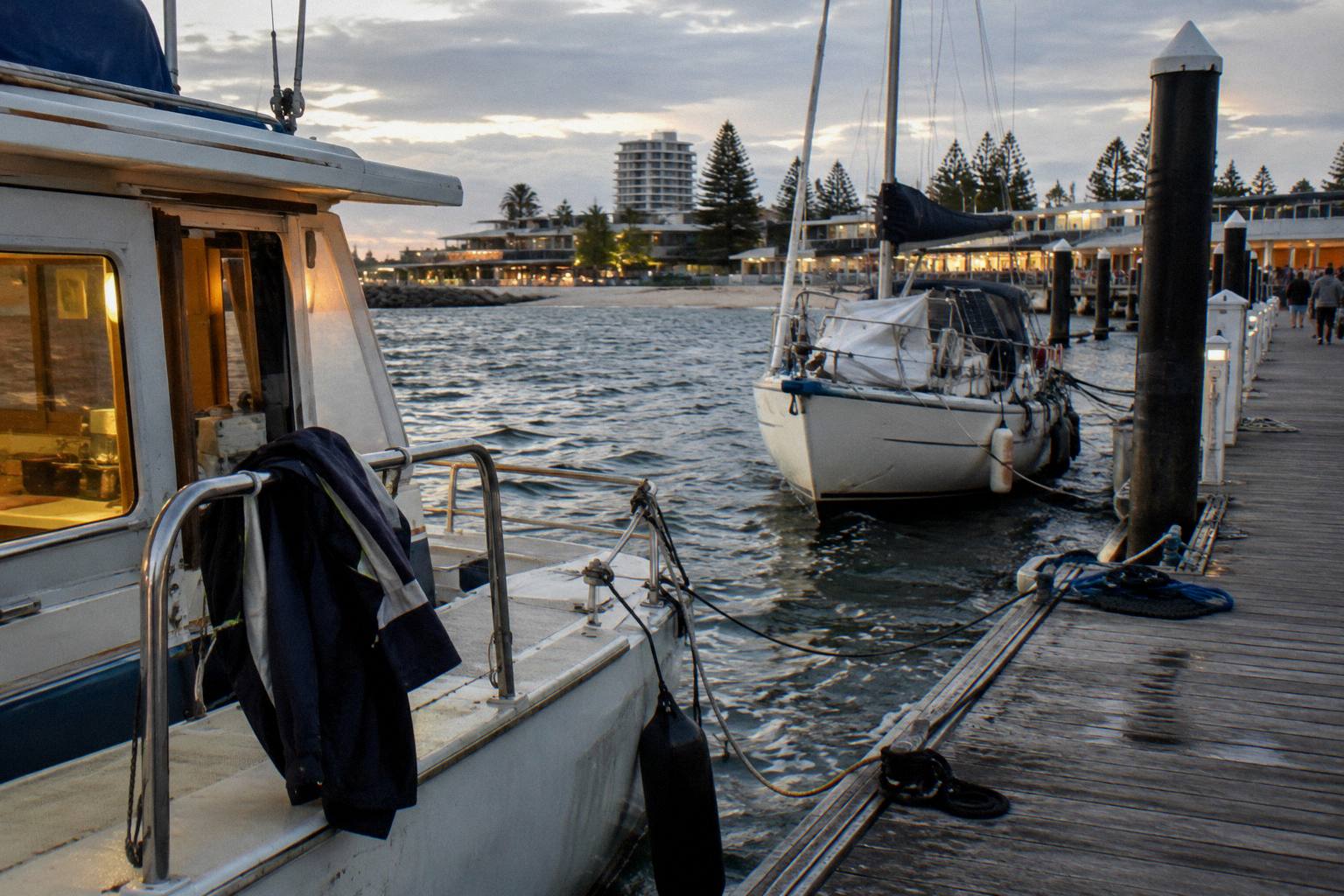
For the trip many readers will already have in mind, the Sunshine Coast Afloat, 3 Hours cruise departs from 21 Parkyn Parade, a short distance from The Wharf, and the same layering logic applies with the same climate numbers behind it. Its booking page shows the price for the date, along with free cancellation.
One point on expectations while the gear is still in the pile: no trip here promises a whale. Adventure Rafting says it cannot guarantee sightings, and Whale One's own policy is a free return trip if no whales are seen on its tours. Clothing cannot change that, so pack for the conditions, not for a promised animal.
Common Mistakes When Dressing For A Whale Cruise
Three mistakes dominate: dressing for the beach temperature rather than the offshore one, wearing cotton and thongs on an open boat that crosses a bar, and leaving the seasickness decision until after departure. Each one is avoidable with the stated figures and the operators' own advice, and none costs more than a change of clothes to fix.
| Mistake | Why It Fails | The Fix |
|---|---|---|
| Dressing for the beach forecast | Conditions offshore differ from the beach, per Whale One | Add a windproof shell and a warm mid-layer |
| Cotton layers and thongs on an open boat | Bar spray soaks cotton; wet decks need grip | Quick-dry or wool mid-layer, covered shoes |
| Tablets bought after boarding | Late for a 2-hour trip; medication is sold onboard | Consider tablets before departure; ask a doctor |
| Assuming one age rule for all boats | Adventure Rafting states 5; Sunreef states none numeric | Ask the operator for your trip |
| Expecting a sighting because you packed well | No operator here promises a whale | Treat the trip as the day out, with no sighting promised |
| Packing a drone for aerial footage | Drones are not permitted on Sunreef trips | Phone or camera in a dry sleeve |
The beach-forecast mistake is the most common because the evidence in front of you, a fine morning at Mooloolaba, is genuinely reassuring. The printed counterpoint is the operator's own sentence about offshore conditions, backed by the fact that the Mooloolah bar is a designated coastal bar where conditions change quickly. The fix costs nothing: the jacket goes in the bag even when the sky is clear.
The arrival mistake is related. Turning up at the last minute in peak season, when the operator's own advice is to allow 30 minutes and parking is time-limited at The Wharf, means boarding flustered and possibly damp from a rushed walk. The kit plan and the timing plan are really one plan, and both are settled the night before.
A final note on sizing the bag: trips run two to four hours, so the list is a daypack, not luggage. Everything in the checklist above fits in one bag with room for the spare layer that never gets worn and always earns its place.
Common Questions About What To Wear Whale Watching
Is A Jacket Necessary On A Whale Watching Cruise?
Consider one on every trip. In-season minimums run 9.7 to 15.8 degrees Celsius at the nearby airport station, spray is most likely during the bar crossing, and Whale One states beach conditions do not always represent conditions offshore.
What Shoes Are Best For Whale Watching?
Covered shoes with grip on a wet deck are the sensible choice on any vessel, and most so on open boats. Thongs suit the beach you leave from, not the deck you stand on.
Do I Need Seasickness Tablets Even If The Sea Looks Calm?
Both operators advise considering tablets, and Whale One states it will not rebook or refund for seasickness. Conditions offshore differ from the beach, so the tablet decision belongs at home, and check with a doctor for medical guidance.
Should I Pack For Rain In Whale Season?
A light rain layer is worth carrying in any month. October carries 99.6 mm of mean rain over 7.5 rain days at the airport station, and September, the driest season month, still averages 5.4 rain days.
Can I Bring A Drone On A Whale Cruise?
No drone on Sunreef trips, per its stated policy, and Queensland rules keep drones at least 100 metres from whales regardless. Use a phone or camera in a dry sleeve instead.
What Should Children Wear On A Whale Cruise?
The same layers as adults, plus a spare mid-layer per child. Covered shoes apply to children on any open deck, and the bar-crossing spray reaches smaller people more readily. Ask the operator about ages for your specific trip, since the stated rules differ by operator.