Whale Watching Weather And Sea Conditions: When Cruises Run And When They Do Not
A fine morning on Mooloolaba Beach does not always mean fine conditions offshore, and a rainy forecast does not always mean a cancelled cruise. Here is what actually decides whether a whale trip runs, what the winter climate record shows, and what each operator says about weather cancellations, seasickness and rebooking.
Short answer
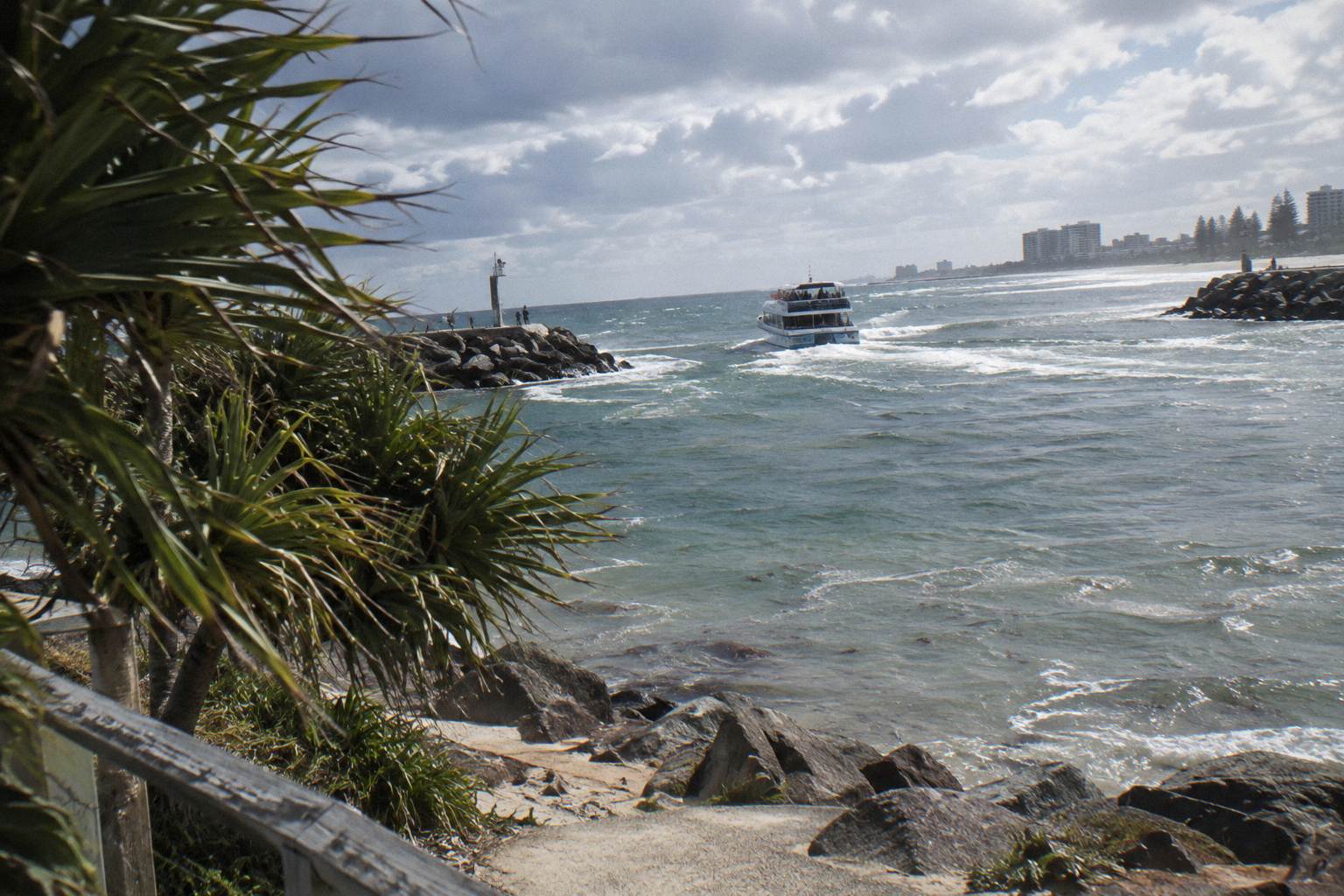
Mooloolaba whale cruises run roughly June to October, in winter temperatures of about 21 to 26 degrees and the driest months of the year, July to September. Operators cancel for wind, swell and sea conditions rather than rain, with rebooking or refund. Calm conditions are most likely in the morning before wind picks up, per the Queensland Government.
When Do Whale Cruises Actually Get Cancelled For Weather?
Rain almost never cancels a whale cruise; wind, swell and sea conditions do. Every Mooloolaba operator in the trips covered here sails in showers, because whales surface whatever the sky is doing, and the decision sits with the skipper on the day, judged on the sea rather than the beach. Both named operators publish weather-cancellation wording, and both rebook or refund when conditions stop a sailing. Weather aside, scheduling matters too, and the guide to whether whale watching cruises sail daily through the season explains which operators publish full timetables and what else can cancel a day on the water.
That distinction matters because the instinct on a cloudy winter morning is to assume the trip is off. It usually is not. The Queensland Government's own whale watching page notes that calm conditions are most likely in the morning, "before any wind picks up", which is why operators schedule most departures early in the day rather than promising anything about the afternoon. The same page describes the migration itself: humpbacks generally move north along the Queensland coast between May and July, then turn south through July and August after time in the tropical breeding grounds. Rain is not part of that equation for the boats. Once the boats do head out, the guide to whale watching ethics and how close boats legally get explains the approach distances operators must follow in Queensland waters.
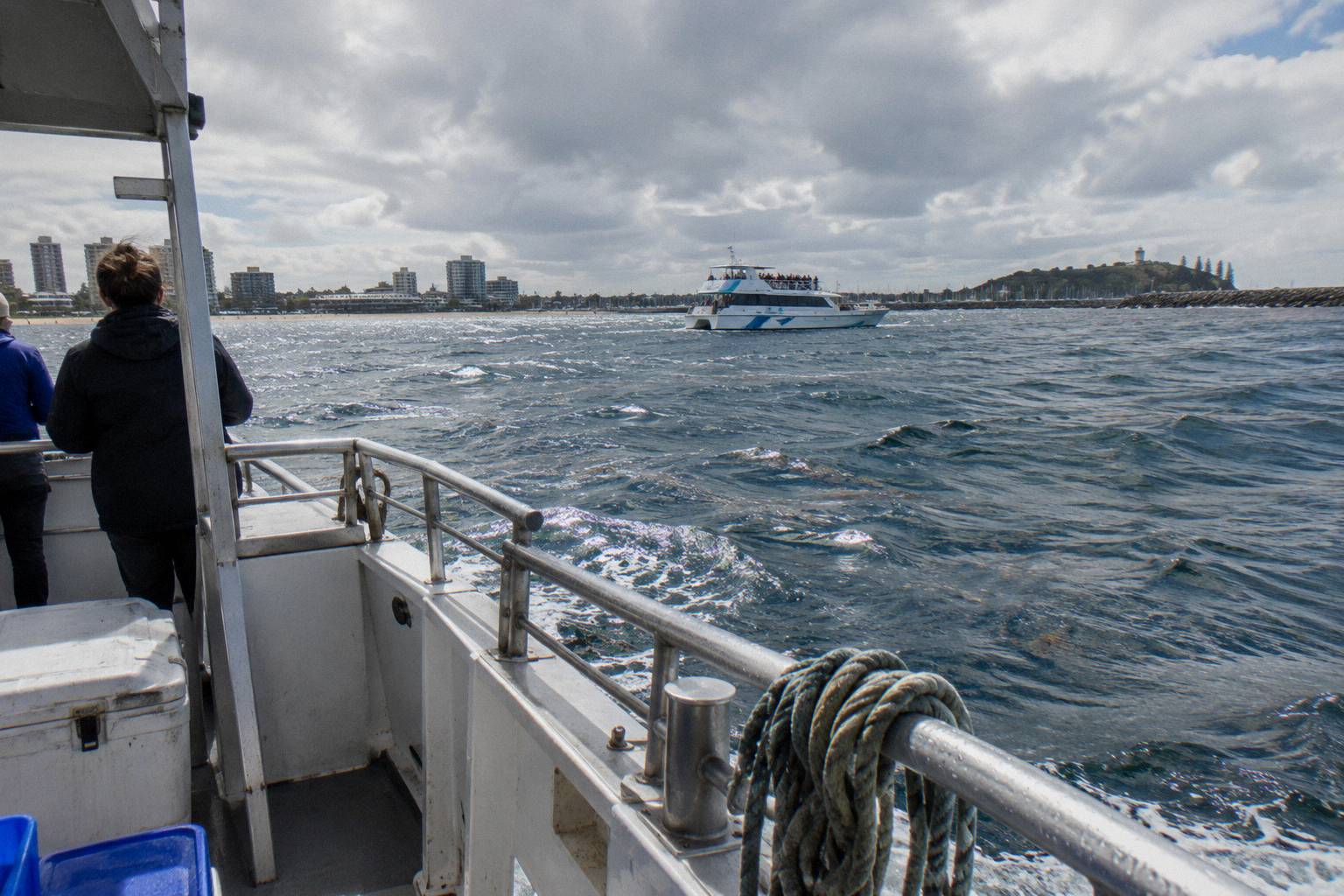
What does stop a sailing is the sea state on the open water and, for boats leaving the Mooloolah River, the state of the bar. Whale One states plainly that if sea conditions cancel a trip, it will either rebook you for another day or refund you. Adventure Rafting's wording runs the same way, cancelling for weather, wind and swell with the ticket reissued or refunded. Neither operator treats rain as a reason to stay tied up.
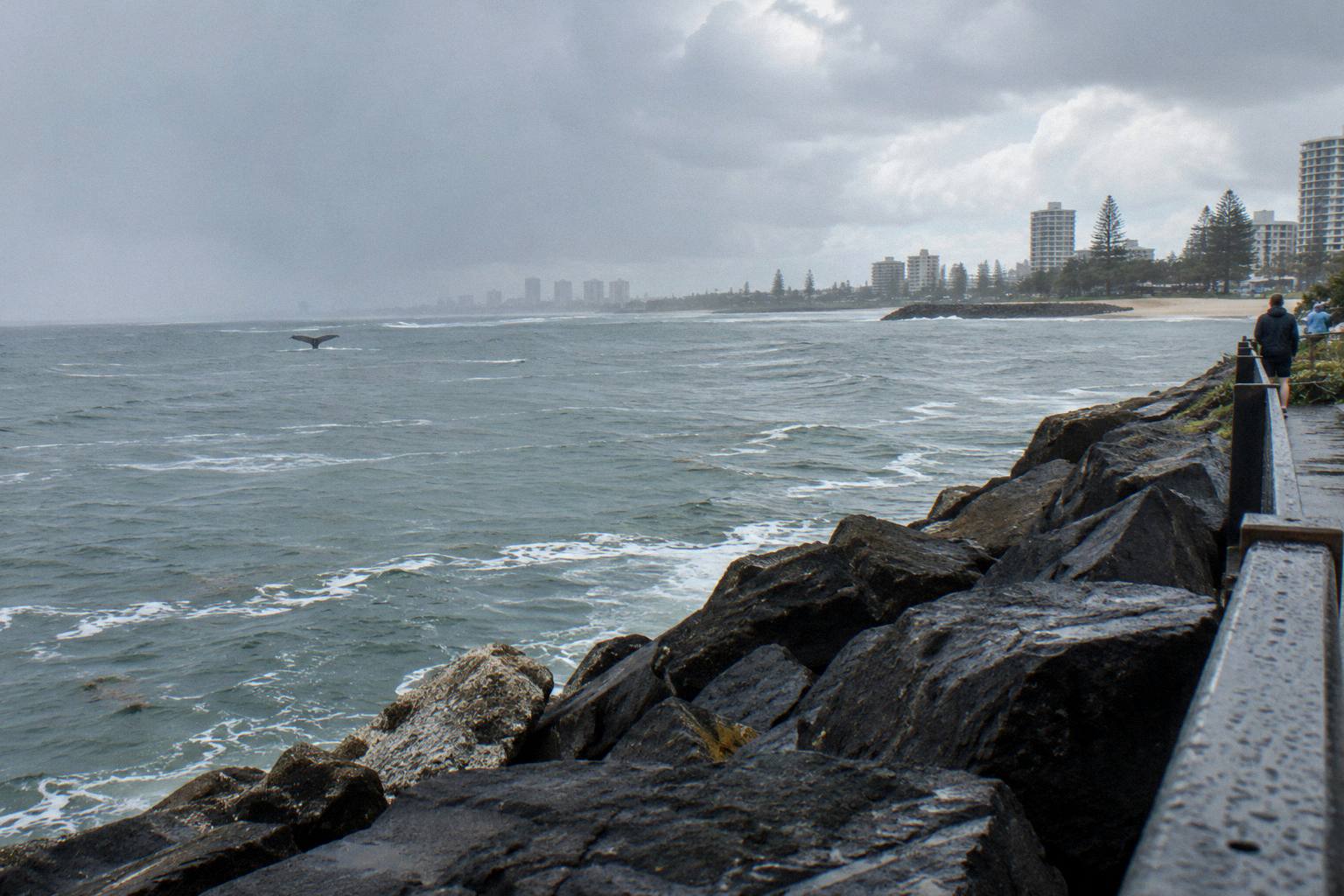
There is a second layer worth knowing before you read any further, and it is the one that catches visitors out. Whale One states that "although sometimes the weather looks fine on the beach, it does not always give an accurate representation of what the conditions offshore are." The beach forecast you checked over coffee describes the strip of sand and the inshore water, while the whales and the boat are kilometres out, where wind has room to build a sea that never reaches the sand. More on that in the bar section below.
If you are deciding whether to book at all, the practical answer is that the season's climate is on your side. The nearby airport station's long-term record shows June to October is the drier, cooler stretch of the Sunshine Coast year, with July, August and September the three driest months. Before diving into the numbers, here are the three Mooloolaba cruise options most readers comparing weather flexibility land on: the Sunreef 3-Hour Whale Cruise from A$89 per person, the Fast Boat, Free Cancellation trip from A$115, and Sunshine Coast Afloat's 3-hour cruise from A$105, all with free cancellation on the booking page. Amounts are Australian dollars throughout.
What The Winter Climate Record Actually Shows
The whale season months of June to October average daytime maximums between 21.2 and 25.7 degrees Celsius at the nearby airport station, overnight minimums between 9.7 and 15.8, and between 5.4 and 8.9 rain days of a millimetre or more per month, against an annual 107.9. September is the driest and among the warmest season months. The season lands in the mildest, driest stretch of the local year.
The record comes from the Bureau of Meteorology's long-term averages for the Sunshine Coast Airport station, about nine kilometres from The Wharf, measured across 1994 to 2026. It is the closest long-run climate data to the departure jetties, and it answers the question people actually ask in May when they start planning: will winter here be grim? It is not. A July day averages a maximum of 21.2 degrees; an October day 25.7. The nights are where the cold sits, with July averaging 9.7 degrees at dawn, which is why a morning departure deserves a jacket even when the afternoon feels warm.
| Month | Mean max (C) | Mean min (C) | Mean rain (mm) | Rain days of 1 mm or more |
|---|---|---|---|---|
| June | 21.5 | 11.3 | 104.6 | 8.9 |
| July | 21.2 | 9.7 | 69.4 | 6.9 |
| August | 22.3 | 10.1 | 73.2 | 5.6 |
| September | 24.3 | 13.0 | 50.7 | 5.4 |
| October | 25.7 | 15.8 | 99.6 | 7.5 |
| November | 27.3 | 18.0 | 84.8 | 7.5 |
Two patterns in that table shape a whale trip. First, the rain days fall as the season progresses, from 8.9 in June to 5.4 in September, so a late-season booking carries the lowest average chance of a wet day. Second, June carries the most rain of the season months at 104.6 mm on average, yet even that is under the summer figures, and rain alone does not stop the boats, as the cancellation wording above shows. The full record sits with the Bureau of Meteorology climate averages for the station.
One climate figure deserves its own sentence because it comes from the operator rather than the Bureau: Sunreef states that water temperatures during the season range from 19 to 23 degrees Celsius. That is an operator statement about its own trips, and it is the number that matters if you are weighing a swim option rather than a cruise, since a wetsuit decision hangs on water, not air.
The month-by-month detail of which weeks carry the most whales is a different question from weather, and it is covered in full in the Sunshine Coast whale season month by month breakdown, which tracks the northbound and southbound passages against the calendar.
Why The Beach Forecast Does Not Tell You What Offshore Looks Like
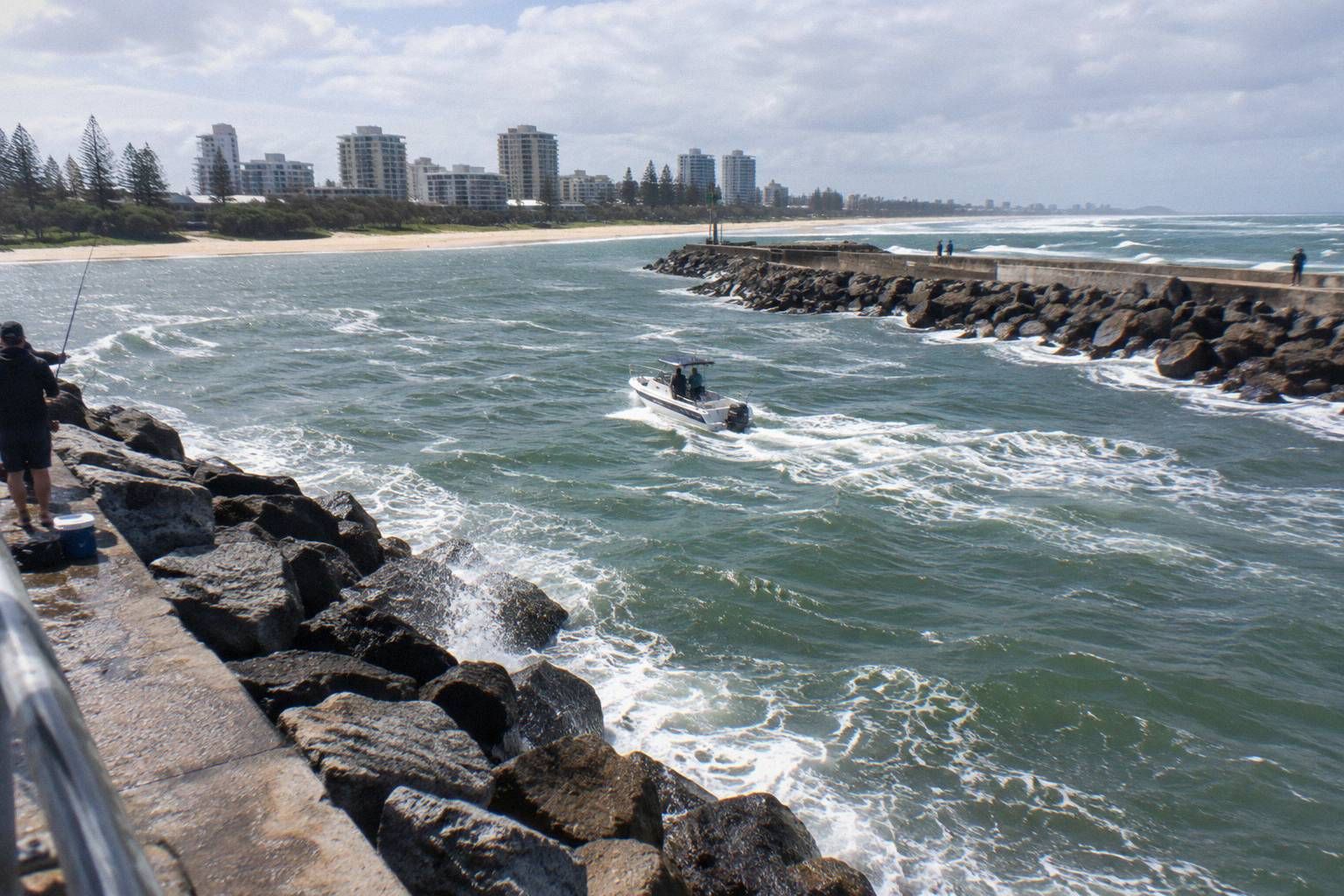
The sea a boat crosses on the way to the whales is not the sea you can see from the sand, and Whale One says so directly: the beach can look fine while conditions offshore are not, because wind builds over open water where nothing shelters it. Every Mooloolaba cruise also crosses the Mooloolah Bar, where Maritime Safety Queensland warns conditions can change quickly and without warning, even on a good day.
Start with the operator's own words, because they are the clearest statement of the problem in the sources. Whale One's page tells passengers that "although sometimes the weather looks fine on the beach, it does not always give an accurate representation of what the conditions offshore are." That is not a disclaimer written for lawyers; it is the practical reason skippers make final calls on the morning rather than days ahead. The trip to the whales takes in open water where wind direction, not rainfall, decides whether the ride is comfortable.
Then there is the bar. The Mooloolah River meets the ocean behind a trained wall, and the crossing is designated as a coastal bar under Queensland rules, which is why Maritime Safety Queensland's bar crossing page treats it seriously: lifejackets are compulsory for everyone on open boats or in open areas while crossing, and the authority's standing warning is that "conditions on a bar can change quickly and without warning, even on a good day." A commercial whale cruise does not cross in marginal conditions, but the bar is part of why the operator's judgement, not the beach camera, governs the day.
The practical takeaway for a reader holding a phone forecast is simple. Look at wind, not rain. A showery morning with light wind is a sailing morning. A sunny morning with a strong onshore wind is the day the skipper thinks hardest, and the day the operator's rebooking wording becomes relevant. If you want the deeper picture of how rough days are handled, the do whale watching cruises run in rough weather post works through the cancellation mechanics in detail.
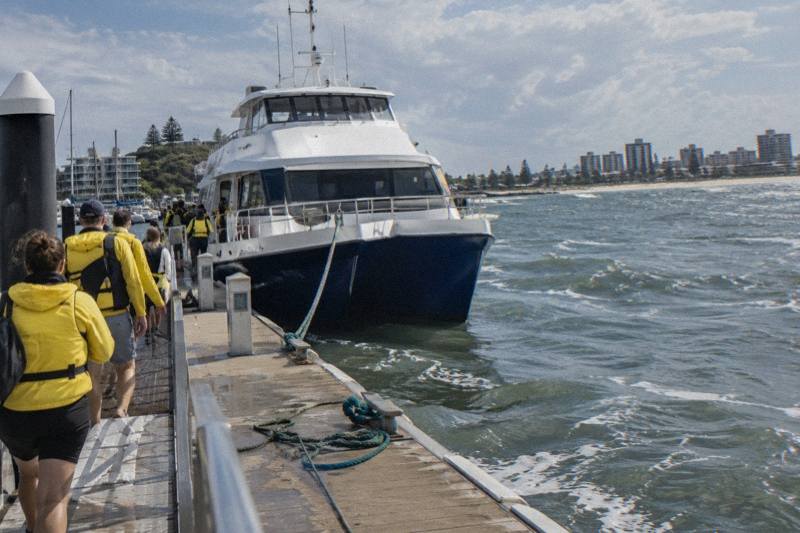
The Sunreef trip is a useful anchor for weather planning because its three-hour format and free cancellation on the booking page give you a decision point close to the day. The meeting point is Sunreef Mooloolaba at 11-12/123 Parkyn Parade, with check-in at the desk for a boarding pass before walking to the boat docked on the river behind the shop. If the forecast is wobbling, Check availability for your date and read the cancellation terms shown during booking.
Morning Or Afternoon: Does The Time Of Day Matter?
The Queensland Government's whale watching page states that calm conditions are most likely in the morning, before any wind picks up, and that is the only time-of-day statement in the sources. It is a fact about sea conditions, not a promise about whales or about any particular departure. Read it as a general pattern from the authority, then let the departure times for your date guide you.
Adventure Rafting's own page shows how that pattern becomes a timetable: departures at 8am, 11am and 2pm, seven days, from its berth at The Wharf Mooloolaba, Marine berth 42 next to Prawn Star. The 8am slot sits inside the calm-morning window the Queensland page describes; the 2pm slot sits outside it. Neither fact makes one departure better than another, and no source here measures which sailing sees more whales, so treat the choice as one about sea conditions and your own schedule.
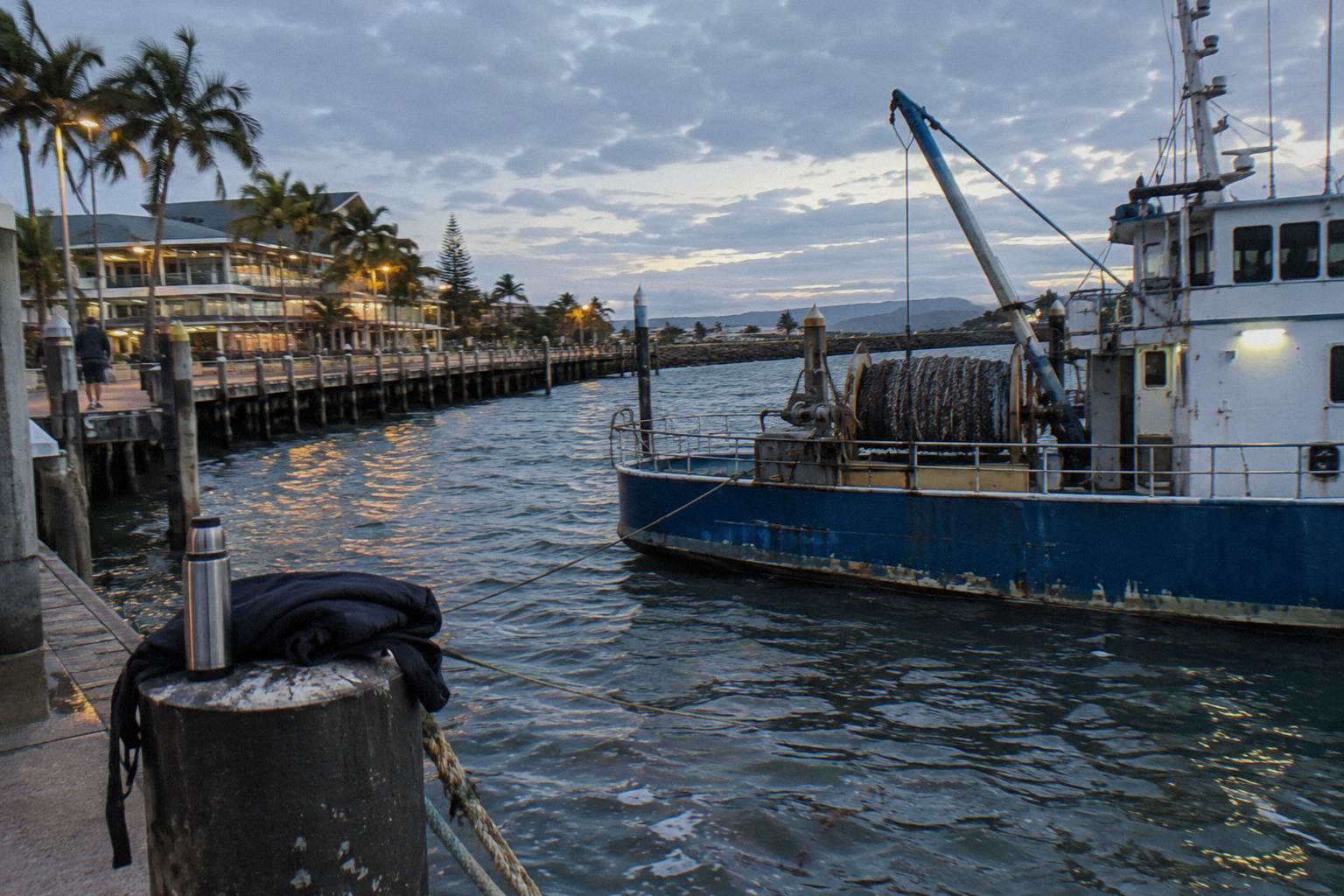
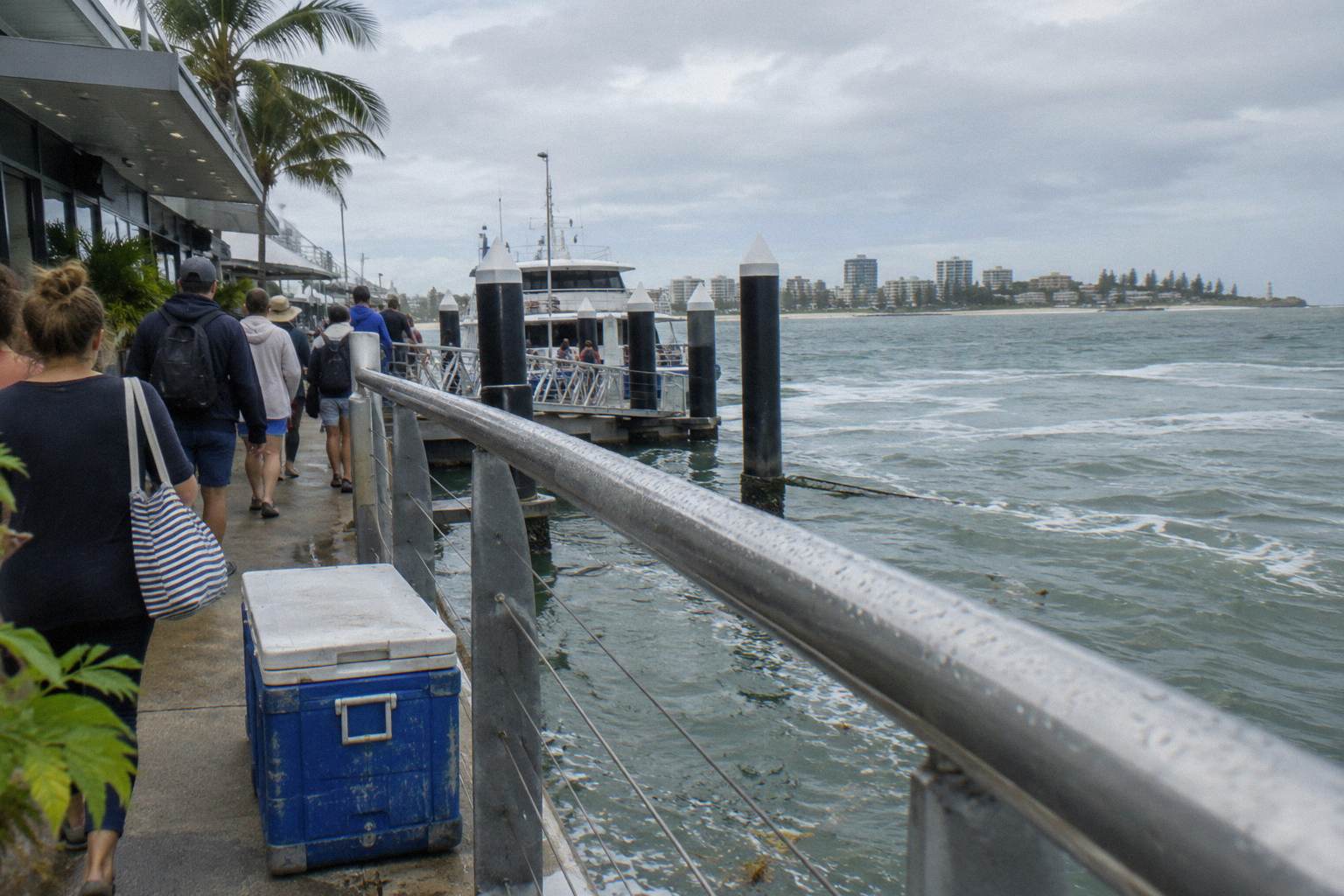
The same operator asks passengers to arrive 30 minutes prior to sailing, "as parking can be difficult during peak times", which pairs with the parking reality at The Wharf: time-limited bays, so allow extra time in peak season. A morning departure therefore means an early alarm, a drive or bus ride in the cold half-light of a winter dawn with July averaging 9.7 degrees overnight, and a jacket you will not need by lunchtime when the average maximum reaches 21.2.
For the fuller argument on both sides of the clock, the morning or afternoon whale watching post lays out what the stated facts support and where the guesswork starts. What can be said here is narrow and worth keeping narrow: the Queensland statement about morning calm is real, attributed and single; everything beyond it, about light, whale activity or crowds, is not in the sources and you should not build a plan on it.
What Each Operator Says About Weather, Cancellations And Refunds
Whale One's policy is a free return trip if no whales are seen, and if sea conditions cancel a sailing it will rebook or refund. Adventure Rafting cancels for weather, wind and swell and also for low numbers, reissuing or refunding the ticket in either case. These are operator statements about their own trips, and every Mooloolaba cruise covered here also carries free cancellation on the booking page. Before assuming your sailing will go ahead on a given morning, the guide to checking whether Mooloolaba whale cruises are running today explains how to verify conditions and season timing.
The table below collects the stated wording by operator, because these policies differ in the details and the details are what protect your money.
| Operator | Stated weather and cancellation wording | Applies to |
|---|---|---|
| Seasickness: no rebookings or refunds. | Sunreef 3-Hour Whale Cruise | |
| Adventure Rafting | Cancels for weather, wind and swell, ticket reissued or refunded; also cancels for low numbers; the operator says it cannot guarantee sightings but that missed sightings are rare. | Fast Boat, Free Cancellation; Hydrophone Whale Adventure |
| Sunshine Coast Afloat | Free cancellation on the booking page; check the cancellation terms for your date on sea conditions. | Sunshine Coast Afloat, 3 Hours |
Two traps hide in that table. First, the Whale One free-return policy belongs to Whale One alone; it must not be assumed for Sunshine Coast Afloat, Adventure Rafting or any Noosa trip, and Adventure Rafting says plainly it cannot guarantee sightings. Second, the seasickness line cuts the other way: Whale One states it will not issue rebookings or refunds for being seasick, so a rough-day decision is yours to make before boarding, not after.
Both operators advise considering seasickness tablets, Adventure Rafting says its friendly crew will take good care of you, and Sunreef sells medication onboard. That is the full extent of the sourced advice; the whale watching seasickness guide walks through preparation in more depth for readers who know the sea disagrees with them.
The Hydrophone Whale Adventure is Adventure Rafting's second two-hour format from The Wharf Mooloolaba, from A$115 per person with free cancellation on the booking page, and it inherits the same operator cancellation wording above. If the flexibility rather than the format is driving your choice, that trip and the Fast Boat sit under identical stated weather terms.
Booking Ahead Or Waiting For The Forecast: Which Wins?
Book ahead and use the free cancellation, because every Mooloolaba cruise carries it on the booking page, and the decision that actually cancels a trip is made by the operator on the morning, not by a forecast five days out. Waiting for a perfect forecast mostly costs you the date, since July and August carry the largest northbound numbers per Visit Sunshine Coast. Check wind, not rain, the day before.
The arithmetic of the season supports booking early. Visit Sunshine Coast states the best time to spot whales on the Sunshine Coast is July and August, when the largest numbers pass heading north, and that demand reality meets a finite number of seats, with Adventure Rafting capping its boats at 20 guests. A reader holding a shaky long-range forecast in June for a July date is making the decision backwards: the forecast cannot yet tell you the sea state, and the seat may not wait.
The free-cancellation rule changes the psychology of the whole decision. From A$89 per person for the Sunreef 3-Hour Whale Cruise, from A$115 for either Adventure Rafting format, and from A$105 for Sunshine Coast Afloat's 3-hour cruise, all with free cancellation on the booking page, a booking made early can be unwound the day before if the wind forecast turns ugly, at no cost. The booking page shows the price for your date for trips without a published from-price, such as Coastal Express Small Boat, and the cancellation terms for your date sit beside it.
What should you actually check inside that window? This table keeps it to the essentials:
| Check | What To Look At | Why It Matters |
|---|---|---|
| Wind strength and direction | The forecast for your departure time | Wind, swell and sea conditions are the operators' stated cancellation triggers, not rain. |
| Official warnings | Current Bureau of Meteorology notices | The bar can change quickly and without warning, even on a good day, per Maritime Safety Queensland. |
| Cancellation terms | The terms shown during booking for your date | Free cancellation applies on the booking page for these trips; sea-condition cancellations are rebooked or refunded by the operator. |
| Rainfall | Nothing beyond your clothing choice | Rain does not cancel whale cruises; the boats sail through showers. |
If the operator then cancels on the morning for sea conditions, the wording in the earlier table takes over: rebooking or refund with Whale One, ticket reissued or refunded with Adventure Rafting. You are not exposed twice.
For readers who keep asking whether it is worth going at all, the is whale watching on the Sunshine Coast worth it assessment gathers the value question in one place, season weather included.
Sea Temperature, Swim Trips And The Cold-Water Question
Sunreef states water temperatures during the season range from 19 to 23 degrees Celsius, the only sea-temperature figure in the sources, and it belongs to that operator's own trips. Air temperature runs 21.2 to 25.7 degrees by day in season. Anyone weighing Swim With Humpback Whales, from A$269 per person for four hours, is making a cold-water decision governed by the swim rules and operator requirements, not cruise weather logic.
The distinction matters because the two products read the same sea differently. A cruise passenger feels the sea as motion and spray; a swim passenger enters it. Nineteen to twenty-three degrees is cool water by any standard, and Sunreef states its swim season runs from July to Mid October, an operator statement about its own programme. No fact in the sources describes wetsuits, fitness requirements or swimmer logistics for the Mooloolaba swim trips, so those questions go to the operator before booking rather than to a weather app.
The swim format is described fully elsewhere on the swim with whales rules and safety page, including the national guidelines the operator says it follows. On weather specifically, the same logic as the cruises holds: the operator cancels or reshapes the day for sea conditions, the free cancellation on the booking page protects the booking before that, and the morning-calm pattern from the Queensland page applies to the water the swimmers enter.
Common Mistakes When Booking Around The Weather
The mistakes that cost people whale trips are reading rain instead of wind, trusting the beach over the offshore sea, assuming one operator's free-return policy is universal, skipping the cancellation check, and arriving with no margin for time-limited parking at The Wharf. Each one is avoidable with a two-minute check the day before, and none of them is about the whales.
The first mistake is cancelling yourself out over a shower icon. June averages 8.9 rain days of a millimetre or more and the boats sail through nearly all of them; wind is what moves a skipper. The second is judging the offshore sea from the esplanade, which Whale One's own statement warns against. The third is assuming Whale One's free-return sighting policy applies everywhere; it does not, and Adventure Rafting says it cannot guarantee sightings.
The fourth is booking without reading the cancellation terms shown during booking for your date; the free cancellation stated for these trips is generous but it is a stated term, not a law. The fifth is treating the drive and park as trivial: Adventure Rafting advises arriving 30 minutes before sailing because parking can be difficult in peak times, and the Wharf bays are time-limited. The sixth is expecting a seasickness refund; Whale One's page is explicit that none is issued, so the tablets both operators suggest considering are cheaper than the gamble. If a wobbly stomach is a known factor, the fuller preparation detail sits in the whale watching seasickness guide.
A last mistake belongs to planners, not to the day: assuming every departure point shares Mooloolaba's weather maths. The Jet Boat Whale Adventure leaves from the Kawana Waters Hotel deck in Buddina, and the three Noosa options leave from Noosaville or Tewantin; their sea conditions and travel times are their own, and none of them is a Mooloolaba trip. Check the meeting point before you check the forecast.
For readers who want the whole climate-and-season picture assembled in one place, Mooloolaba Whale Watching gathers the local trips and the facts that govern them, month by month and trip by trip.
Common Questions About Whale Watching Weather
Do Whale Cruises Get Cancelled For Rain?
Rain alone is not what cancels whale cruises; the operators' stated cancellation triggers are weather in the sense of wind, swell and sea conditions. Whale One rebooks or refunds if sea conditions stop a sailing, and Adventure Rafting reissues or refunds tickets when it cancels for weather, wind or swell. A showery forecast with light wind is normally a sailing day.
Does A Fine Day On The Beach Mean Good Conditions Offshore?
Not always. Whale One states that weather which looks fine on the beach "does not always give an accurate representation of what the conditions offshore are", and the Mooloolah Bar crossing can change quickly even on a good day per Maritime Safety Queensland. The skipper's judgement on the morning is the one that counts.
Is The Morning Really Calmer Than The Afternoon?
The Queensland Government's whale watching page states that calm conditions are most likely in the morning, before any wind picks up. That is a general statement about sea conditions, not a promise about any departure or about sightings. Adventure Rafting's timetable runs 8am, 11am and 2pm sailings, so early slots sit inside that calm-morning pattern.
What Happens To My Money If The Operator Cancels?
If sea conditions cancel a Whale One sailing, the operator says it will rebook you for another day or refund you. Adventure Rafting reissues or refunds the ticket when it cancels for weather, wind or swell, and it also cancels for low numbers. Separately, every trip covered here carries free cancellation on the booking page for your own change of plans.
How Cold Is Whale Season On The Sunshine Coast?
At the nearby airport station, June to October averages daytime maximums of 21.2 to 25.7 degrees Celsius and overnight minimums of 9.7 to 15.8, with July the coldest mornings. Sunreef states water temperatures during the season range from 19 to 23 degrees Celsius. A jacket for the morning departure is the standard advice.
Will I Get A Refund If I Get Seasick?
No, not with Whale One: its page states no rebookings or refunds are issued for being seasick. Both operators advise considering seasickness tablets before boarding, and Sunreef sells medication onboard. The decision about a rough day belongs to you before the boat leaves, not after.