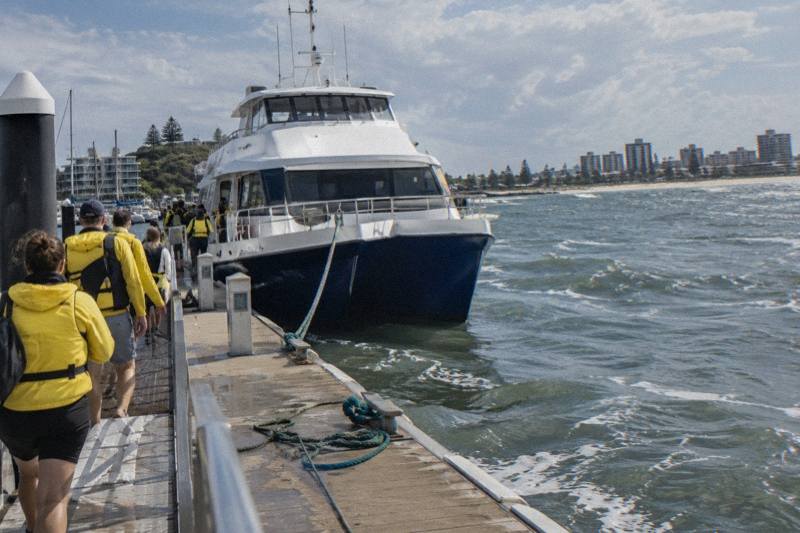
Do Whale Watching Cruises Run In Rough Weather?
Whale watching trips from Mooloolaba sometimes sail in weather that looks doubtful and sometimes do not: the operators state their own sea-condition cancellation rules, and free cancellation (up to 24 hours before departure on most, up to 3 days on the Sunreef 3-Hour Whale Cruise and Swim With Humpback Whales) applies on the booking pages.
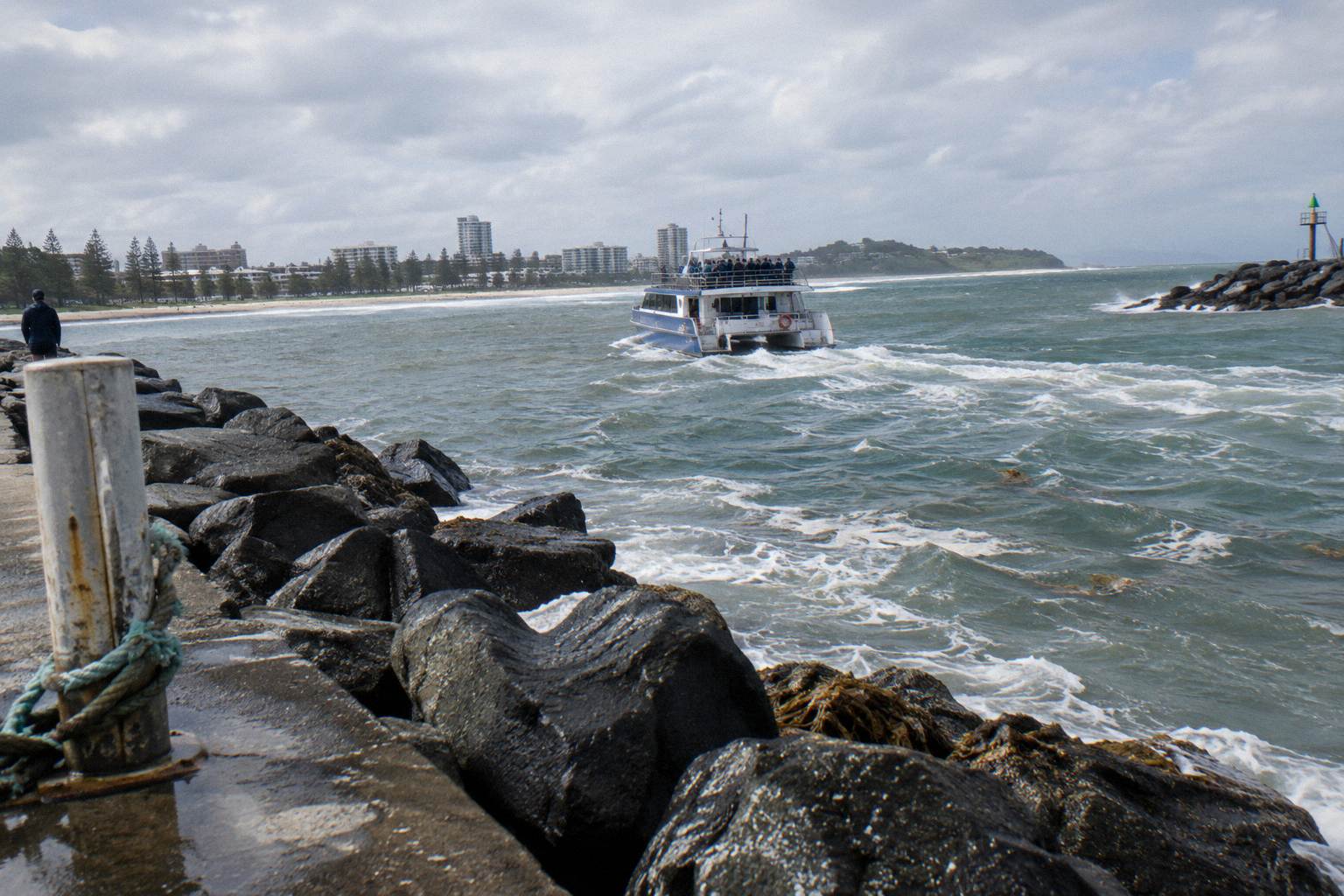
Some do and some do not, and no operator sails in every condition: the decision belongs to each operator on the day. Whale One states that when sea conditions stop a trip it will either rebook passengers for another day or refund them, and Adventure Rafting says weather, wind and swell cancellations mean the ticket is reissued or refunded. Neither statement promises a sailing, and neither promises a whale.
The short answer for anyone staring at a wet forecast is that a rough-looking morning is not, by itself, a cancellation. Operators watch the conditions offshore rather than the sky over the beach, and a trip can proceed in weather that looks uninviting from the sand. Equally, a trip can be called off on a day that looks pleasant from shore, because the swell beyond the river mouth is what the skipper has to work with.
That judgement sits with the operator, not with the passenger and not with any weather app. The two Mooloolaba operators whose policies are published say so in plain words. Whale One, which runs the whale watching boat behind the Sunreef shop at The Wharf Mooloolaba, addresses the question directly: when sea conditions cause a cancellation, "we will either rebook you for another day, or refund you." Adventure Rafting, which runs its fast boat trips from The Wharf, names its own triggers: weather, wind and swell, plus low passenger numbers, and in each case the ticket is reissued or refunded.
For a reader deciding whether to book at all, the practical protection is layered. Every trip covered here carries free cancellation on the booking page, so a doubtful forecast can be backed out of at no cost up to that point. Once the free-cancellation window has closed, the operator's own weather policy takes over, and that policy, as published, rebooks or refunds rather than leaving the passenger out of pocket when conditions stop the boat.
How Each Operator States Its Weather Rules
Whale One and Adventure Rafting publish the clearest rules, and both end in a rebook or a refund rather than a lost fare. Whale One ties its policy to sea conditions: cancelled trips are rebooked for another day or refunded. Adventure Rafting names weather, wind, swell and low numbers as its cancellation triggers, with tickets reissued or refunded. The other operators ask passengers to check the terms on the booking page for the chosen date.
The distinction matters because the two published policies are not identical. Whale One's wording covers sea conditions as a category: the operator decides the conditions are not right to sail, and the passenger gets another day or their money back. Its page also carries a harder line on seasickness, which is worth reading before boarding rather than after: "We will not issue any rebookings or refunds for being seasick." A trip that sails is a trip that sailed, and feeling unwell on it is not, in that operator's terms, a cancellation.
Adventure Rafting's page frames things slightly differently. It lists the causes it will cancel for: weather, wind and swell, and separately low passenger numbers. In each case the remedy is the same, a reissued ticket or a refund. The operator is also candid about sightings, saying that while it can't guarantee sightings, missed sightings are rare, and it makes no free-return offer of the kind Whale One makes on its own tours.
A point that catches many first-time bookers: the sea-condition policy and the free cancellation are two different protections operating on two different clocks. Free cancellation is a booking-page term that applies across the trips covered here. The sea-condition policy is the operator's own promise about what happens when it, not the passenger, pulls the pin on the day. Both can apply to the same booking at different moments, and neither overrides the other.
The table below gathers the published statements by operator, keeping each policy with the operator that wrote it.
| Operator | Weather or condition statement as published |
|---|---|
| Whale One (Sunreef shop, The Wharf Mooloolaba) | Sea-condition cancellations: "we will either rebook you for another day, or refund you." Seasickness: no rebooking or refund. Free return trip if no whales are seen, on its own tours |
| Adventure Rafting (The Wharf Mooloolaba) | Cancels for weather, wind and swell, and for low numbers; ticket reissued or refunded. Says it can't guarantee sightings |
| Sunshine Coast Afloat, Whales Sunshine Coast, Noosa operators, Coastal Express Small Boat | Check the cancellation terms on the booking page for your date |
Why Offshore Conditions Differ From The Beach
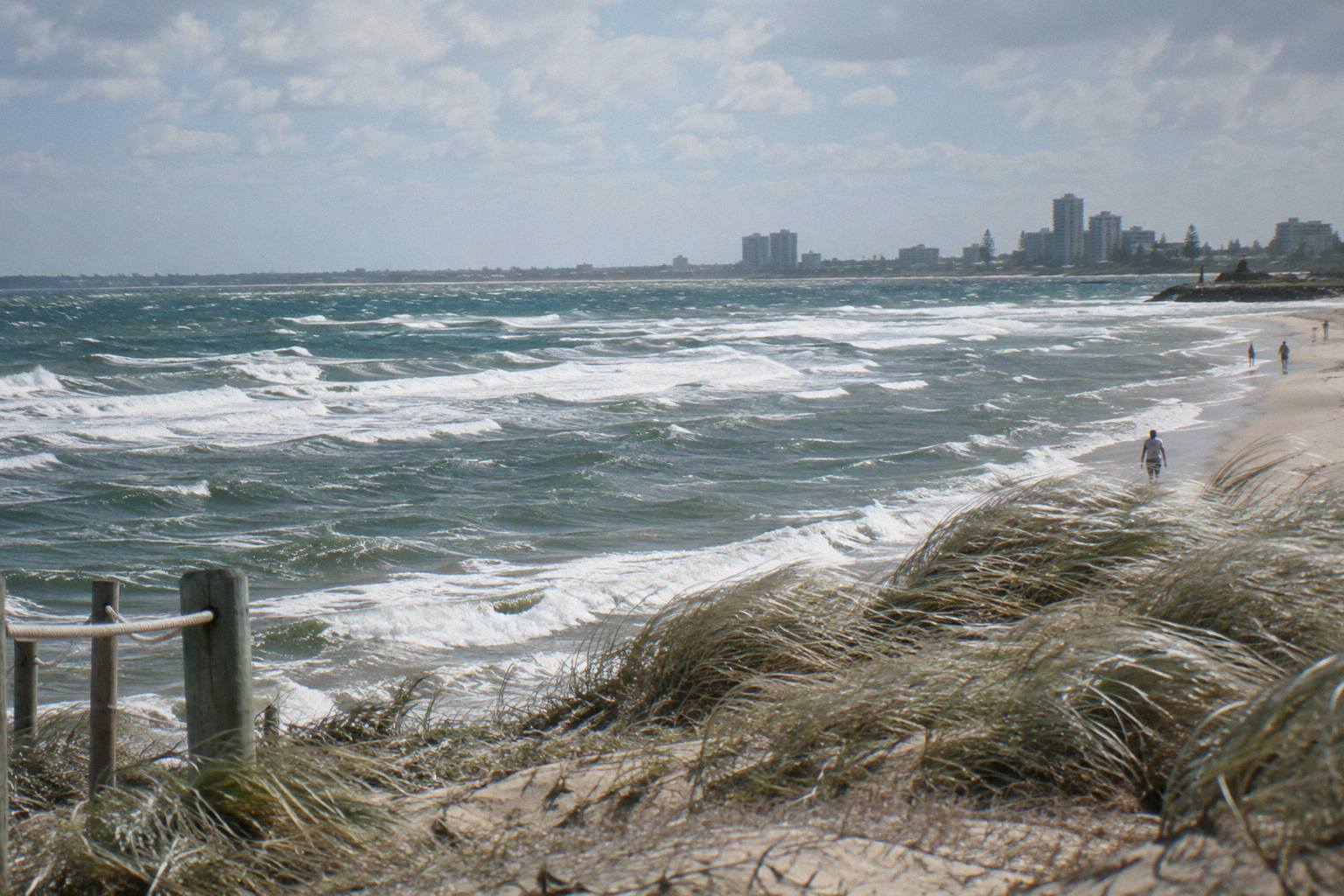
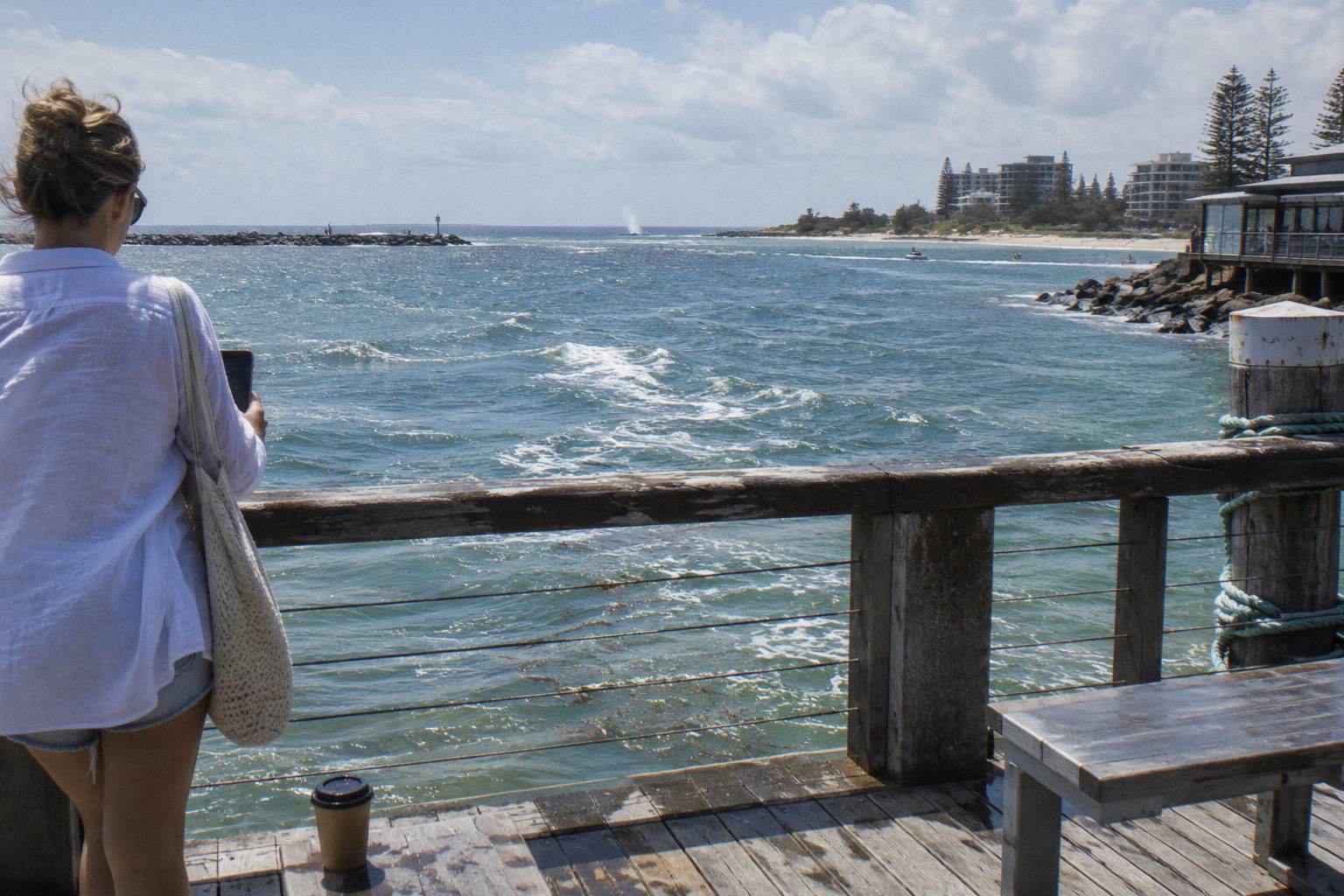
The beach is a poor guide to the sea a whale boat sails on, and the operators say so directly. Whale One's page warns that "although sometimes the weather looks fine on the beach, it does not always give an accurate representation of what the conditions offshore are." The Mooloolah River mouth is a designated coastal bar, and Maritime Safety Queensland warns conditions on a bar can change quickly and without warning, even on a good day.
This is the single most useful idea for anyone judging a forecast from a hotel balcony. The swell that matters on a whale cruise is the open-ocean swell beyond the river mouth, hours old and built up over a long fetch of water. It has no relationship to whether rain is falling on the Esplanade or whether the wind is rustling the palms at the beach. A grey, drizzly morning can sit over a workable sea, and a bright one can sit over a swell that keeps every boat in the marina.
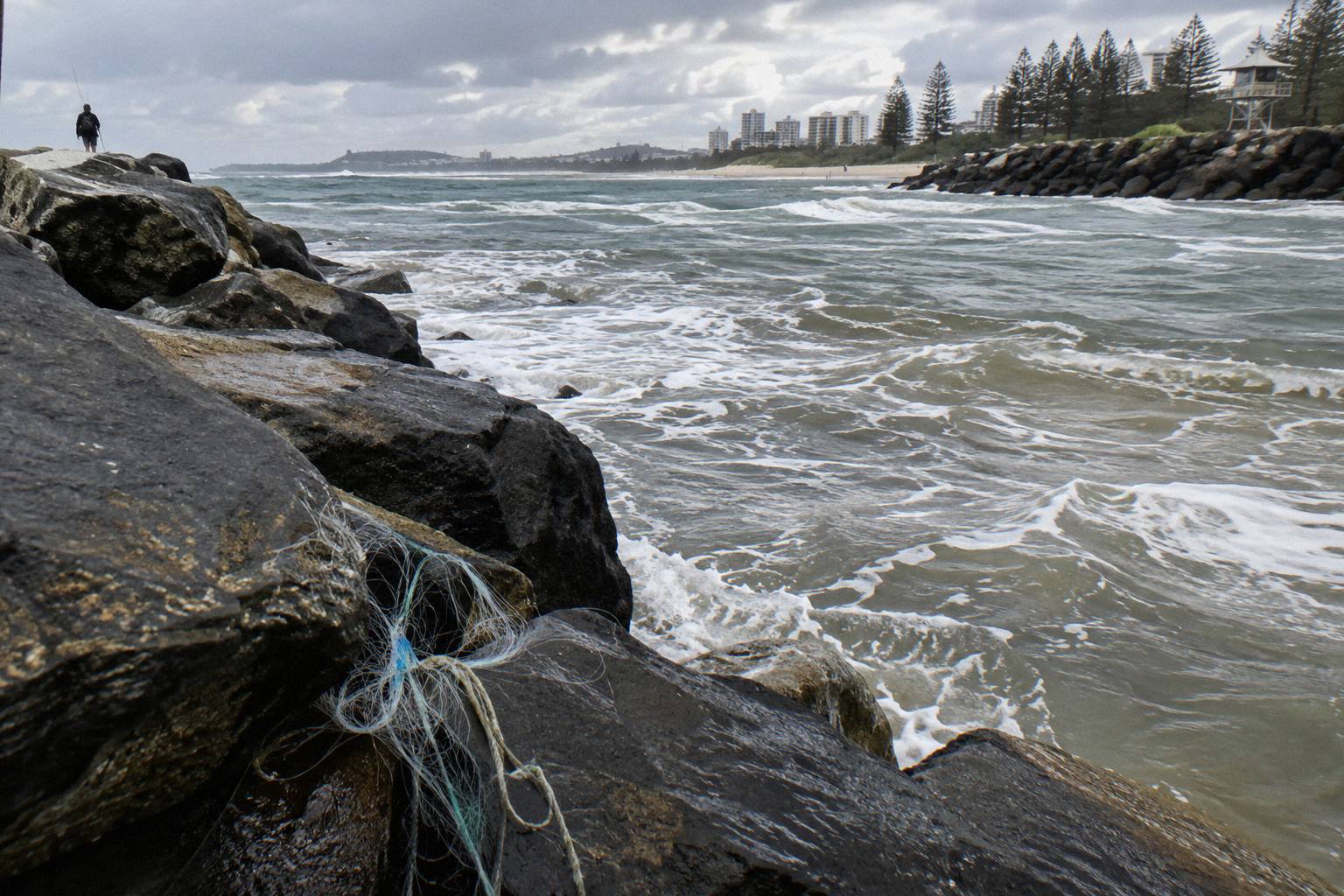
The bar adds its own layer. To leave the river for open water, a Mooloolaba whale boat crosses the Mooloolah Bar, which Maritime Safety Queensland designates as a coastal bar. Its safety page states two things relevant to whale passengers: lifejackets are compulsory for everyone on open boats or in open areas while crossing, and "conditions on a bar can change quickly and without warning, even on a good day." That is the authority's wording, not a prediction about any particular morning, and it explains why the final call on sailing is made by the people watching the bar, not by passengers watching an app. Bar crossings are only one part of the safety picture, and how close a boat may legally approach a whale matters just as much, as explained in the guide to whale watching rules and approach distances.
The Queensland Government adds one timing note that is often quoted in planning discussions: calm conditions are most likely in the morning, "before any wind picks up." That is a general statement about conditions from the Queensland whale watching page, not a promise that any given departure is steadier than another, and it should not be read as advice that a morning ticket is safer. It simply explains why so many whale trips across the coast are scheduled early in the day. More on that framing appears in morning versus afternoon whale watching.
For readers who want to go deeper on the planning side, the question of how whale watching weather and sea conditions work is covered in a dedicated guide, and seasickness preparation has its own page in the whale watching seasickness guide. The short version of the operator advice on seasickness: consider seasickness tablets, and check with a doctor where that is relevant to you. Whale One also notes that medication is sold onboard.
What Rough Weather Means For Your Booking
Practically, a rough forecast changes two things and nothing else: it makes the free cancellation worth using early, and it makes the operator's own rebook-or-refund policy the safety net on the day. No trip covered here charges a passenger for a sailing the operator cancels for conditions, based on the published policies of the two operators who state theirs. What no policy covers is a change of mind after the free-cancellation window closes.
The sequencing is worth spelling out. Before the free-cancellation window closes, any of these trips can be cancelled on the booking page at no cost, wet forecast or not. After it closes, the fare is committed, and the question becomes whether the operator sails. If it sails, the trip runs. If it cancels for sea conditions, Whale One rebooks or refunds and Adventure Rafting reissues or refunds. The gap in the middle, a passenger who no longer wants to go on a trip that is sailing, is where money can be lost, and it is the gap worth thinking about before booking rather than after.
The featured trip for this question is the Sunreef 3-Hour Whale Cruise, a 3-hour sailing from The Wharf Mooloolaba rated 4.3 from 200+ reviews, from A$89 per person, with free cancellation up to 3 days on the booking page. All amounts on the booking pages are in Australian dollars. Its sea-condition cover is Whale One's own rebook-or-refund policy, and its sighting policy is Whale One's free return trip if no whales are seen, an operator statement that applies to its tours and to no one else's. Check availability
A reader weighing a faster, smaller-boat option against a bigger one can also compare the Adventure Rafting fast boat whale trip, 2 hours, from A$115 per person, rated 4.6 from 100+ reviews, with the same free cancellation. Both fast-boat trips from this operator carry its weather, wind and swell cancellation terms. The choice between boat styles in marginal conditions is a question worth putting to the operator directly, since the published facts do not compare how different hulls handle the same sea, and no such comparison should be invented from a decision name.
Which Trip Says What About Cancellations
Every trip covered here carries free cancellation on the booking page, and the differences sit in what each operator says happens on the day itself. The table below lists the cancellation line by trip exactly as each booking page and operator states it, with "check the booking page" where no published line exists for that product. If you want to confirm whether boats are actually sailing on a given day, the guide to today's whale watching departures from Mooloolaba explains how to check before you leave home.
The value of reading this before booking rather than after is that it shows where the published protection is thickest. The trips with a named operator policy behind them state their terms in full. The trips whose operators have not published a weather line are not weaker trips, they are simply trips whose terms live on the booking page for the date you choose, which is where the binding version sits anyway.
| Trip | Duration | Cancellation line |
|---|---|---|
| Sunreef 3-Hour Whale Cruise | 3 hours | Free cancellation up to 3 days; Whale One rebooks or refunds for sea-condition cancellations |
| Fast Boat, Free Cancellation | 2 hours | Free cancellation up to 24 hours; Adventure Rafting reissues or refunds for weather, wind, swell and low numbers |
| Hydrophone Whale Adventure | 2 hours | Free cancellation up to 24 hours; Adventure Rafting reissues or refunds for weather, wind, swell and low numbers |
| Sunshine Coast Afloat, 3 Hours | 3 hours | Free cancellation up to 24 hours; check the booking page for your date |
| Coastal Express Small Boat | 2 hours | Free cancellation up to 24 hours; check the booking page for your date |
| Swim With Humpback Whales | 4 hours | Free cancellation up to 3 days; check the booking page for your date |
| Jet Boat Whale Adventure | approx. 2 hours | Free cancellation up to 24 hours; check the booking page for your date |
| Noosa Thriller Whale Watching | 2 hours | Free cancellation up to 24 hours; check the booking page for your date |
| Oceanrider Small-Group Tour | 2 hours | Free cancellation up to 24 hours; check the booking page for your date |
| Whale And Dolphin Charters | 2 hours | Free cancellation up to 24 hours; check the booking page for your date |
Two notes on reading it. First, a "check the booking page" cell is not a gap in protection, it is a fact that is not published in the sources used here, and the binding terms will be shown during booking. Second, the operator policies in the top rows belong to those operators only: Whale One's rebook-or-refund wording applies to the trips Whale One runs, and Adventure Rafting's terms apply to Adventure Rafting's trips. Neither line can be borrowed for another boat.
A separate question, whether trips run every day in season at all, has its own answer in do whale watching cruises run every day: daily schedules and weather cancellations are different mechanisms, and one does not tell you about the other.
Common Mistakes When A Wet Forecast Appears
Three mistakes cost people money or a sailing: cancelling too early off a beach forecast, assuming the operator will call off a trip that actually sails, and expecting a seasickness refund that the operator's terms rule out. Each is avoidable by reading the published policies before the free-cancellation window closes.
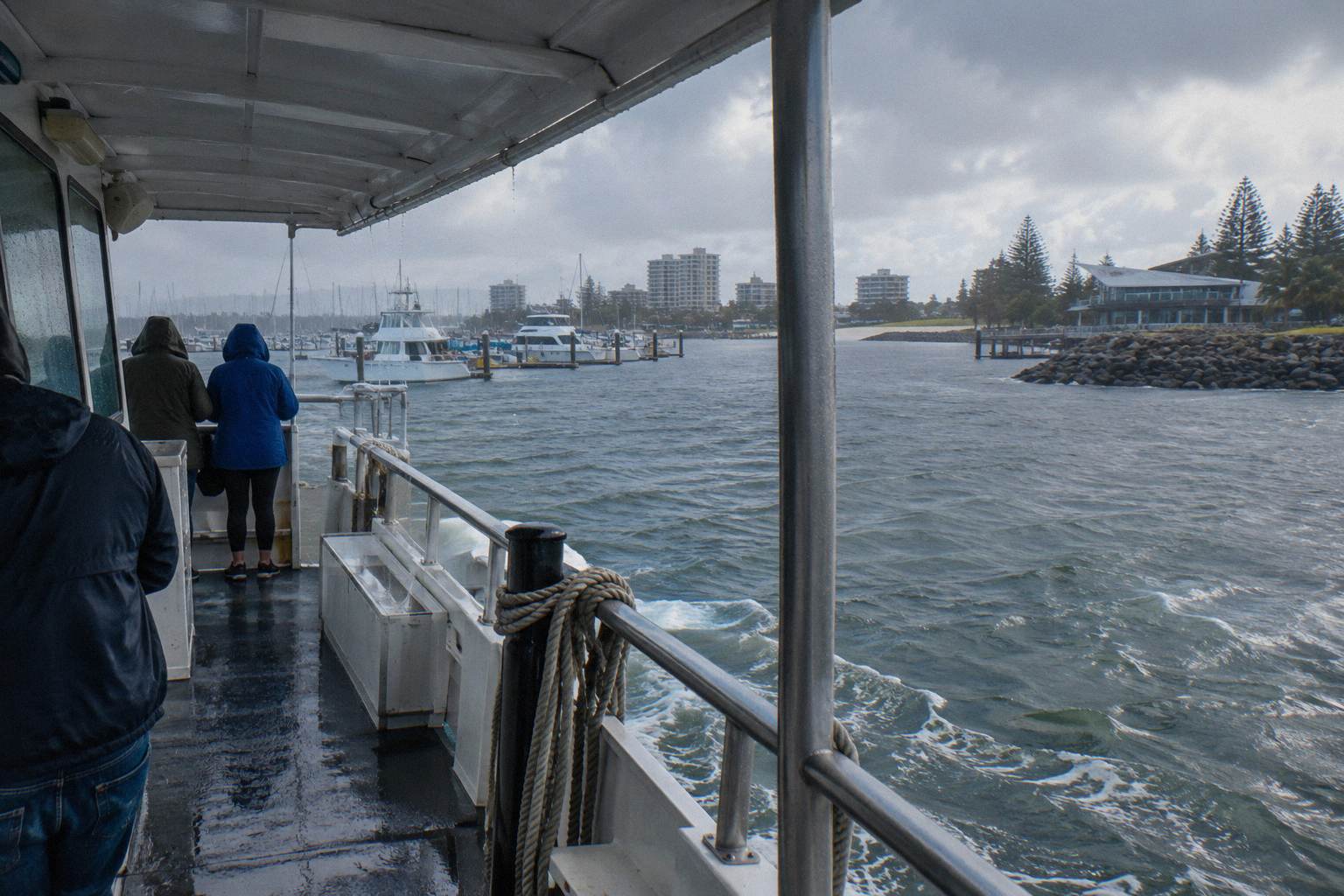
The first mistake is treating the beach sky as the sea state. Whale One's own warning is that fine weather on the beach does not always represent conditions offshore, and the reverse holds too: an ugly sky over a calm sea can still be a sailing day. Passengers who cancel themselves outside the operator's process, rather than waiting for the operator's call, can end up paying for a decision that was not theirs to make.
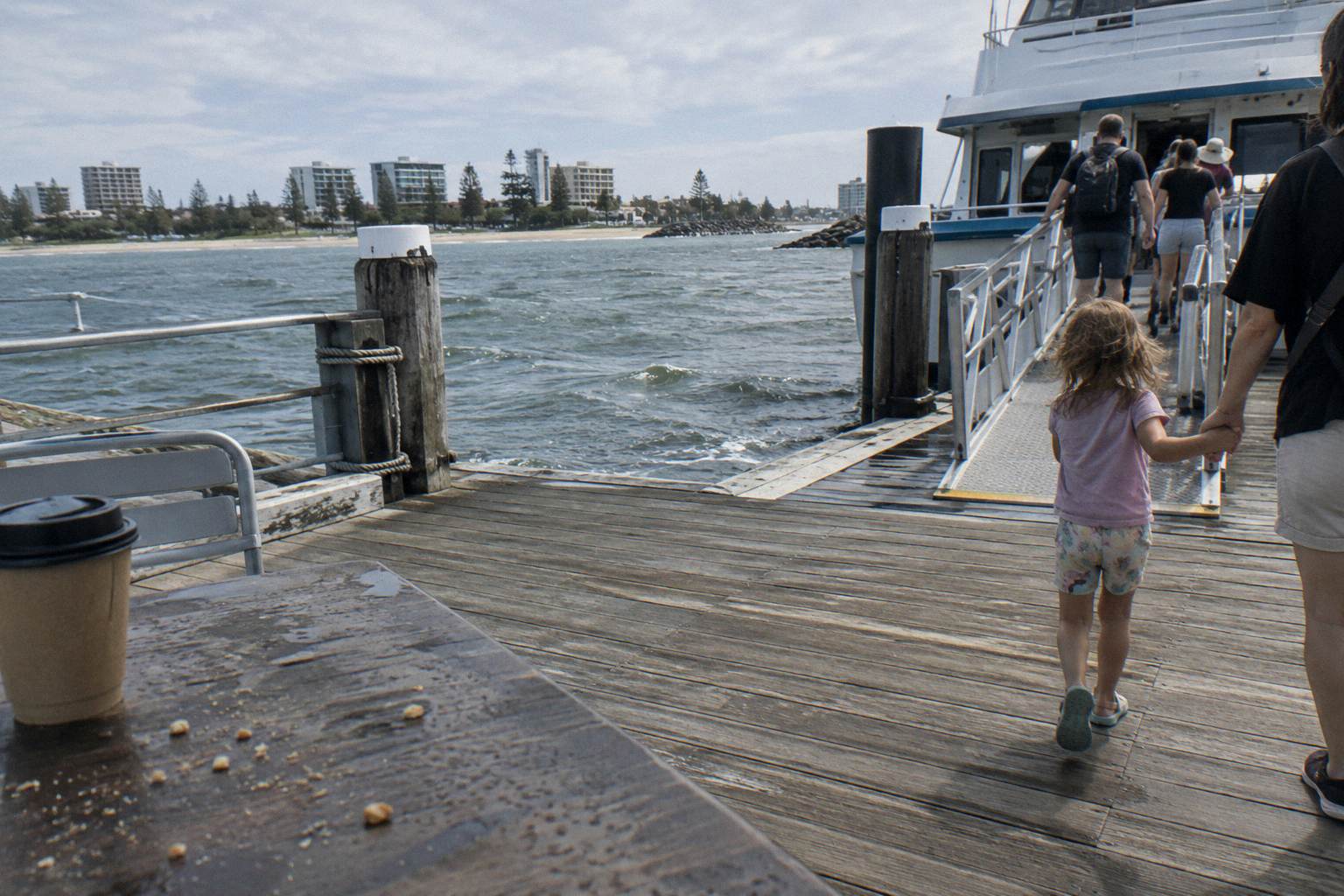
The second is assuming every boat has the same age, arrival and cancellation rules. Adventure Rafting asks passengers on its own trips to arrive 30 minutes prior to sailing, noting parking can be difficult during peak times; that advice is Adventure Rafting's, for its trips, and no other operator's arrival time may be inferred from it. Time-limited parking at The Wharf means extra time in peak season, whoever you sail with. Age rules differ the same way: Adventure Rafting states a minimum age of 5 on its trips, while Sunreef states no numeric minimum and instead sells child tickets for ages 4 to 14 with under 4 free, and requires children under 16 to be accompanied by an adult.
The third is the seasickness expectation. Whale One's terms are explicit that no rebooking or refund is issued for seasickness, and its remedy is a free return trip only when no whales are seen at all. Both operators advise considering seasickness tablets before a trip. Neither statement is a medical recommendation, and anyone with questions about medication should check with a doctor.
A fourth, quieter mistake: assuming a sighting guarantee is a weather guarantee. Whale One's free return trip if no whales are seen is a sighting policy on its own tours, not a promise about conditions, and Adventure Rafting says outright that it can't guarantee sightings. No trip covered here promises a whale in any weather, and any sentence that does should be treated as a red flag wherever it appears.
What To Ask The Operator Before Booking
Four questions cover almost everything the published pages leave open: what conditions trigger a cancellation on that boat, whether a refund or a rebooking follows, what happens to a fare when the trip sails but the passenger stays ashore, and where the meeting point and arrival time sit on the day. The operators answer the first two publicly for their own trips and answer all four by message or phone.
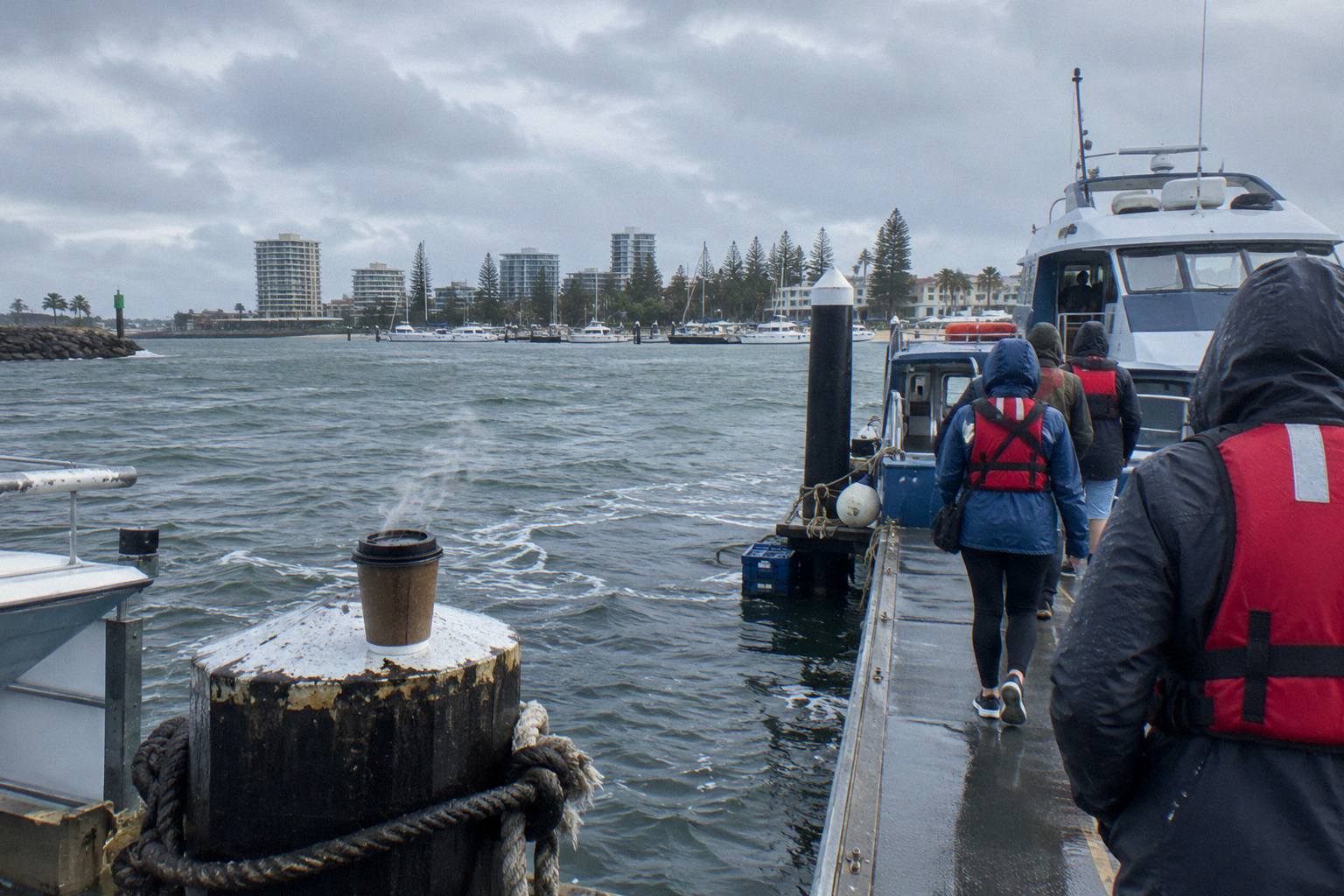
For trips whose weather lines live on the booking page rather than an operator page, the question list is the protection. Ask what sea state stops that particular boat. Ask whether the remedy is a rebook or a refund, and by when. Ask how the operator contacts passengers on the morning, since a cancelled trip that reaches the passenger before they park is a different day from one that does not. And ask about the bar crossing if it is new to you: Maritime Safety Queensland's bar safety page explains the lifejacket rule and the changeability of bar conditions, and it applies to every open boat crossing the Mooloolah Bar.
The last practical piece is timing. Free cancellation gives a clean exit from any doubtful plan, and the forecast inside that window is usually informative enough to make a real decision with. Inside the window, the operator's policy governs, and on the evidence published here, the Mooloolaba operators who state their terms both land on the passenger's side when the sea, not the passenger, is the reason a trip does not run.
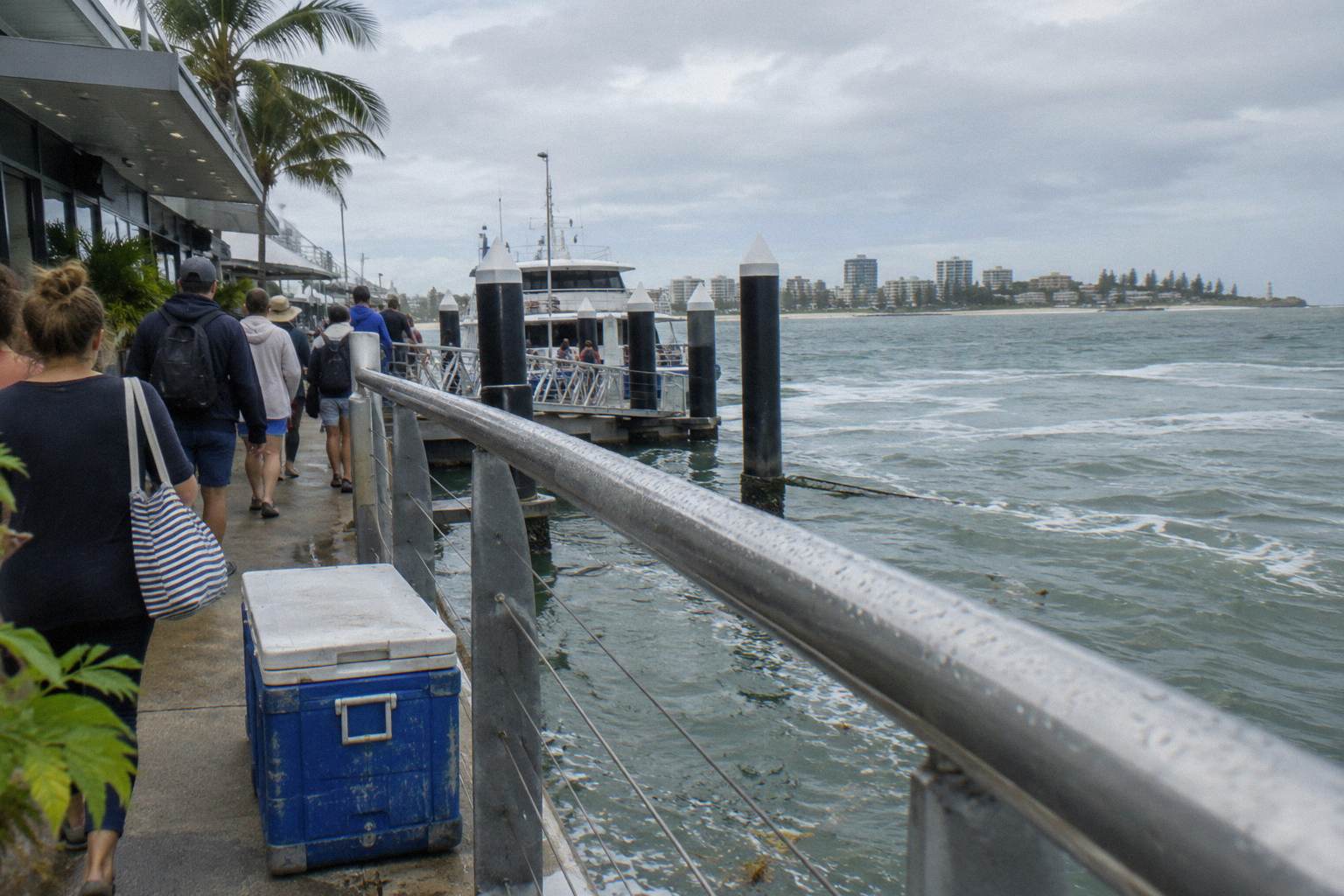
Mooloolaba sits at the practical centre of this question because its boats cross a designated bar to reach the whales, and because its two best-documented operators publish opposite halves of the answer: one states its sea-condition rebook-or-refund in full, the other names its weather, wind, swell and low-number triggers. Put together, they give a reader with a wet forecast almost everything needed to decide whether to book, when to cancel, and what happens if the sea decides instead. For the wider picture across the coast, Mooloolaba Whale Watching gathers the trip pages, season guides and planning pieces in one place.
Common Questions About Rough Weather Whale Watching
Do Whale Watching Cruises Run In Rough Weather?
Sometimes. The operator decides on the day based on offshore conditions, not the beach sky. Whale One rebooks or refunds when sea conditions stop a trip, and Adventure Rafting reissues or refunds tickets when weather, wind, swell or low numbers cancel one. No operator sails in every condition and none promises a whale in any weather.
Can I Cancel If The Forecast Turns Bad?
Yes: up to 24 hours before departure on most trips here, and up to 3 days before on the Sunreef 3-Hour Whale Cruise and Swim With Humpback Whales. Inside that window the fare is committed unless the operator cancels, in which case the published policies rebook or refund.
Do I Get A Refund If The Trip Is Cancelled For Weather?
On the trips with a published policy, yes or its equivalent: Whale One rebooks for another day or refunds, and Adventure Rafting reissues the ticket or refunds it. For other trips, check the cancellation terms on the booking page for your date before you book.
Will I Get My Money Back If I Get Seasick?
Not from Whale One: its terms state plainly that no rebooking or refund is issued for seasickness. Its free return trip applies only when no whales are seen. Both operators advise considering seasickness tablets before a trip; check with a doctor about medication.
Why Was My Trip Called Off On A Sunny Day?
Because the conditions that matter are offshore: the swell beyond the river mouth and the state of the Mooloolah Bar, not the sky over the beach. Whale One warns that fine beach weather does not always represent offshore conditions, and Maritime Safety Queensland notes bar conditions can change quickly even on a good day.
Is The Morning Better When The Weather Looks Doubtful?
The Queensland Government notes calm conditions are most likely in the morning, before any wind picks up. That is a general statement about conditions, not a promise that a morning departure is steadier or safer than a later one; the operator makes the sailing call trip by trip.